
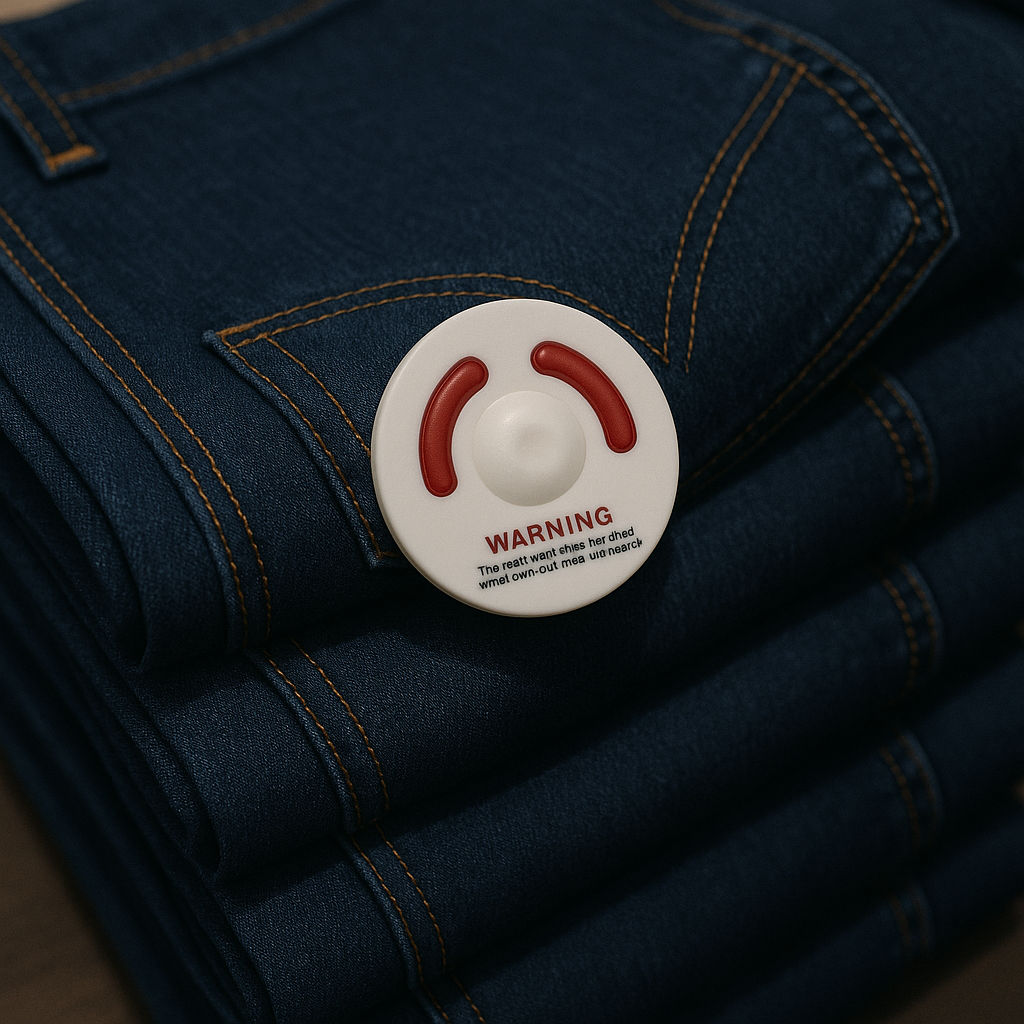
Hawkeye ink tag on jeans…
Electronic Article Surveillance (EAS) systems, whether Acousto-Magnetic (AM) or Radio Frequency (RF), form the backbone of modern retail loss prevention. But for stores dealing with high-theft-risk merchandise or persistent shrinkage, one upgrade stands out as both cost-effective and psychologically powerful: ink tags.
Ink tags don't just detect theft, they deter it. When paired with either AM or RF technology, they make stealing more costly, and far less appealing for would-be shoplifters.
What Are Ink Tags?
Ink tags are hard tags or pins that contain one or more vials of permanent dye. If someone tries to forcibly remove the tag without the proper detacher, the vials are intended to break and stain the item, rendering it unsellable, unwearable, and hopefully worthless on the black market.
They are often paired with standard EAS hard tags like pencil tags, mini hard tags, or Supertags. When a shoplifter walks out, the gate alarms due to the EAS system, and if they try to remove the tag at home, they will likely ruin the product.
Why Ink Tags Make EAS Systems More Effective
1. Physical Consequence Adds Psychological Deterrent
The key advantage of ink tags is that they raise the stakes. EAS systems trigger an alarm, but some brazen shoplifters often gamble they can get away or that staff won’t respond. With ink tags, the risk is greater: even if they succeed in leaving the store, the ink tag is there to prevent use, return, or resale of the item.
2. Strengthens Low-Intervention Environments
In stores where staff aren't always able to pursue or confront theft, ink tags do the heavy lifting. They passively defend inventory and reduce the store's reliance on physical intervention or confrontation.
3. Enhances Both AM and RF Systems
AM Systems (58 kHz): Known for wider coverage and stronger signal penetration around metal, these systems are especially effective when paired with high-security tags like SuperTag II or pencil tags, particularly when used with ink pins.
RF Systems (8.2 MHz): Cost-effective and compatible with popular tags like the Mini Hard Tag. Adding ink increases their deterrence level, closing the security gap.
Key In-Store Areas Where Ink Tags Provide Added Protection
Fitting Rooms: Ink tags deter tag swapping and unauthorized removal in unsupervised spaces where customers try on merchandise.
Entry and Exit Zones: High-traffic areas benefit from ink tags as a visual and functional theft deterrent, especially when paired with AM or RF detection systems.
Footwear Sections: Shoes are highly resellable and frequently targeted by thieves, ink tags help discourage theft without damaging the product.
Youth Fashion Areas: Popular, trendy items with high theft motivation are better protected with ink tags that create real consequences for removal attempts.
Luxury Merchandise Zones: High-margin apparel and accessories are protected with ink tags that reduce the incentive for professional theft and unauthorized resale.
Product Examples That Pair Well With Ink
Designer Jeans – High resale value and commonly targeted in fitting rooms
Sneakers and Athletic Shoes – Popular among resellers and easy to conceal
Leather Jackets – High-ticket items often displayed on open racks
Handbags and Purses – Frequently targeted due to brand recognition and compact size
Dresses and Evening Wear – High-margin items vulnerable to tag swapping
Hoodies and Streetwear – Appealing to youth demographics with high theft risk
Winter Coats – Puffy coats where concealment is easier, making ink tags an essential deterrent
Branded T-Shirts – Small, high-turnover items often taken in multiples
Belts and Accessories – Frequently stolen add-ons that are easy to remove without visible deterrents
Swimwear and Lingerie – Ink tags discourage removal in low-supervision areas like fitting rooms
Need help outfitting your store with EAS + ink protection?
Our specialists can walk you through compatible tag/pin setups based on your merchandise and store layout. Reach out now for expert advice or custom package pricing.
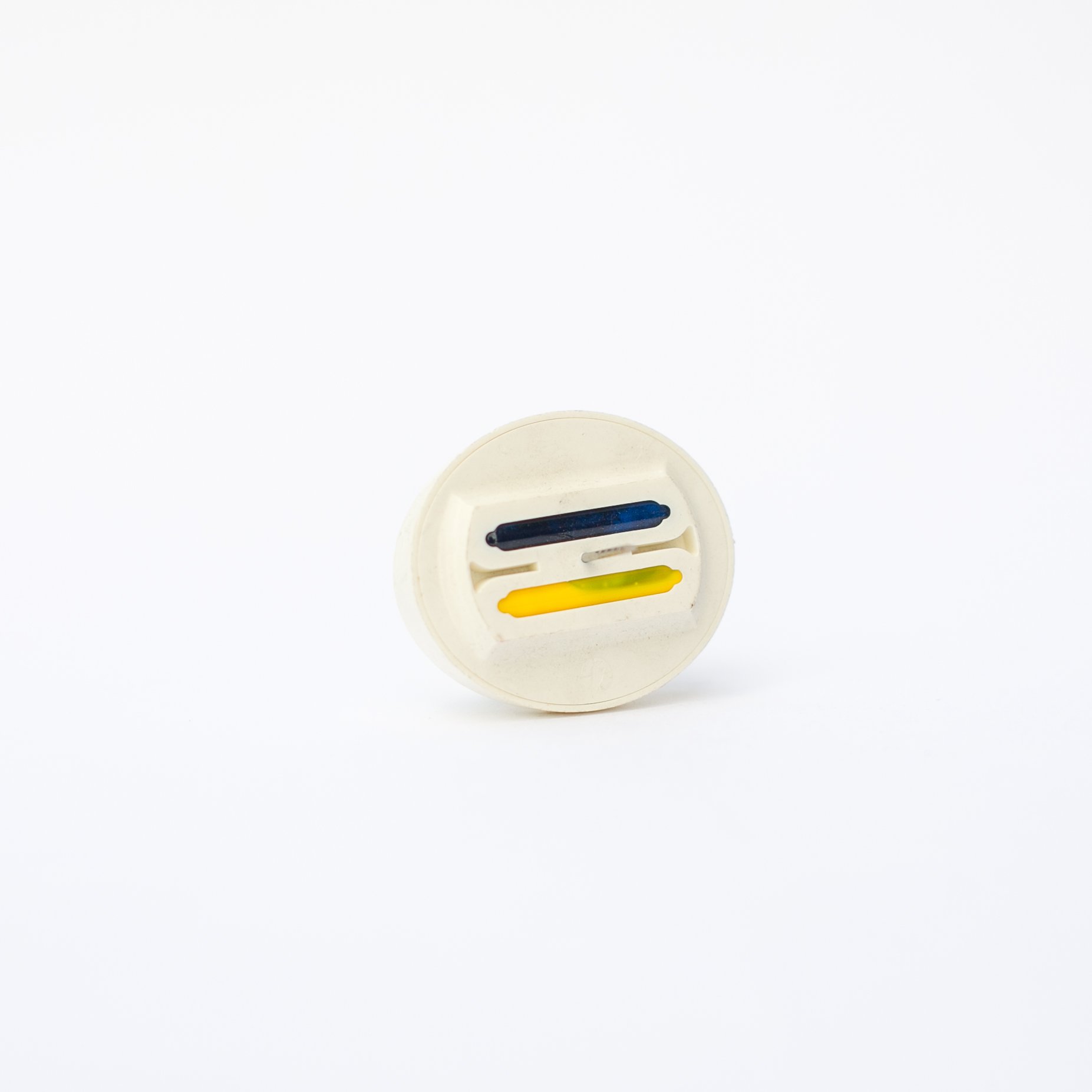
Upgrade the hard tags you already own with the Round Ink Pin, a versatile benefit denial pin that replaces standard metal or plastic pins and works with most existing hard tags. Often called exploding ink tags, these pins are designed to release ink if tampered with, rendering the garment unusable and taking the payoff out of shoplifting. The durable design delivers reliable performance in any retail environment.
Key Features
Benefit denial technology: Releases ink upon tampering to protect your merchandise
Versatile compatibility: Works with most existing hard tags
Easy integration: A direct replacement for standard metal or plastic pins
Durable design: Built for dependable day to day use on the sales floor
Bulk pack: 1,000 pins per box for an ample supply
Quantity: 1,000 Round Ink Pins per box
Product Code: PIN3014 Round Ink Pin