
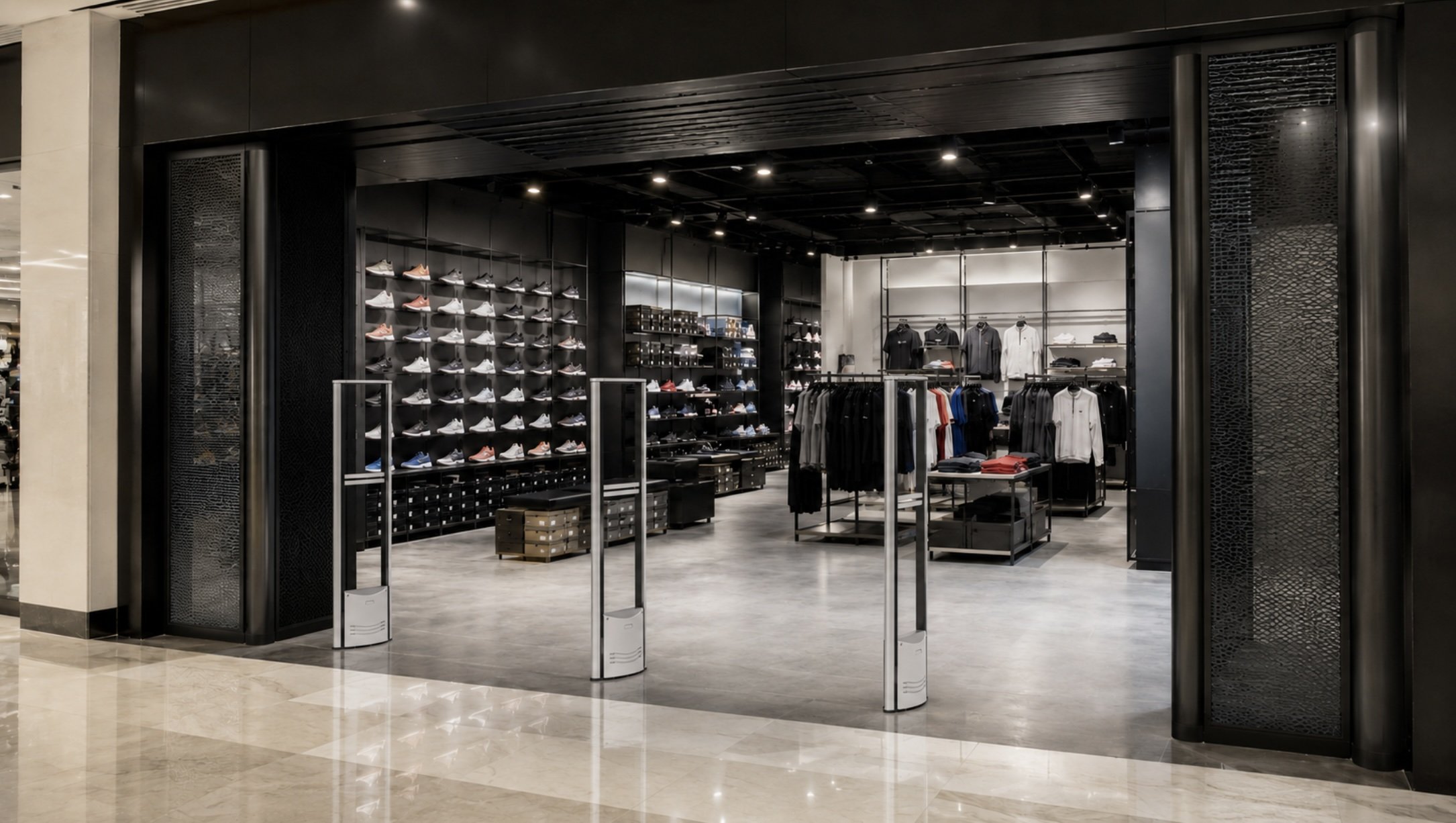
Flash Robs, Footwear Theft, and the Case for EAS Hard Tags
On Sunday July 19, eight people walked into a Dicks Sporting Goods on South Telegraph Road in Bloomfield Township, Michigan, pulled armfuls of Nike clothing off the racks, and ran for the door. Bloomfield Township police say the group, three women and five men, cleared 113 items worth about 10,800 dollars in the time it takes most shoppers to find their size. The department released the store video this week and asked the public to help identify the crew.
Police called it a flash rob, and the label matters. This was not a lone shoplifter concealing one item. It was a coordinated group using speed and numbers to strip a section of the floor before anyone could react. Nike is a favorite target for this kind of theft because the product moves. Athletic apparel and sneakers carry brand demand that does not care about size tags or receipts, they resell instantly on secondary marketplaces, and the margin for a fence is high. A rack of hoodies or a wall of popular sneakers is, to an organized crew, a shelf of cash.
Here is the honest part. No electronic article surveillance system is going to physically stop eight determined people from running out a door. Anyone who sells you EAS as a wall against a flash rob is not being straight with you. What EAS does is change the math on both ends of the theft, and against organized retail crime the math is the whole game.
Start with deterrence at the shelf. A visible hard tag on a garment tells a booster that this store tagged its merchandise, that the tag has to be defeated or removed before the item is worth anything on resale, and that the exit is going to sound. Crews that plan flash robs scout stores first. A floor where every high demand item carries a hard tag is a slower, louder, harder target than the store next door that left its Nike racks bare. Organized crime is a business, and it routes around friction.
Hard tags are the right tool here because they hold up. They deliver better detection rates than labels, they are far harder for a thief to pull off without the right detacher, and they are reusable, so tagging apparel is an operating decision rather than a recurring cost. For footwear the answer is a lanyard tag, which loops through a shoe so a single sneaker or a boxed pair cannot leave without triggering the pedestals. Displaying one shoe from a pair on the floor and keeping the mate in the back is an old trick that still works, and a lanyard tag on the display shoe backs it up.
The exit is where the second half of the math lives. Sporting goods stores and mall anchor entrances are wide, and that is exactly where an acousto magnetic system earns its place. Sensormatic AM runs at 58 kilohertz and covers wide openings well, with pedestal spacing that reaches up to eight feet on certain systems. That coverage matters when your entrance is a twenty foot span of glass doors and you cannot funnel every customer through a narrow lane. For the boxed goods, accessories, and smaller packaged items where a bulky hard tag does not fit, Checkpoint RF at 8.2 megahertz gives you a paper thin label that source tagging can hide inside a shoebox or on packaging. RFID now integrates with both AM and RF, so the same tags that trip the alarm can also feed inventory visibility, which is its own defense because you cannot protect what you cannot count.
None of this replaces staff protocol, and it should not. The guidance during a flash rob is to document and not to chase, because employee safety is worth more than any rack of merchandise. But a tagged floor turns a chaotic event into an investigable one. Goods that still carry live tags are harder to fence, easier to flag if they surface at a return counter, and the alarm event itself timestamps the incident for the police report and the video pull. EAS does not win the sprint out the door. It makes the store a worse business decision to hit, and it puts the aftermath to work in the retailer's favor.
The stores that get flash robbed twice are usually the ones that treated the first hit as bad luck instead of a scouting report. Athletic apparel and footwear are not going to fall off the organized retail crime target list, and the crew that hit Dicks in Bloomfield Township is running the same playbook in every metro in the country. The question for a retailer carrying that inventory is not whether the tools exist. It is whether the floor is tagged before the next crew walks in.
Retail Security Group Inc. provides professional EAS system installation, maintenance, and consultation across all 48 continental U.S. states. Whether you need a full new system, a tagging strategy review for apparel and footwear, or service on existing Checkpoint or Sensormatic equipment, we can help. Info@SecurityTagStore.com
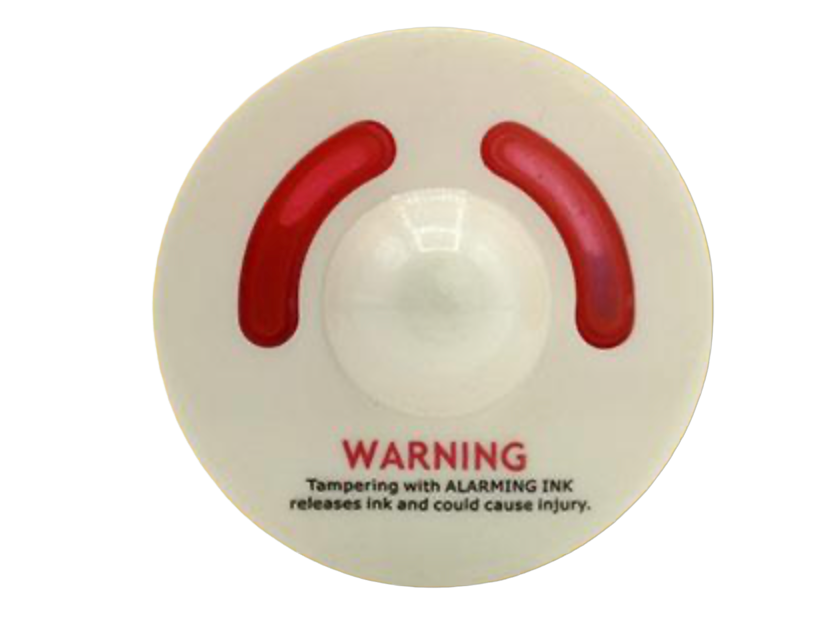
The TAG3003-A Hawkeye Ink Tag with Pin is an industry-standard benefit denial security tag designed to work seamlessly with all Sensormatic AM systems. Operating at a frequency of 58 KHz, this tag combines the traditional theft deterrent of AM technology with the added security of ink-based benefit denial. If tampered with, the tag is designed to release ink, rendering the garment unwearable and significantly reducing inventory loss due to shoplifting.
Hawkeye ink tags are trusted by retailers for their reliability and effectiveness in high-theft environments. This complete package includes 500 ink tags paired with 500 cone head pins, providing a robust solution for protecting valuable merchandise.
Key Features:
• Benefit Denial Security: Designed to release ink if tampered with, effectively preventing theft and reducing inventory loss.
• AM Technology: Operates on a 58 KHz frequency, compatible with all Sensormatic AM systems.
• Industry Standard: Widely used by retailers for reliable protection in high-theft areas.
• Complete Package: Comes in boxes of 500 ink tags with 500 cone head pins, offering comprehensive security.
• Effective Deterrent: Combines AM technology with ink-based protection for maximum security.
Quantity: Comes in boxes of 500 ink tags with 500 cone head pins.
Product Code: TAG3003-A Hawkeye Ink Tag - AM - NEW