

The U.S. and China may have agreed to a 90-day pause on their escalating trade war, but don’t mistake this as a return to normalcy. The temporary tariff relief, which cuts some rates from a staggering 145% down to 30%, still leaves importers facing historically high costs. Retailers are now bracing for the next wave of economic turbulence by doing what makes the most financial sense in a narrow window: stockpiling.
A Lower Tariff, But Still a Heavy Burden
The new agreement trims tariffs significantly compared to the recent peak. However, a 30% duty on imported goods from China remains extraordinarily steep by any historical standard. For businesses that have held off ordering inventory in hopes of a better deal, this 90-day truce offers a rare opportunity to move goods before another potential spike or breakdown in negotiations.
Retailers are already scrambling to place orders and book cargo space, rushing to import as much as possible before tariffs might climb again. The result is that warehouses are about to fill with unusually large inventories of goods, acquired at far higher prices than last year and in many cases even this quarter.
Inventory Just Got More Expensive and More Vulnerable
This surge in high-cost inventory means one thing: every unit on the shelf is now more valuable and more irreplaceable. For retailers, that changes the risk calculus entirely. Any loss, whether due to spoilage, returns, or increasingly, theft, has a greater financial impact than ever before.
Simply put, the cost of doing nothing about shoplifting just skyrocketed.
Retailers will not just be protecting profits. They will be guarding massive capital outlays. This is not speculative spending. It is survival spending. In a supply chain still reeling from post-pandemic disruptions and inflation, the stakes are now higher than at any point in recent memory.
A Wake-Up Call for Retail Security
Loss prevention is no longer an optional investment. It is a core business necessity. Electronic Article Surveillance (EAS) systems, security tags, detachers, and professional installation services are no longer just for big-box stores or luxury boutiques. Every retailer carrying high-tariff, high-value merchandise should be reassessing their security posture.
That means:
Hardening entrances and exits with AM or RF-based EAS pedestals
Implementing security tagging on all high-risk SKUs
Training staff on theft deterrence and alarm response
Auditing store layouts to eliminate blind spots and improve visibility
The reality is clear. With margins under pressure and inventories inflated, retailers cannot afford to lose even a small fraction of stock to theft. In this new environment, every stolen item cuts deeper.
The Window Is Short and So Is the Fuse
This 90-day reprieve could evaporate with little warning. If talks between the U.S. and China falter, tariffs could surge back overnight, making today’s already expensive inventory even harder to replace. Retailers that fail to act now, both on purchasing and security, risk being caught flat-footed in a far more punishing climate.
Retailers are entering a volatile economic phase where high-cost inventory meets heightened risk. The goods now being imported are not just expensive. They are strategic assets. In an era of organized retail crime and rising theft, every piece of merchandise must be protected accordingly.
The tariff battle may be on pause, but the fight for your inventory is just beginning.
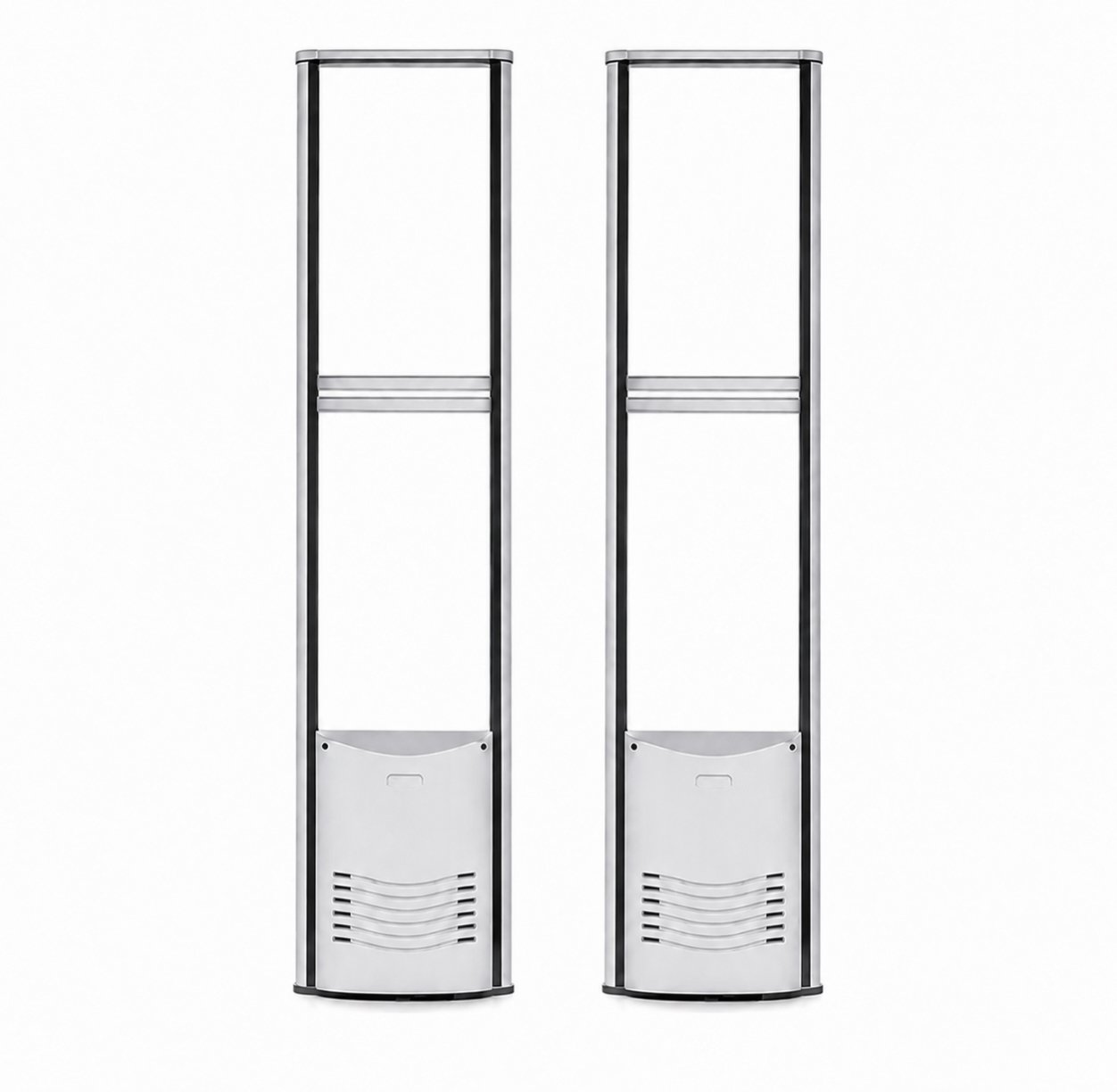
Cover large entryways with the Century Classic Primary and Secondary Transceiver system, a new AM 58KHz dual pedestal package that protects up to 12 feet total, 6 feet between the units plus 3 feet on each outer side. Built on the latest DSP technology and advanced signal filtering, it identifies label signals precisely while screening out environmental noise for minimal false alarms. The system works with all AM 58KHz security tags and is designed for professional installation.
Key Features
AM 58KHz technology: Works with all AM 58KHz security tags.
Wide coverage: Up to 12 feet, 6 feet between pedestals plus 3 feet on each outer side.
Latest DSP processing: Precise identification of label signals with noise reduction for maximum detection efficiency.
Interference resistance: Advanced filtering algorithms minimize false alarms and keep coverage consistent.
New condition: Sleek, durable design that blends into any retail space.
Professional installation required: Optimized for expert setup and precise operation.
Quantity: 2 new pedestals (1 primary, 1 secondary) with power supply
Dimensions: 61 × 15.5 × 5 in (per pedestal)
Product Code: C2001-2 Classic Primary and Secondary Transceivers, AM 58KHz, New