
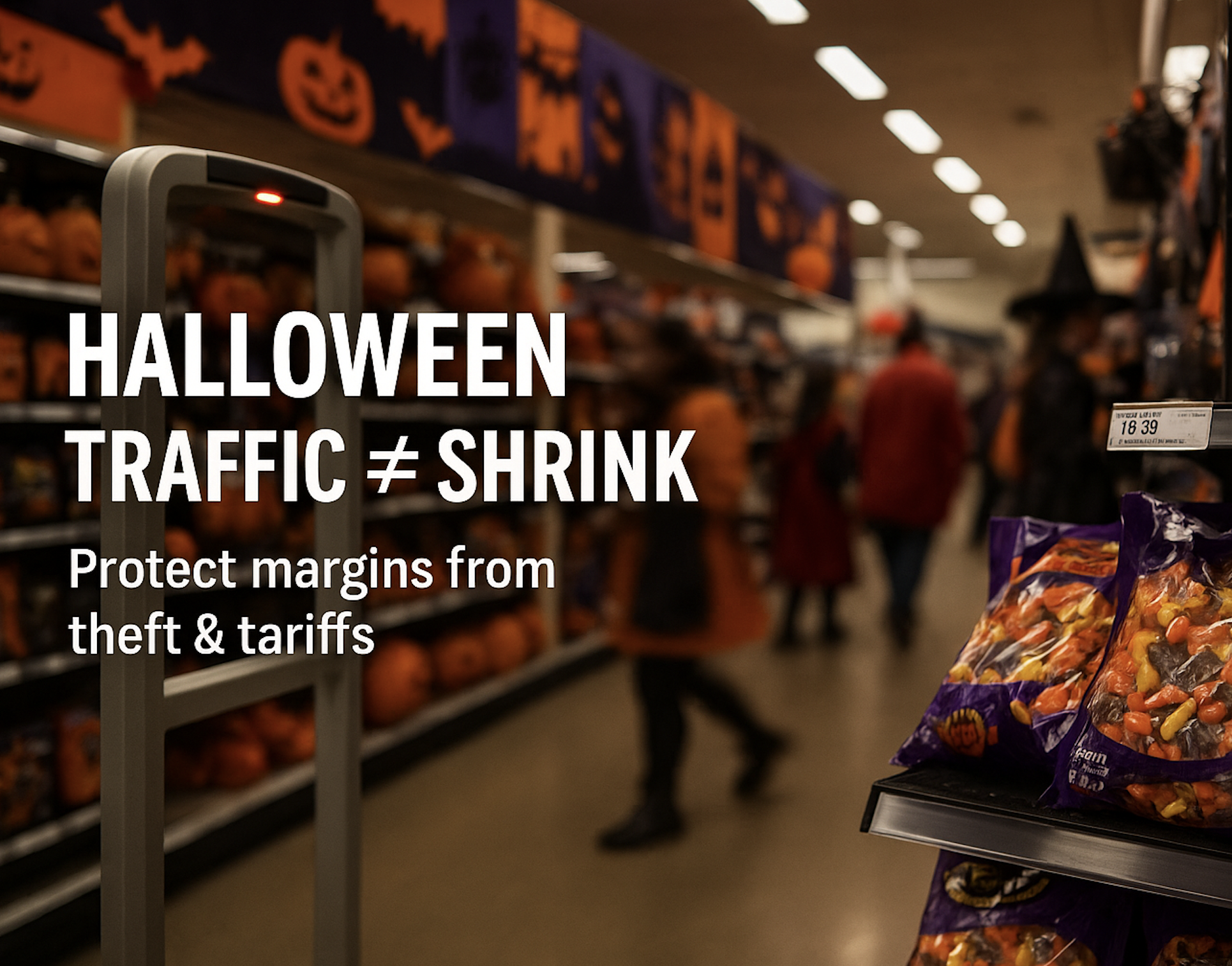
If you run brick and mortar retail, October is a double edged sword. Traffic spikes (great), but so do theft attempts (not great). And this year, the cost of Halloween inventory is higher than usual thanks to tariffs and commodity pressures. Here’s what to expect, and what to do, before the spooky season hits full stride.
Why shoplifting spikes in October
Crowds + costumes = cover. Busier aisles, darker evenings, and face coverings make offenders feel anonymous and embolden grab and go behavior. Industry groups routinely warn that retail crime rises as the holiday period kicks off, with theft often spiking into November and December.
High-risk, high-velocity categories. Candy, cosmetics, small electronics (batteries, earbuds), decorative lighting, costumes/accessories, and razor/blade refills are classic “easy to conceal, quick to resell” items. Those endcaps near the front doors? Thieves know them well.
ORC pressure hasn’t let up. Retailers reported dramatic increases in shoplifting incidents and losses versus pre pandemic baselines, underscoring why seasonal readiness matters.
Tariffs are raising the landed cost of Halloween goods
Most Halloween décor, novelty items, and many costumes are imported, and a very large share comes from China, where Section 301 duties still apply to a wide range of consumer goods. Depending on the product list, extra tariffs of ~7.5% to 25% stack on top of your regular duty rate and the 30% baseline. That pushes up your landed cost and, if left unmanaged, compresses margin right when promotions peak.
Media estimates suggest nearly 90% of Halloween/Christmas novelties sold in the U.S. are imported from China, magnifying tariff exposure for seasonal categories.
Retailers also front loaded assortments earlier this year to hedge against tariff uncertainty and capture demand, a sign of how trade policy now shapes seasonal timing.
Don’t forget candy inflation
Even outside tariffs, ingredient markets matter: cocoa costs remain historically elevated, and major chocolate makers have announced price actions to offset input spikes. That pressure may show up via list price moves or shrinkflation in seasonal packs.
Demand is there, but so is risk
The NRF projects a record ~$13.1B in Halloween spending this year, including billions on candy alone. Great news for traffic; risky news for shrink. Align your loss prevention plan to the demand curve.
A practical, pre-Halloween loss-prevention playbook
1) Secure the “fast lift” SKUs
Tag high-risk items (candy variety bags, cosmetics, batteries, small electronics, premium décor) so protection follows the product from shelf to exit.
Use AM 58 kHz or RF 8.2 MHz hard tags and labels appropriate to packaging (hard tags for costumes, lanyard or box-wraps for bulky décor, adhesive labels for cartons).
Peg security: lock high shrink items on pegs with secure peg stop hooks to prevent “sweep” theft.
2) Fix the floor plan
Pull hot SKUs away from vestibules; avoid placing candy towers within sightline of exits.
Keep a clear line of sight from associates to seasonal displays; add convex mirrors where needed.
3) Train seasonal staff for October reality
10 minute daily huddles on concealment behaviors, common ORC tactics (booster bags, team handoffs), and friendly but firm engagement (“May I get you a basket?”).
POS discipline: detachers stay anchored, never unattended; verify tag removal to avoid false alarms.
4) Use your technology stack
Calibrated EAS pedestals at key entrances/exits with tuned sensitivity to reduce nuisance alarms and keep deterrence high.
CCTV analytics: dwell/time on shelf alerts for high risk bays; event bookmarks for rapid case building.
Exception based reporting: flag unusual voids/returns/promotions on seasonal SKUs.
5) Tighten returns & price overrides
Shorten return windows on seasonal costumes/decor; require tags attached and receipt present.
Limit manual price overrides on Halloween UPCs; require manager approval after a set threshold.
Margin defense under tariffs
Even if you can’t control duty rates, you can engineer margin back:
Assortment mix: balance tariff heavy novelty/décor with domestic/NAFTA sourced candy and seasonal consumables.
Pack engineering: right size seasonal multi packs to hit price points without over discounting.
Vendor collaboration: push for source tagging at origin and shared funding on protection (it reduces damage/returns and increases on shelf availability).
Promotional discipline: stage markdowns after peak weekend (theft risk is highest when stores are busiest).
The bottom line
Halloween 2025 brings record spending, and elevated theft risk , while tariffs and input costs squeeze margins on the very items shoppers want most. A smart mix of EAS protection, staff training, floor set tweaks, and tight return controls can turn October from a shrink nightmare into a profitable treat.
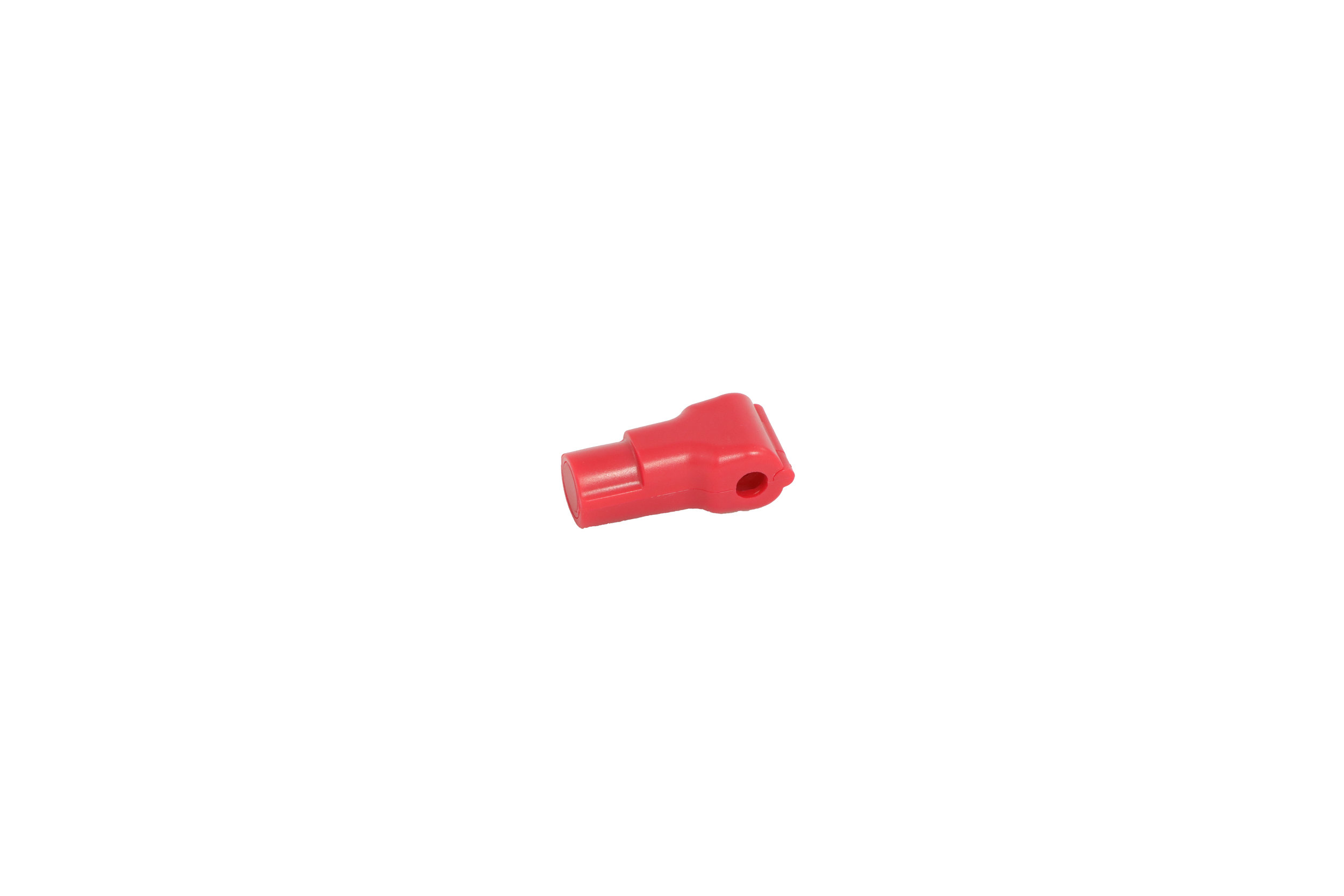
Keep high value blister packs where they belong with the red Peg Hook Lock. It secures merchandise on standard peg hooks so blister packs stay on the display until a sales associate assists the customer, making it a simple, effective deterrent for razor blades and other high cost items. Products remain fully visible and easy for staff to access.
Key Features
Locks the peg hook: Blister packs stay on display until a sales associate assists
Ideal for high value items: Razor blades and other frequently targeted merchandise
Standard peg hook fit: Works with the peg hooks already on your fixtures
Red finish: Highly visible deterrent on the display
Simple operation: Keeps products secure yet accessible for staff
Quantity: 100 locks per box
Product Code: TAG2321 Peg Hook Lock Red