
Are Tariff Refunds Coming Next?
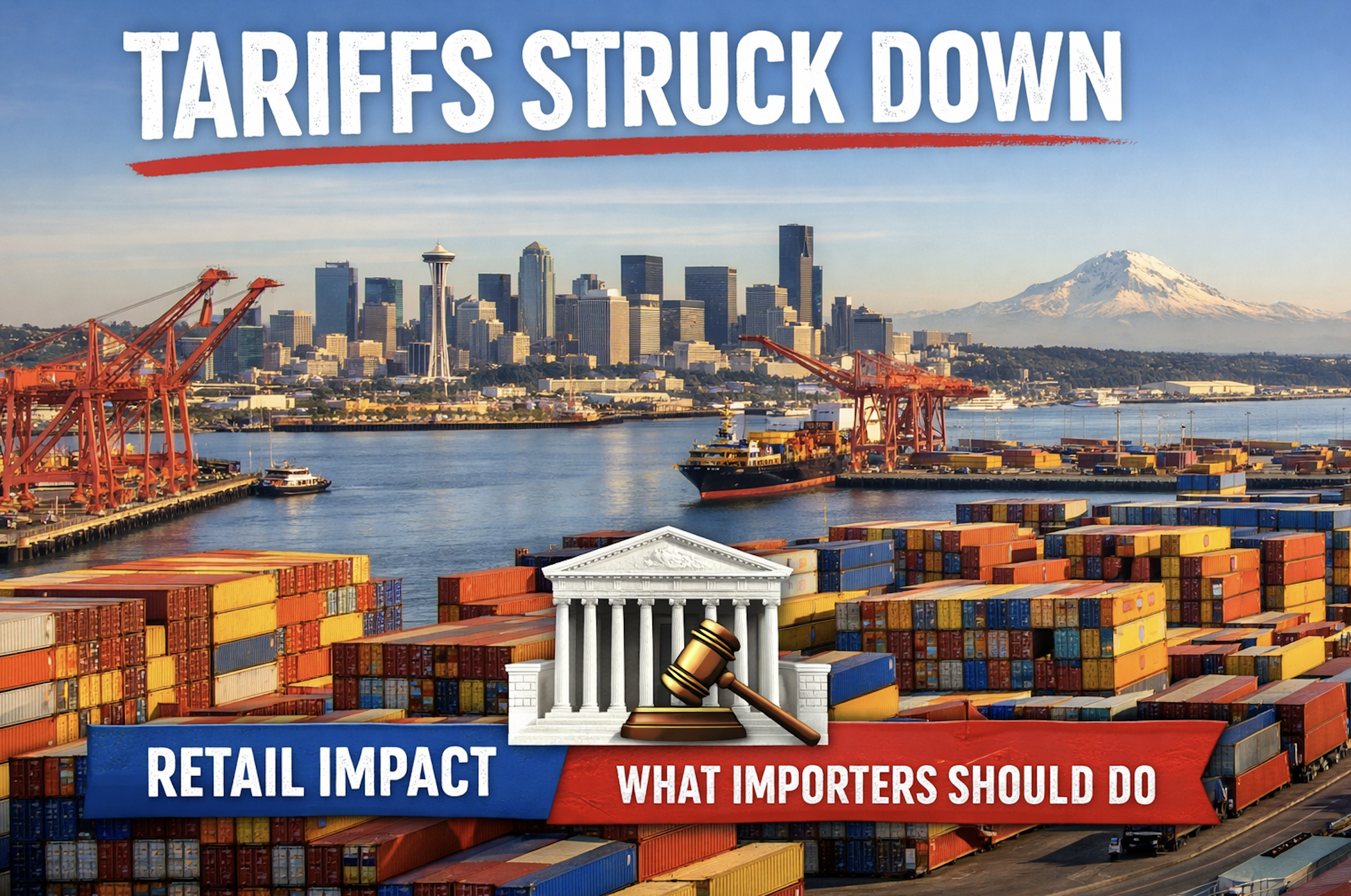
On Friday, February 20, 2026, the U.S. Supreme Court delivered a decision with immediate ripple effects across retail pricing, sourcing, and cash flow: the president cannot use the International Emergency Economic Powers Act (IEEPA) of 1977 to impose sweeping, across the board tariffs.
This isn’t a niche legal technicality. It’s a major constraint on the “instant, unlimited” tariff tool that had become central to trade policy, and it creates both opportunity (refunds, cost relief) and fresh uncertainty (replacement tariffs, new rules, new timelines) for retailers and importers.
What the Court Actually Said (and why it’s huge)
IEEPA is an emergency statute historically used for sanctions and embargoes. The Trump administration argued that IEEPA’s authority to “regulate… importation” could include imposing tariffs. The Supreme Court rejected that reading, emphasizing that IEEPA contains no reference to tariffs or duties, and that “regulate” can’t be stretched into a blank check for taxation.
Why that matters:
Tariffs are taxes, and under the Constitution, taxing power lives with Congress, unless Congress clearly delegates it.
The decision reins in executive authority: no more broad, emergency, instantly deployable global tariffs under IEEPA.
Why Retailers Should Care: This Hits Prices, Promotions, and Planning
1) Cost pressure could ease, but not overnight
If the IEEPA tariffs were baked into landed costs, this ruling can reduce future cost burdens. But retailers shouldn’t assume an immediate return to “pre tariff normal” because:
supply contracts and inventory already in the pipeline may still carry tariff inflated costs, and
the administration has signaled it will pursue other legal pathways to reimpose tariffs.
Retail reality: Merchants may get breathing room, but it’s likely messy and uneven by category and timing.
2) Margin volatility becomes the new normal (again)
Tariffs were often treated like an unavoidable “tax line item.” Now, they’re a moving target:
a portion may fall away,
replacement tariffs may return with different scope, and
timing could swing based on investigations and administrative procedures.
That means pricing teams and promo calendars may need faster adjustments than usual, especially for tariff sensitive categories (apparel, home goods, toys, wine/spirits, small electronics accessories, etc.).
3) Competitive whiplash: winners and losers by inventory position
Retailers sitting on high cost inventory may be undercut by competitors who reorder later at lower cost (if costs actually fall).
Retailers with strong private label sourcing flexibility can pivot faster than those locked into long lead times.
The Importer Angle: Refunds Could Be Enormous, and Cash Flow Could Change
Reporting indicates the ruling could put well over $175 billion in tariff revenue at risk (refund exposure estimates vary).
If you import, this is potentially a balance sheet event:
refunds can mean real cash returning, but only if you protect your rights and follow procedure;
documentation and deadlines will matter; and
“refunds” may become a long, contested process rather than a simple check in the mail.
What Importers Should Do Now (practical checklist)
I’m not your attorney, but here’s the operational playbook most trade teams are moving toward right now:
1) Quantify your exposure (today)
Build a simple internal snapshot:
Total duties paid under IEEPA tariffs by month
Top SKUs / HTS codes affected
Countries of origin and vendors
Which entries are still unliquidated vs. already liquidated (this affects options)
Why: refund strategy is much easier when you know where the dollars are.
2) Protect your refund rights before entries “lock”
Import processes run on timelines. Once entries liquidate, refund options can narrow and deadlines apply. Reuters has reported the 314-day correction window issue and looming timing pressure for some entries.
Action:
talk with your customs broker about entry status, liquidation dates, and what “protective” filings make sense for your profile (bigger importers have already been doing this).
3) Get your paperwork tight (you’ll need it)
Create a “refund-ready” folder per importer of record:
Entry summaries (CBP 7501), broker statements, duty payment confirmations
SKU/HTS classification support
Commercial invoices / packing lists / proof of origin
Any communications about tariff surcharges passed through vendors
This is boring, until it’s the difference between recovering money and missing it.
4) Coordinate with finance on how refunds will be treated
Refunds can affect:
COGS and inventory valuation
accruals and reserves
customer pricing decisions already made
vendor negotiations (did you eat it, share it, or pass it through?)
Treat it like a real project: owner, tracker, weekly status.
5) Don’t assume tariffs are “gone” plan for replacement tools
Analysts have flagged alternative authorities the administration may use, such as:
Section 232 (national security; typically sector based)
Section 301 (unfair trade; investigation driven)
Section 122 of the Trade Act of 1974 (temporary tariffs up to 15% for limited duration)
These may be narrower or slower than IEEPA, but they can still move markets.
What to do: model two scenarios for your top categories:
“Refunds + partial tariff rollback”
“Refunds + replacement tariffs return in a different form”
What retailers should do next (even if you don’t import directly)
If you’re a retailer buying from domestic distributors or brands, you’re still exposed because tariffs flow into wholesale pricing.
Best next steps:
Ask vendors for tariff line item transparency (what portion of pricing is tariff-derived?).
Renegotiate “tariff surcharge” clauses tied to IEEPA tariffs (many contracts have them).
Build a price change triage list: the 50–200 SKUs most tariff sensitive.
Coordinate merchant + finance + legal: if costs drop, decide in advance whether you’ll reprice, promote, or take margin.
The bottom line
This ruling is important because it doesn’t just tweak tariff rates, it removes a powerful emergency lever for instant, global tariffs and pushes tariff authority back toward clearer congressional authorization.
For retailers, it means possible cost relief, but also renewed uncertainty and likely policy whiplash. For importers, it may be a rare chance to recover significant cash, if you move quickly, document everything, and protect your procedural rights.
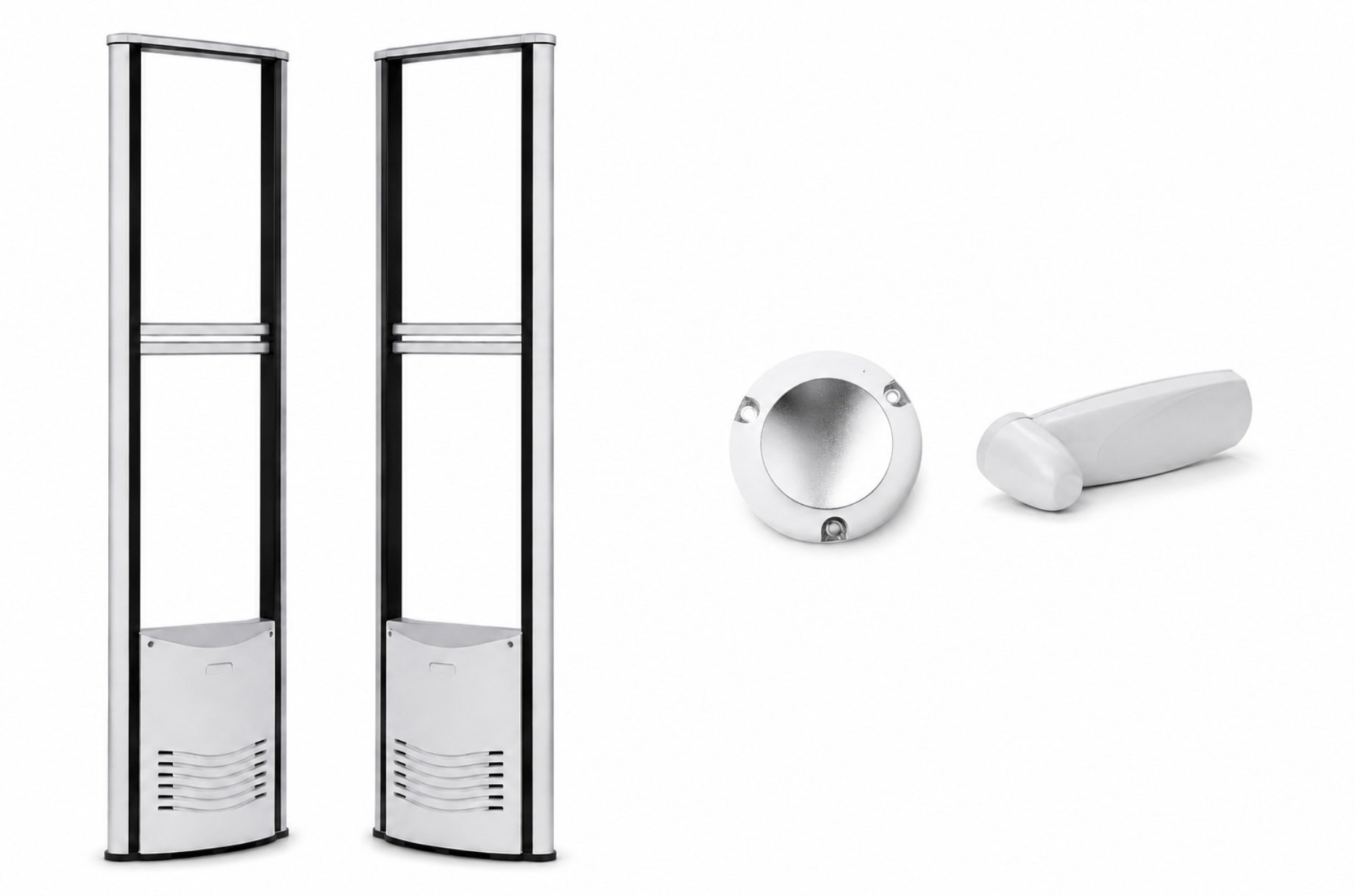
Protect your apparel floor with the High Detection Clothing Security Tag Package, a complete new AM 58KHz system built around the Century Classic Primary and Secondary Transceivers with advanced DSP technology. The dual pedestal layout covers up to 12 feet of entryway, 6 feet between the pedestals plus 3 feet on each outer side, and ships with 1,000 flat pencil hard tags with pins and a DET1006 bench detacher so you can start tagging the moment installation is finished. Professional installation is included across most of the continental U.S.
Key Features
AM 58KHz technology: Works with all AM 58KHz security tags.
High detection accuracy: Advanced DSP processing identifies tag signals while filtering environmental noise for minimal false alarms.
Wide 12 foot coverage: Dual pedestal layout secures large clothing store entrances.
1,000 flat pencil tags with pins: TAG2064-WP grey AM 58KHz hard tags with grooved pins for fast, secure attachment to apparel.
Bench detacher included: DET1006 high strength counter detacher for quick, quiet checkout.
Professional installation included: Covered in most of the continental U.S., with exclusions for remote or difficult to reach locations.
Quantity: System package: 2 pedestals (Classic Primary and Secondary Transceivers) with power supply, 1,000 flat pencil tags with pins (TAG2064-WP), 1 DET1006 bench detacher, professional installation
Product Code: C2001-2STP High Detection Clothing Security Tag Package, AM 58KHz, New