
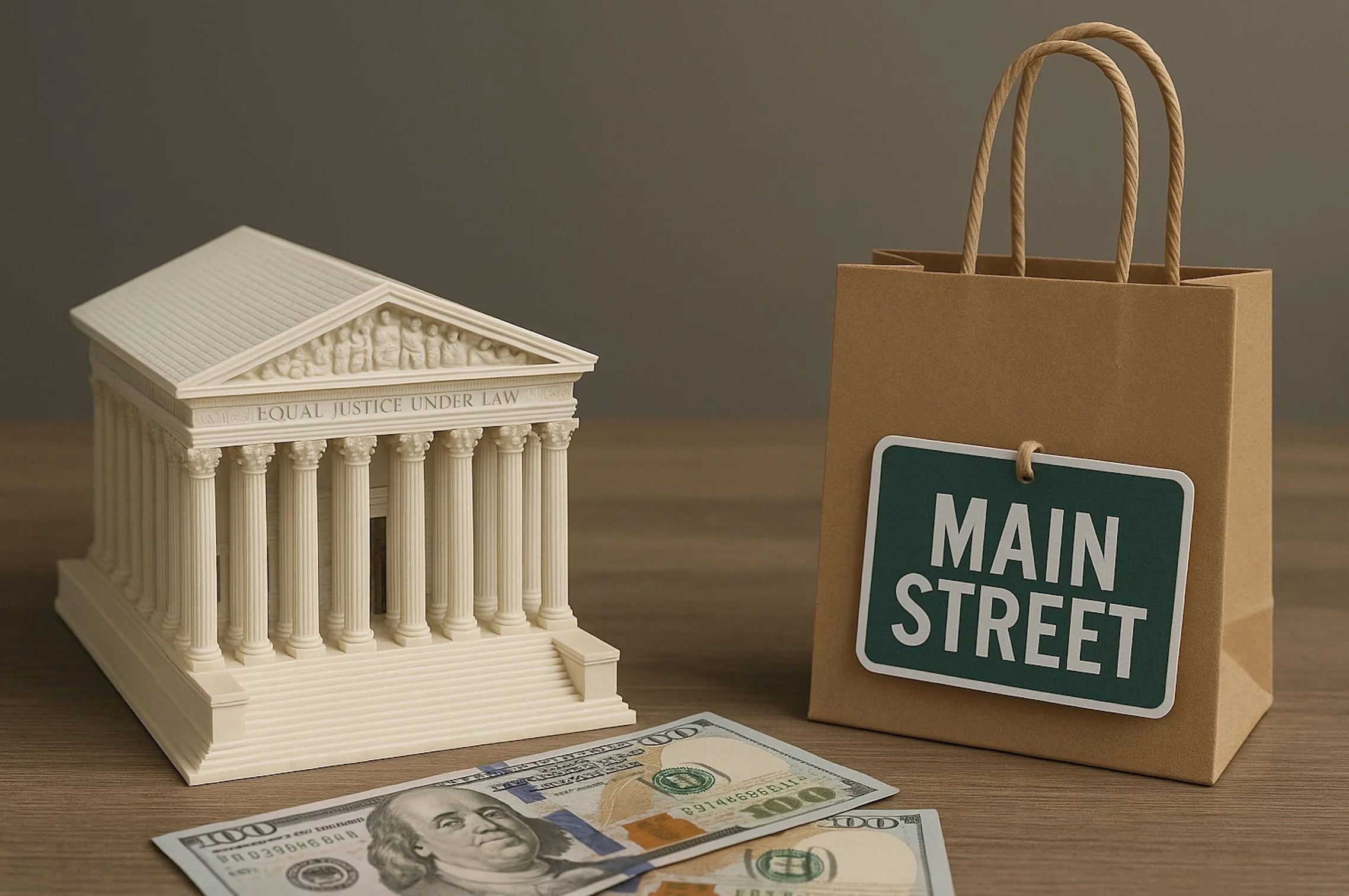
Tariffs hit American companies….
For the past few years, one part of the U.S. economy has been booming while much of the rest has felt stuck: artificial intelligence. AI spending is driving an outsized share of GDP growth and stock market gains, while many non tech sectors, from manufacturing to retail, are slogging through higher costs, weaker margins, and flat demand.
Now imagine this: the Supreme Court strikes down some of the recent tariffs and orders refunds on duties that importers have already paid.
On paper, that sounds like an obscure legal and trade story. In practice, it could be one of the biggest “stealth stimulus” events for the real economy, especially for small and mid sized businesses, without Congress passing a single new spending bill.
What Tariffs Have Been Doing to the Real Economy
A tariff is just a tax on imports, paid by the U.S. business receiving the goods at the port of entry. Broad based tariffs don’t mainly hit foreign governments, they hit American companies and, indirectly, American consumers. The U.S. Chamber of Commerce has been blunt: tariffs raise costs, disrupt supply chains, and are especially hard on small businesses that don’t have the financial cushion or bargaining power to absorb shocks.
Recent analysis of the 2025 tariff wave found:
Tariffs in 2025 alone are estimated to raise the overall price level by roughly 2.3%, the equivalent of about $3,800 per household in lost purchasing power.
Apparel and textiles are hit especially hard, with prices projected to jump around 17% under the full tariff package.
Long run projections suggest the new tariffs could cut GDP by about 6% and wages by about 5%, with a typical middle income household facing roughly $22,000 in lifetime losses.
Financial firms tell a similar story: U.S. businesses are absorbing more than half of the tariff costs, with consumers picking up most of the rest and only a sliver falling on foreign exporters.
For many big corporates, tariffs are painful but survivable. For small import heavy firms, retailers, specialty manufacturers, distributors, they’re existential.
Why the Supreme Court Is Suddenly in the Middle of This
The key legal fight now is over the use of the International Emergency Economic Powers Act (IEEPA) to impose certain “reciprocal” and fentanyl related tariffs. Lower courts have already cast serious doubt on whether IEEPA actually gives the authority to impose tariffs this way.
The Supreme Court has been asked to decide whether those tariffs are lawful at all. Legal analysts warn that if the Court strikes them down, the next big question is what happens to all the duties already collected:
Some experts expect a wave of refund claims and lawsuits, as importers try to claw back years of overpaid tariffs.
Trade attorneys are already advising companies to document entries, file protective protests, and prepare for a “complex, time-sensitive, and contentious” refund process.
That sounds technical and dry, but if refunds really materialize, the impact on Main Street could be huge.
How Tariff Refunds Would Hit Like a Targeted Stimulus
Think of tariff refunds as retroactive tax cuts, but only for businesses that actually import and sell real goods. The money doesn’t go into abstract share buybacks or financial engineering. It goes straight into the working guts of the economy.
For retailers and importers, in particular, refunds could mean:
1. Immediate Cash Relief for Thin Margin Businesses
Tariffs have been especially brutal for:
Independent apparel and footwear retailers
Import heavy home goods and décor shops
Niche distributors and specialty manufacturers that rely on specific overseas components
These firms live and die on margins of 3–8%. A tariff shock of 10–25% (or higher for certain metals and targeted products) wipes out profitability overnight. Some analyses of steel and aluminum tariffs show cost increases on the order of tens of billions of dollars annually, much of which cascades down to downstream industries in the form of higher input prices and lower profits.
A meaningful refund isn’t “found money” for these companies, it’s back rent, payroll, and inventory funding that they’ve been effectively fronting to the government. For many, it would literally be the difference between shuttering and surviving.
2. Debt Decompression and Fewer Closures
To stay alive under tariffs, small businesses have:
Drawn down lines of credit
Taken on higher interest debt
Put owners’ personal savings (and home equity) on the line
Refinancing that position with a lump sum refund would:
Pay off expensive short term debt
Restore working capital
Allow owners to start investing again, marketing, new locations, better e-commerce, higher wages
If even a small percentage of tariff stressed firms avoid closure because of refunds, you’re talking about thousands of saved businesses and tens of thousands of jobs, concentrated in the very sectors that have not benefited from the AI boom.
3. Price Pressure Relief for Consumers
Unwinding tariffs doesn’t automatically slash prices overnight, but it changes the math:
New orders become cheaper to import.
Retailers have more room to discount without bleeding red ink.
Competitive pressure from non tariffed suppliers (or from foreign markets if tariffs are reduced broadly) starts to push markups down.
Given that 2025 tariffs alone are estimated to push prices up several percentage points, even partially reversing that through refunds and future cuts would be a rare piece of disinflationary good news that doesn’t rely on the Federal Reserve hammering demand.
The Bigger Picture: An Economy Leaning Too Hard on AI
Right now, a lot of headline economic strength is coming from AI related investment and profits. Analysts estimate that AI spending accounts for a huge share of 2025 GDP growth and stock market gains, while non AI sectors, from small retail to traditional manufacturing, are lagging.
That imbalance is risky:
It deepens regional inequality (AI clusters vs. everywhere else).
It makes the economy more vulnerable if the AI boom slows or turns out to be partially a bubble.
It feeds the perception that “the economy is great for Wall Street and Silicon Valley, but lousy for everyone else.”
Tariff refunds would specifically boost the sectors that are struggling:
Brick and mortar retailers in second tier cities and suburbs
Import dependent wholesalers and distributors
Non tech manufacturers squeezed by elevated input costs
In other words, it’s one of the few policy shifts that would rebalance some of the gains away from an AI centric boom and toward a broader, more tangible Main Street recovery.
The Political Irony: Unpopular Policy, Popular Outcome
Here’s the twist:
The current administration has publicly embraced tariffs as a tool, on China, on specific sectors, and as leverage in broader negotiations.
A Supreme Court decision forcing refunds would cut against that stated policy, effectively unwinding a major part of its trade strategy.
And yet, the outcome could be politically popular:
Small business owners suddenly get real relief instead of PowerPoint promises.
Retail prices stabilize or even tick lower in categories where families are feeling the pinch: clothing, home goods, basic consumer products.
Regional economies that have felt ignored compared to AI hubs start to feel some daylight.
Most voters won’t follow the legalese of the Supreme Court case,, or debates over IEEPA scope. What they will notice is:
“My costs dropped.”
“Our store stayed open.”
“We finally rehired.”
“Groceries and kids’ clothes aren’t jumping in price every quarter.”
Ironically, a Court mandated tariff rollback and refund program, something the administration did not campaign on and may fight in court, could do more to improve its economic reputation than a dozen press conferences about AI innovation or industrial policy grants.
The Caveats: It Won’t Be Simple
Even in the “refunds happen” scenario, there are real constraints:
Not all tariffs are on the table. The Supreme Court case focuses on specific IEEPA-based tariffs, not every Section 232 or Section 301 duty out there.
The process will be messy. Companies will need to file claims, track entries, and possibly litigate disputes over eligibility and timing. Smaller firms may need help from trade counsel just to navigate the system.
Timing matters. Refunds arriving too slowly could reach businesses after the damage is already done.
But even acknowledging all of that, the scale of potential relief is enormous. If 2025 tariffs are adding tens of billions of dollars in extra costs per year, even partial refunds and rollbacks would inject a comparable amount back into the private sector, without new deficits or headline tax cuts.
Bottom Line
If the Supreme Court ultimately orders refunds of the IEEPA tariffs, it won’t just be a technical trade law footnote. It would function as a massive, targeted tax rebate for the real economy at a time when:
Small and mid sized businesses are squeezed by higher costs and interest rates.
Non AI sectors are stagnating while the AI boom grabs all the headlines.
Consumers are exhausted by years of price hikes.
Legally, it might be a setback for the administration’s preferred trade tools. Economically and politically, it could be one of the best things that happens to them, because it would finally deliver something the AI boom hasn’t: visible, broad based relief for Main Street.
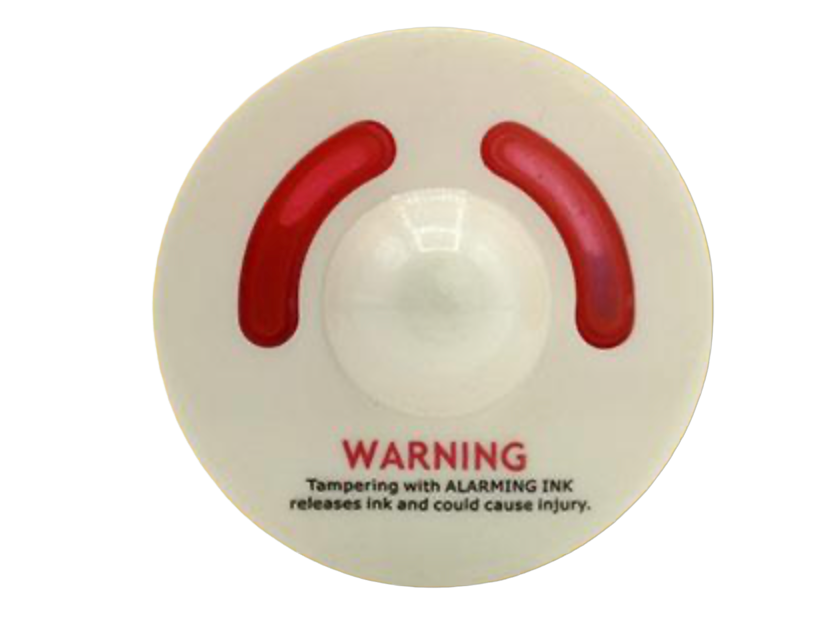
Deter shoplifting before it starts with the Hawkeye ink tag, an industry standard benefit denial tag sold new with pins included. Built on 58KHz AM technology, it works with all Sensormatic AM detection systems. If tampered with, the tag may release ink that can render a garment unwearable, which greatly reduces inventory loss related to shoplifting.
Key Features
AM technology: 58KHz frequency works with all Sensormatic AM systems.
Benefit denial: May release ink if tampered with, rendering garments unwearable and deterring theft.
Pins included: Every box ships with matching cone head pins.
Condition: Brand new stock.
Bulk pack: 500 tags per box for high volume tagging.
Quantity: Sold in boxes of 500 ink tags with 500 cone head pins included.
Product Code: TAG3003-AG Hawkeye Ink Tag, AM, New