

Shoppers are being squeezed…
Black Friday 2025 was a win for topline sales and a loss for the shopper. And whenever the math stops working for consumers, theft risk usually follows.
Using the latest Black Friday data, you can make a pretty clear case that shoplifting pressure is likely to increase going into 2026, even if overall sales look healthy on paper.
1. The consumer paid more and got less
On the surface, Black Friday 2025 looked great although different estimates have come in:
U.S. e-commerce sales hit $11.8 billion, up 9.1% year over year, according to Adobe Analytics.
Salesforce estimates U.S. online Black Friday sales at $18 billion, up 3% year over year.
But dig one layer deeper and the picture flips:
Average selling prices (ASPs) rose ~7% vs 2024.
Online order volume fell 1%.
Units per transaction dropped 2%.
Average online discount rate stayed flat at ~28%, the same as 2024.
Translation:
Shoppers spent more money but walked away with fewer items, and the advertised “% OFF” looked the same as last year even though the end price was higher.
Example:
2024: $100 list price – 28% off → $72
2025: list price up 7% to $107 – 28% off → ~$77
Same promo sign, about 7% more out of pocket.
When consumers feel like they “did Black Friday right” and still end up with thinner baskets and higher bills, you’re building frustration and a sense that the game is rigged. That’s exactly the kind of environment where rationalizations for theft (“They’re overcharging anyway”) start to harden.
2. Flat discounts + higher prices = perfect storm for perceived unfairness
Retail Dive’s breakdown makes it clear: 2025 wasn’t a huge step up in deal quality. It was the same promotional playbook stretched over more expensive merchandise.
Key points:
Discounts were not richer than 2024. Many specialty apparel retailers simply repeated last year’s promos, even as base prices rose.
Category details:
Electronics: peak discount 29% vs 30.1% in 2024, slightly worse.
TVs: basically flat (24.3% vs 24.2%).
Furniture: flat at 19%.
Toys: slightly better (30% vs 28%) but still sitting on higher base prices.
So to the shopper:
Marketing story: “Same amazing deals as last year!”
Reality at the register: “Why is my cart smaller and my total higher?”
That gap between message and lived experience is dangerous. It feeds:
Erosion of trust – “these sales are fake.”
Moral licensing – “if they’re playing games, I don’t feel bad getting something back.”
Boundary pushing behavior – “forgetting” items at self-checkout, ticket switching, wardrobing, etc.
Not everyone acts on those feelings, but pressure plus resentment is exactly what pushes the margin cases of the “gray-area” customers into outright theft.
3. BNPL and the 2026 “hangover”
The data shows consumers are already stretching to afford 2025 prices:
Buy now, pay later (BNPL) usage on Black Friday was up 8.9% YoY, driving $747.5 million in online spend.
Retailers love the incremental conversion, but from a risk perspective:
More shoppers are leveraging short term credit to keep spending levels up.
Any missed payments turn a “deal” into a very expensive purchase via late fees and interest.
That pain doesn’t hit in November, it hits months later, right when budgets are already tight.
What does that have to do with shoplifting?
A consumer who feels “behind” on bills and deeply overextended is more likely to see merchandise as the only flexible variable: if they can’t get more income and can’t shrink fixed costs, some will decide to cut corners on how they acquire goods.
As the 2025 BNPL surge rolls into 2026, we should reasonably expect heightened financial stress in exactly the segments most sensitive to prices . The same segments already feeling burned by higher ASPs and flat discounts.
That’s a recipe for more opportunistic theft, not less.
4. A K shaped Black Friday: another warning sign
Multiple analyses of Black Friday 2025 point to a K shaped pattern:
Higher income households drove strength in luxury categories, where spending remained strong.
Average and lower income shoppers pulled back on volume, affected by inflation and tariffs pushing up prices on discretionary goods.
So you have:
One group for whom prices are an annoyance but manageable.
Another group for whom prices are hitting the “can’t keep up” threshold.
It’s the second group, the stressed, price-sensitive consumer, that’s most relevant to shrink:
They still want the same brands, tech, toys, and apparel they see all around them.
Their real purchasing power is slipping, especially when rent, food, and utilities already take more of the paycheck.
Social media and influencer culture normalize consumption expectations that many can’t meet legitimately.
When aspiration remains high but legitimate access drops, theft and fraud are the main “pressure valves.” That doesn’t mean everyone starts stealing, but it does mean the pool of people who might enlarges.
5. The role of AI, store traffic, and self-checkout in the risk mix
Black Friday 2025 was also shaped by tech and behavior shifts:
AI traffic to U.S. retail websites grew 805% vs 2024; AI driven or AI influenced purchases accounted for billions in online sales.
In-store traffic showed mixed signals: some data showed modest declines (RetailNext saw traffic down 3.6%), others saw a slight increase depending on sector.
Why does this matter for shoplifting?
AI and “perfect price discovery”
AI tools and agents make it easier than ever for consumers to know exactly what something should cost across retailers. When they see prices that look inflated relative to competitors or previous years, they feel overcharged with proof in hand. That can supercharge the “they’re ripping me off” narrative that sits behind some theft rationalizations.Self checkout and sparse staffing
Retailers are still leaning on self checkout and thinner labor models to manage costs, especially as margins are squeezed by tariffs and higher wholesale prices. Fewer eyes + more self service = more opportunity for “soft” shoplifting (missed scans, mis-scans, concealed items).Promotional sameness and prize driven foot traffic
With prices converging and discounts flat, a few retailers resorted to giveaways (Target tote bags, Lowe’s buckets, etc.) to drive store visits.
When the only real difference is freebies, and price/value looks the same everywhere, it reinforces the idea that merchandise itself is just a prize in a game, not something customers feel obliged to treat as “property” in the traditional sense.
Put all of that together, and you have stores that:
Feel less supervised.
Host more frustrated, price sensitive shoppers.
Operate in an environment where value feels increasingly abstract.
That is fertile ground for shrink.
6. So will shoplifting increase? The rational case says “yes”
You never get a guarantee, but based on the 2025 Black Friday data, it’s reasonable to expect upward pressure on shoplifting and fraud in 2026 because:
Real deal value has eroded.
Prices are up ~7%, discounts are flat, baskets are smaller. Consumers feel like the “loser” in the transaction.Economic stress is building, not easing.
Inflation, tariffs, end of some federal supports, and a K shaped economy leave a growing slice of shoppers squeezed hardest on discretionary goods.BNPL and credit use are rising.
Short term financing is cushioning today’s prices at the cost of tomorrow’s budgets. When the bills hit, some consumers will look for ways to maintain their lifestyle without equivalent income.Store environments are structurally more vulnerable.
Self checkout, fewer associates, and high SKU density in certain categories all make it easier to steal with less perceived risk.Cultural and tech shifts make theft easier to rationalize.
AI enabled price comparison, social media expectations, and perceptions of “greedy corporations” give some shoppers the narrative they need to convince themselves it’s “no big deal.”
Given all that, it would be surprising if shoplifting didn’t continue to climb without a corresponding step up in prevention.
7. What retailers should be doing now
If you accept that the risk is rising, the question becomes: how to respond without destroying customer experience?
High level moves that fit this environment:
Tighten high risk categories, not the whole store.
Focus EAS tags, locked displays, and associate coverage on the SKUs where ASPs jumped most and shrink is historically highest (small electronics, beauty, branded apparel, etc.).Pair EAS with smarter merchandising.
Use security tags, labels, and alarming devices to protect items while keeping them shoppable. The goal is not to lock everything in cages; it’s to make casual theft difficult and obvious.Strengthen self-checkout controls.
Weight checks, random audits, associate presence, and clear signage that theft is monitored, all of these matter more when price frustration is high.Refine promotions for value perception.
If discounts are going to stay flat, retailers need to communicate value more transparently (clear “was/now” pricing, honest comparisons, meaningful bundles) so customers don’t feel tricked.Watch BNPL customers carefully.
Use data to monitor returns, fraud patterns, and category specific spikes associated with BNPL. Rising financial stress in those segments can show up as shrink first.
Bottom line:
Black Friday 2025 sent a loud signal: shoppers are paying more for less, and they know it. In a retail environment already stretched by inflation, tariffs, and thinner staffing, that’s exactly the kind of pressure cooker that typically leads to higher shoplifting and fraud.
Retailers who acknowledge that reality now, and invest accordingly in prevention, EAS, store design, and smarter promotions, will be in a much better position when the 2026 “hangover” hits.
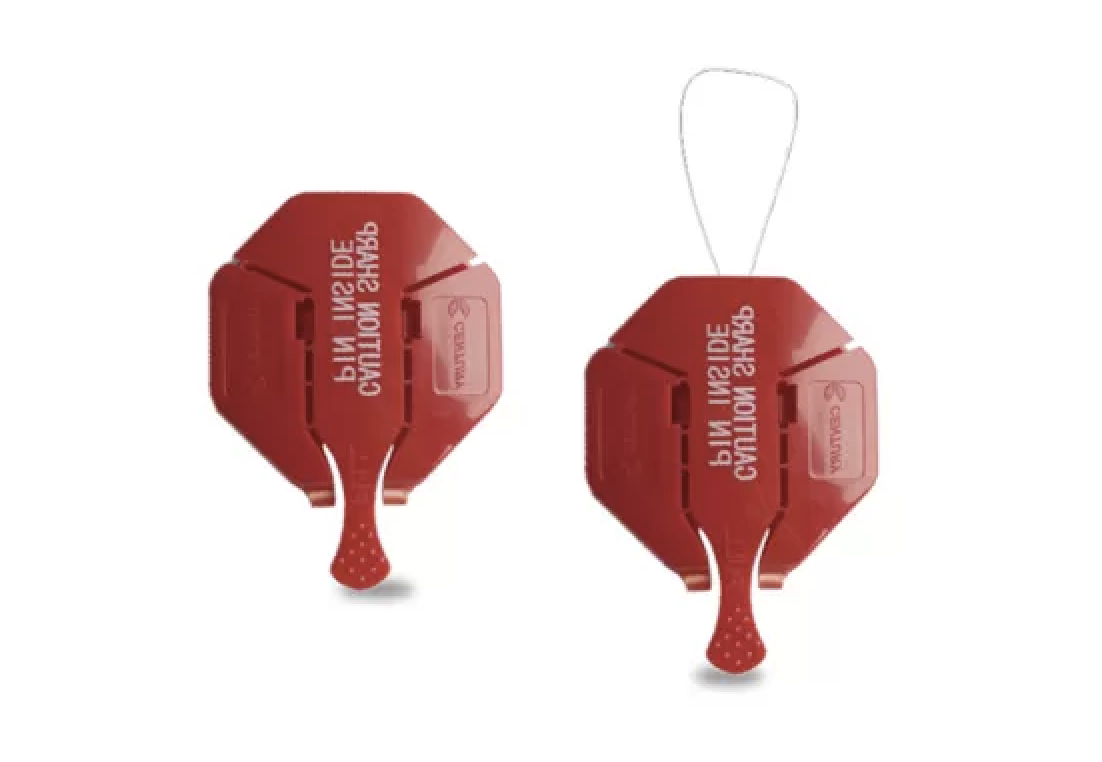
The TAG3010 Disposable Anti Wardrobing Tag is a simple yet powerful solution for combating fraudulent returns. Designed for single use applications, this bright red tag is easily affixed to garments in highly visible areas, effectively deterring wardrobing, the practice of wearing an item and returning it as new. Its tamper evident design ensures the tag cannot be removed without rendering the item ineligible for return, making it ideal for use on high-risk merchandise such as dresses, blazers, and formalwear.
Unlike traditional security tags used for theft prevention, the TAG3010 is engineered specifically to enforce return policy compliance. Its disposable design eliminates the need for removal tools or reuse logistics, offering retailers a scalable, cost-effective defense against abuse in both online and brick-and-mortar environments.
Key Features:
• Wardrobing Deterrent: Discourages wear and return fraud by attaching prominently to the garment in a bright red color that makes public use undesirable.
• Single-Use Design: Disposable tag that is easily applied with a pin and designed not to be reattached.
• Return Policy Enforcement: Ensures compliance by requiring intact tag presence for returns, tampering voids return eligibility.
• Easy Application: Attaches quickly with standard security tag pins in seconds; perfect for fulfillment centers and retail staff.
• Cost-Effective Protection: Sold in bulk to meet the needs of fashion retailers and e-commerce sellers combating serial returners.
Quantity: Comes in boxes of 100 tags.
Product Code: TAG3010 – Disposable Anti-Wardrobing Tag – Red – Single-Use – NEW