
Apparel prices…poised to rise as tariff costs flow through supply chains
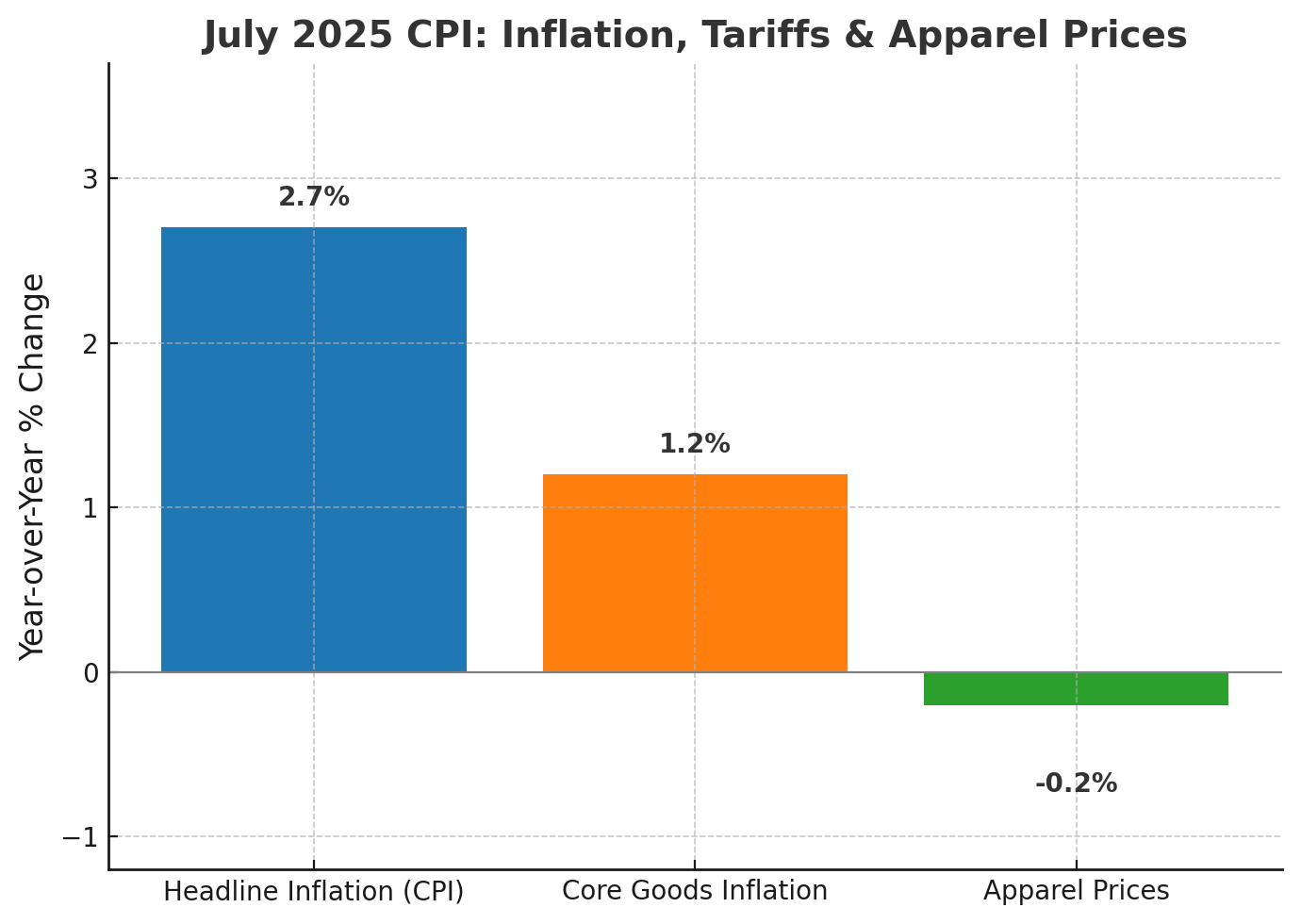
July’s Consumer Price Index (CPI) data from the Bureau of Labor Statistics sent a clear signal to retailers: while headline inflation remains steady at 2.7% year over year, the pressures building beneath the surface are set to challenge margins, pricing strategies, and consumer spending patterns, especially for apparel and other tariff sensitive categories.
The CPI Headlines
Overall inflation: +2.7% YoY (unchanged from June)
Core inflation (excluding food and energy): +3.1% YoY, the fastest pace in over two years
Core goods inflation: +1.2% YoY, an unusually high figure for a category that typically trends flat or negative
Apparel prices: +0.1% MoM, but poised to rise as tariff costs flow through supply chains
Household furnishings: +0.7% MoM, a clear sign of tariff impact
Why Retailers Should Be Paying Attention
Historically, core goods inflation, covering items like apparel, home furnishings, and electronics, has been muted. In July, however, economists noted that tariff-driven cost increases are starting to make their way to the shelf. This is particularly relevant for retailers that depend on imported goods from countries targeted by recent tariff actions.
Mark Zandi, Chief Economist at Moody’s, put it plainly:
“That they’re on the rise is clear evidence of tariff impact.”
Apparel Retail: The Perfect Storm
The apparel sector is highly globalized, with the majority of garments imported from Asia and other low cost manufacturing hubs. Tariffs directly increase landed costs for these goods. At the same time:
Price sensitivity is high: Consumers are accustomed to frequent sales and low cost fast fashion, making it risky for retailers to pass along the full tariff cost immediately.
Inventory lag: Many retailers are still selling pre-tariff stock, delaying the visible price hikes but creating a potential price jump once replenishment cycles catch up.
Competitive squeeze: Discount retailers may absorb more of the tariff costs to keep traffic, forcing mid-market and specialty retailers into an uncomfortable margin compromise.
Beyond Apparel: The Spillover Effect
Other retailers, especially in home goods, toys, and consumer electronics, face similar tariff related cost pressures. The July CPI data shows:
Household furnishings up 0.7% MoM
Toys up 0.2% MoM
Used vehicles up 0.5% MoM, showing the spillover from higher new vehicle costs
Personal care services rising due to labor constraints linked to immigration policy changes
This mix of goods inflation and rising service costs could lead to a “double hit” for retailers, higher sourcing costs and more expensive store operations.
The Margin Math
The Budget Lab at Yale estimates that the average U.S. household will lose $2,400 annually in the short run from current tariffs. That lost disposable income can translate into:
Slower discretionary spending growth
Higher price sensitivity
More aggressive deal hunting behavior
For retailers, the challenge will be balancing margin protection with maintaining traffic, and doing so in a market where competitors may choose different strategies.
Retailer Strategies Going Forward
Scenario Based Pricing Models
Prepare multiple pricing strategies depending on how tariffs evolve. From absorbing costs to staged price increases.Inventory Timing
Buy ahead when possible to lock in pre-tariff costs, especially for core seasonal SKUs.Supplier Diversification
Explore alternative sourcing regions not subject to tariffs.Operational Efficiency
Offset higher product costs with supply chain and labor productivity gains.Customer Communication
Be transparent about price changes to maintain trust, especially for loyal segments.
The Bottom Line
July’s CPI numbers suggest that while the headline inflation rate looks tame, the retail sector, especially apparel, is walking into a cost pressured fall and holiday season. Tariffs and labor constraints are starting to “speak loudly” in the data, and by year’s end, economists expect they will be “yelling.”
For apparel retailers, the challenge is not just higher costs, but navigating them without losing customers in an already competitive, discount driven environment. The winners will be those who prepare now, diversify their supply chains, and adapt pricing strategies with both margin and market share in mind.
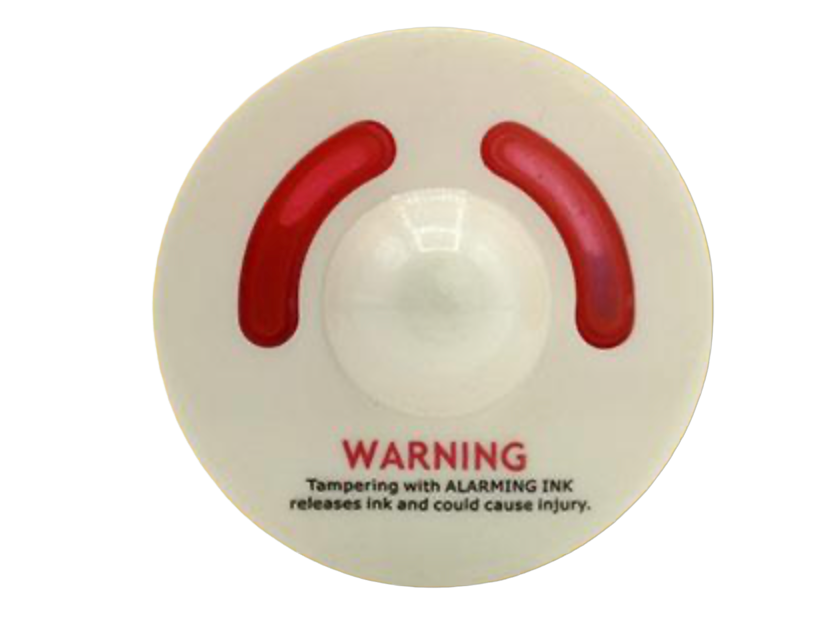
Deter shoplifting before it starts with the Hawkeye ink tag, an industry standard benefit denial tag sold new with pins included. Built on 58KHz AM technology, it works with all Sensormatic AM detection systems. If tampered with, the tag may release ink that can render a garment unwearable, which greatly reduces inventory loss related to shoplifting.
Key Features
AM technology: 58KHz frequency works with all Sensormatic AM systems.
Benefit denial: May release ink if tampered with, rendering garments unwearable and deterring theft.
Pins included: Every box ships with matching cone head pins.
Condition: Brand new stock.
Bulk pack: 500 tags per box for high volume tagging.
Quantity: Sold in boxes of 500 ink tags with 500 cone head pins included.
Product Code: TAG3003-AG Hawkeye Ink Tag, AM, New
https://www.cnbc.com/2025/08/12/heres-the-inflation-breakdown-for-july-2025-in-one-chart.html