
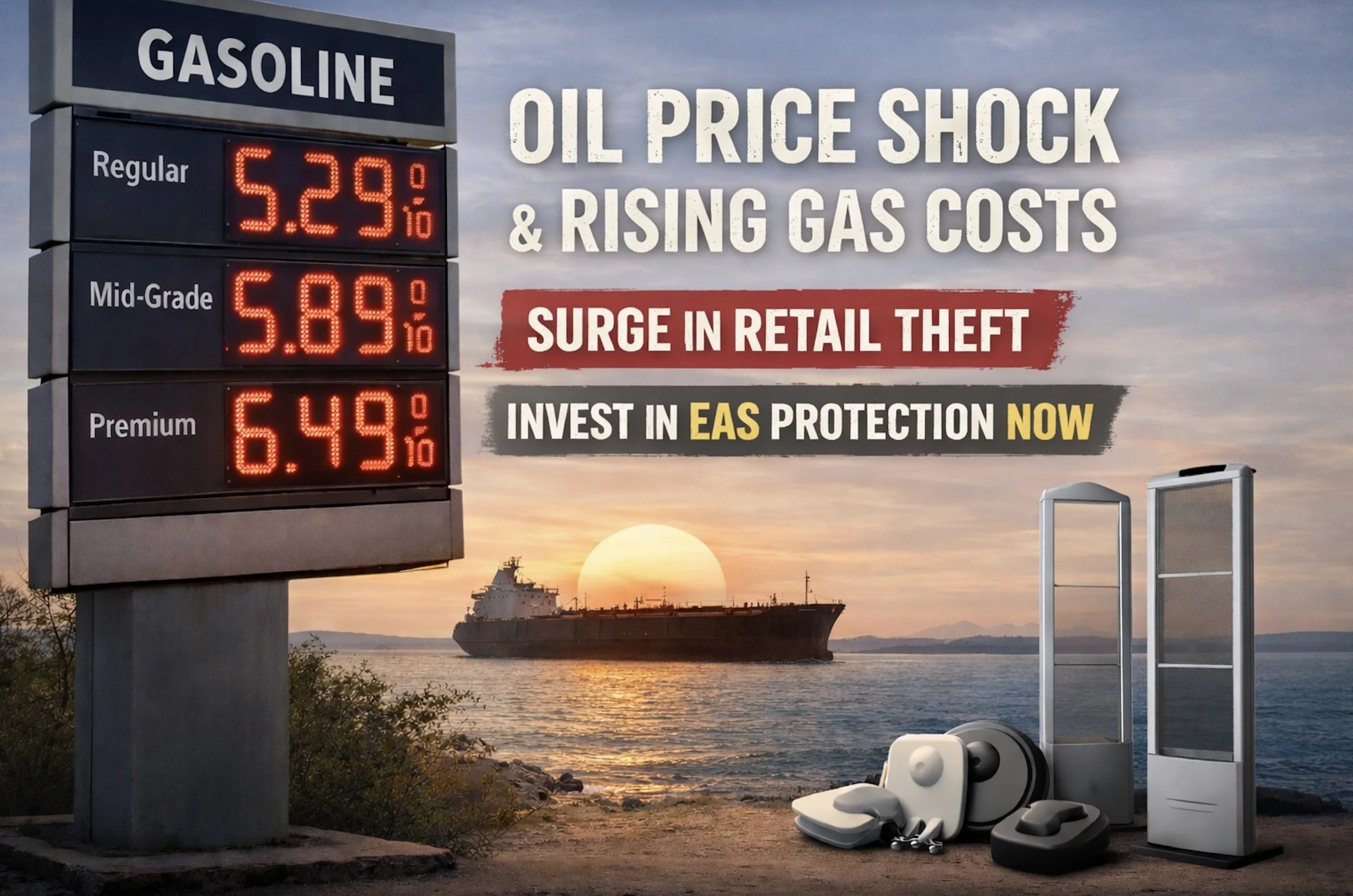
Higher gas prices may increase shoplifting…
When oil spikes, retail feels it fast.
The escalating war in the Middle East has severely disrupted energy markets, with shipping through the Strait of Hormuz nearly paralyzed and crude prices surging. Reuters and AP report that Brent crude recently spiked above $100 and at points neared $120, while major producers in the Gulf have cut output and rerouted exports as the conflict squeezes global supply. Since roughly 1/5 of the world’s oil and LNG moves through the Strait of Hormuz, the disruption is not a regional issue, it is a direct global cost shock.
American consumers are already feeling it at the pump. AAA lists the national average price of regular gasoline at $3.478 per gallon as of March 9, 2026, with Florida at $3.494. Just a few days earlier, AAA said the national average had jumped nearly 27 cents in a single week, one of the sharpest weekly increases since the start of the Russia-Ukraine war in 2022.
That matters because higher fuel costs do not stay confined to gas stations. They work their way through the economy. Shipping gets more expensive. Delivery surcharges rise. Suppliers face higher transportation and production costs. Inflation pressure builds. IMF Managing Director Kristalina Georgieva warned this week that a sustained 10% increase in oil prices could add about 40 basis points to global inflation. In other words, this energy shock can quickly become a broader consumer affordability problem.
And when consumer pressure rises, retailers should not assume shrink risk stays flat.
No serious asset protection professional should claim that high gas prices automatically “cause” shoplifting. Theft is driven by many factors: opportunity, weak deterrence, organized retail crime, staffing gaps, prosecution risk, and economic stress. But it is reasonable, and operationally responsible, to recognize that when essentials take a bigger bite out of household budgets, retailers often face more theft pressure at exactly the same time their margins are under strain.
That is why this moment calls for prevention, not hesitation.
The retail industry was already contending with elevated theft and violence before the latest oil shock. According to NRF’s 2025 theft and violence study, retailers reported an 18% increase in average shoplifting incidents in 2024 versus 2023, while threats or acts of violence during shoplifting and theft events rose 17%. More than half of retailers surveyed also reported increases in shoplifting and merchandise theft tied to organized retail crime activity.
So retailers are now facing a dangerous combination:
Higher operating costs. Fuel, freight, and supply chain volatility are pushing expenses up.
More pressure on shoppers. Rising gas prices and broader inflation reduce discretionary income and increase financial stress.
Already elevated theft trends. Shoplifting incidents and retail violence were already rising before this latest geopolitical shock.
In that environment, investing in EAS is not a luxury. It is a margin protection decision.
Why EAS makes sense right now
Electronic Article Surveillance gives retailers something they need most in uncertain times: a scalable, visible, proven deterrent.
A properly deployed EAS system helps reduce opportunistic theft, disrupt repeat grab and go behavior, and create friction for organized shoplifting teams. Pedestals at the door send a clear signal that merchandise is protected. Hard tags and labels force would be thieves to make a harder choice. Alarm events help staff intervene earlier. And unlike reactive loss recovery, EAS is about preventing loss before it leaves the building.
That matters even more when every unit lost is harder to absorb.
If your cost of goods, labor, freight, and utilities are all under pressure, shrink becomes more expensive. A stolen item is no longer just lost revenue; it is margin lost at a time when replacement inventory may also cost more to source and move. The tighter the environment, the more valuable prevention becomes.
Why retailers should act before theft worsens
One of the biggest mistakes retailers make is waiting for shrink numbers to “prove” the problem.
NRF has noted that shrink is a trailing indicator. By the time annual inventory results clearly show the damage, the loss has already happened. Retailers who wait for perfect data often end up responding after theft patterns are established.
A smarter approach is to prepare early:
Protect high risk categories before pressure intensifies.
Tag merchandise before theft spikes become visible in inventory results.
Upgrade weak or aging systems before stores enter a higher risk environment.
Use visible deterrence to reduce both loss and staff confrontations.
The retailers that win during volatile periods are usually the ones that act before the full impact shows up on the P&L.
EAS is not just about shrink, it is about store confidence
There is another reason to invest now: store teams are already under enough pressure.
When theft rises, frontline employees feel it first. They deal with repeat offenders, damaged morale, safety concerns, and the frustration of watching merchandise walk out the door. Visible, functioning EAS systems help restore confidence. They show employees that the business is taking protection seriously. They also signal to honest customers that the store is professionally run and that loss prevention matters.
In a climate where NRF says violence connected to theft is also rising, deterrence has value beyond inventory alone.
The takeaway
The Middle East conflict and the disruption in the Strait of Hormuz are not abstract geopolitical headlines. They are already pushing energy prices higher, pressuring inflation, and raising costs for both retailers and consumers. U.S. gas prices have moved up sharply, and the broader retail environment was already dealing with rising theft and violence even before this latest shock.
Retailers cannot control oil markets. They cannot reopen shipping lanes. And they cannot remove every source of financial stress hitting the consumer.
But they can control how prepared their stores are.
This is the time to strengthen the front line. This is the time to protect vulnerable merchandise. This is the time to invest in EAS systems and tags that deter theft, support staff, and defend margin before the pressure gets worse.
In periods of uncertainty, the cost of inaction usually shows up later.
The cost of protection starts paying back immediately.
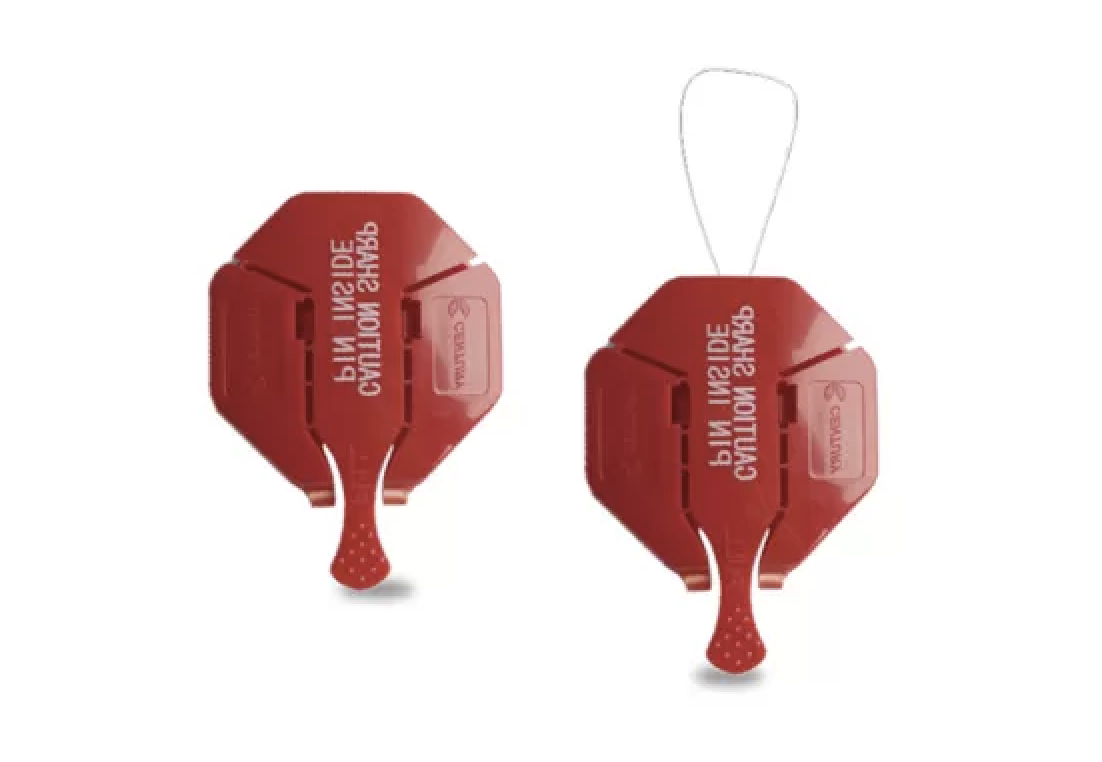
The TAG3010 Disposable Anti Wardrobing Tag is a simple yet powerful solution for combating fraudulent returns. Designed for single use applications, this bright red tag is easily affixed to garments in highly visible areas, effectively deterring wardrobing, the practice of wearing an item and returning it as new. Its tamper evident design ensures the tag cannot be removed without rendering the item ineligible for return, making it ideal for use on high-risk merchandise such as dresses, blazers, and formalwear.
Unlike traditional security tags used for theft prevention, the TAG3010 is engineered specifically to enforce return policy compliance. Its disposable design eliminates the need for removal tools or reuse logistics, offering retailers a scalable, cost-effective defense against abuse in both online and brick-and-mortar environments.
Key Features:
• Wardrobing Deterrent: Discourages wear and return fraud by attaching prominently to the garment in a bright red color that makes public use undesirable.
• Single-Use Design: Disposable tag that is easily applied with a pin and designed not to be reattached.
• Return Policy Enforcement: Ensures compliance by requiring intact tag presence for returns, tampering voids return eligibility.
• Easy Application: Attaches quickly with standard security tag pins in seconds; perfect for fulfillment centers and retail staff.
• Cost-Effective Protection: Sold in bulk to meet the needs of fashion retailers and e-commerce sellers combating serial returners.
Quantity: Comes in boxes of 100 tags.
Product Code: TAG3010 – Disposable Anti-Wardrobing Tag – Red – Single-Use – NEW