

Luxury Handbag Theft…
A career retail theft suspect was back in a Washington jail this month, and the path that put her there says more about store security than it does about her. On June 12 Bellevue police arrested Janeice Downs, also known as Janeice Smith, in the parking lot of the Westfield Southcenter mall. Investigators tied her to the theft of two Louis Vuitton handbags worth more than seven thousand dollars from a Nordstrom in downtown Seattle, along with thefts at Macy's stores in Tacoma and Tukwila.
She was not new to this. Downs had been released from prison in January after serving part of a thirty three month sentence for six counts of organized retail theft connected to a Lululemon theft ring. Prosecutors said she and her mother had moved more than five hundred thousand dollars in stolen merchandise over the life of that operation. She now faces a first degree organized retail theft charge in Washington and sixteen more counts tied to an Oregon fugitive warrant, with bail set at two hundred fifteen thousand dollars.
Bellevue Police Captain Landon Barnwell described her plainly. For us, she is a prolific organized career theft criminal. Then he added the detail that should matter most to any retailer reading this. Repeat offenders bounce around many retailers. That single sentence is the whole problem stated in eight words.
Why career thieves target luxury soft goods
A luxury handbag is one of the most efficient products in retail to steal. It carries a high price in a small package, it is recognizable across brands, it has a predictable resale value, and it moves fast on secondhand marketplaces. A single bag can return more cash in one grab than a full cart of mid priced clothing. That economics is why organized crews single out designer accessories, footwear, and premium apparel, and why the same crews come back to the categories that pay.
The high value is also why these thefts are rarely impulsive. The Downs case was built on surveillance footage, a TikTok video showing the stolen items, Instagram posts, and a distinctive disguise. This was a person treating theft as a business, with a supply side and a sales side. When theft is a business, the only way to disrupt it is to make the supply side harder to work.
Bouncing between stores
The captain's phrase about offenders bouncing around many retailers is the key to understanding loss prevention. One person hit a Nordstrom in Seattle and Macy's locations in two other cities. From the thief's point of view those are not three different problems. They are three doors, and the thief reads each door the same way, looking for the path of least resistance.
That is exactly why the front door is the one point in the theft cycle a retailer fully controls. A store cannot fix the courts, cannot predict which released offender will walk in next, and cannot recover margin once merchandise is in a car heading to a resale channel. What a store can control is whether high value merchandise can quietly cross the threshold without consequence.
What EAS does that surveillance cannot
Cameras, social media, and disguises all became part of this story after the fact. Footage is evidence. It helps build a case, identify a suspect, and support a charge. What it does not do is stop the handbags from leaving the store. By the time video matters, the loss has already happened, the inventory is gone, and the labor cost of an investigation has already started.
Electronic Article Surveillance works at a different moment. EAS acts at the door at the instant of exit. When a tagged item crosses the pedestals without being deactivated or detached, the system alerts. That alert is the trigger that turns a silent walkout into a documented event with a chance to intervene before the merchandise is gone. Detection at the moment of exit is the layer that career crews actually have to plan around, and the layer that makes one store a harder target than the next.
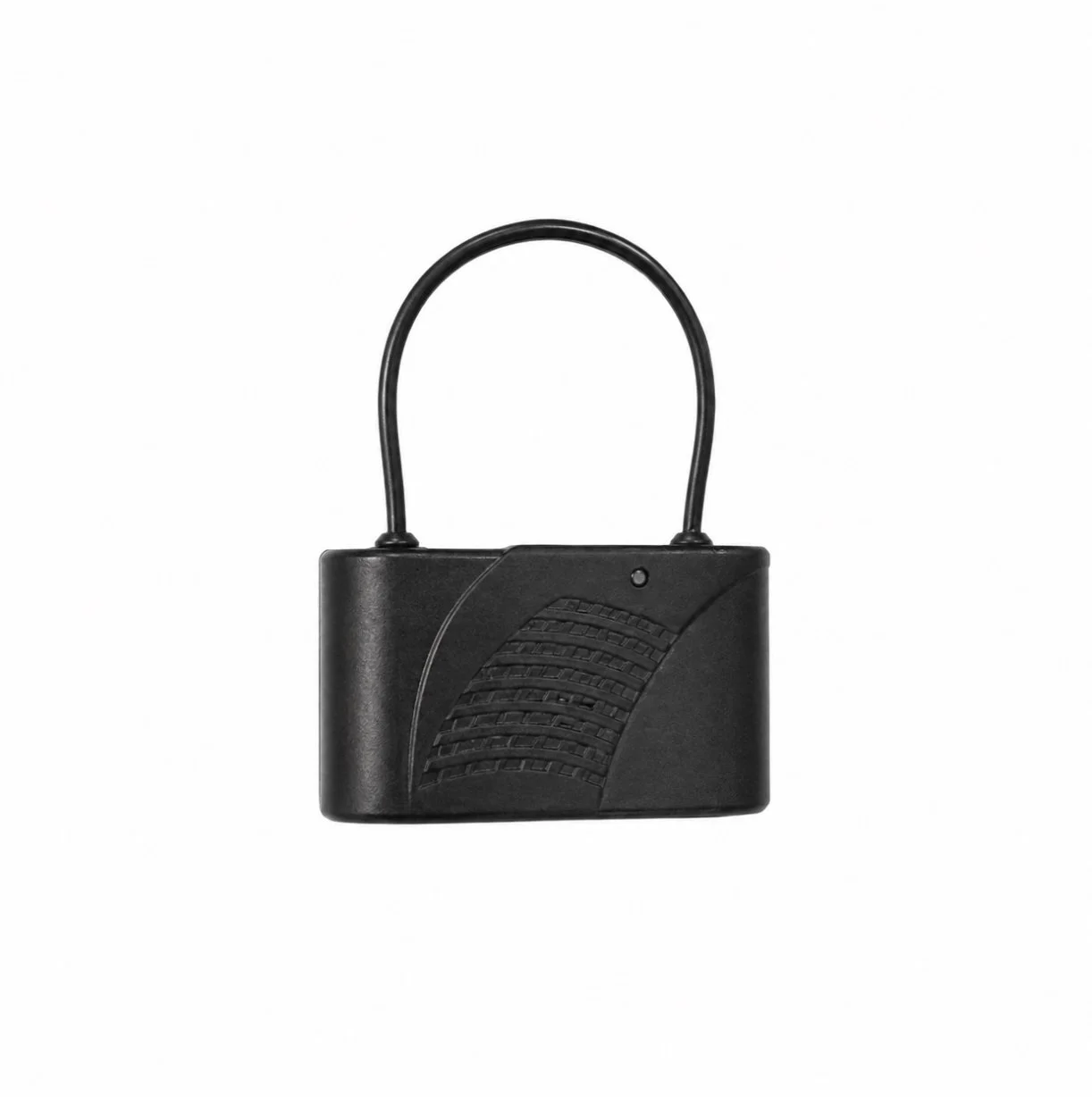
Protect high theft merchandise with these 2 alarm AM security tags featuring a durable 4" lanyard for fast, flexible attachment. Built on 58KHz AM technology, these tags are ideal for retailers who want strong deterrence on accessories and other grab and go items without slowing down the sales floor. Designed to integrate seamlessly with AM/Sensormatic style systems, they deliver reliable alarming performance while keeping your product presentation clean and professional. Requires Superlock detacher.
Key Features
Dual-Alarm Protection: 2 alarm design adds an extra layer of deterrence for high risk items.
AM Technology (58KHz): Dependable detection and performance on AM systems.
4" Lanyard Included: Quick, secure attachment for accessories and hard to tag products.
Versatile Use Cases: Great for handbags, belts, shoes, luggage, apparel, and accessories.
Retail Ready & Durable: Built for day to day store use and repeated handling.
Convenient Pack Size:Box of 25, perfect for smaller rollouts, new stores, or replenishment orders.
Requires Superlock detacher.
Quantity: Box of 25 tags (each with attached 4" lanyard)
Product Code: TAG2405 Magnetic Mini 2 Alarm Lanyard AM SL 4" - New(25 Pack)
Tagging luxury handbags and apparel
For designer handbags and premium apparel the right hardware is a hard tag, not a label. Hard tags deliver better detection rates than labels, they are significantly harder for a shoplifter to defeat, they are reusable, and they work as a visible psychological deterrent. A thief scouting a display reads a hard tag the same way they read a camera dome. It signals friction. Lanyard tags are the right choice for paired items and for bags where the tag can be looped through a handle or zipper pull without damaging the leather.
Ink tags raise the cost of failure even higher. An ink tag ruptures when it is tampered with, staining and destroying the item so it cannot be used, returned, or resold. For a thief whose entire business depends on clean resale, an ink stained handbag is worthless. That consequence reaches past the alarm and attacks the resale value that makes luxury goods worth stealing in the first place.
Choosing the system
The tags only do their job when paired with the right detection at the door. Sensormatic uses acousto magnetic technology at 58 kHz and offers wide pedestal coverage, which suits large department store entrances and open mall fronts. Checkpoint uses radio frequency technology at 8.2 MHz with paper thin labels that work well for packaged goods alongside the hard tags on the apparel floor. Both perform well in high traffic environments, and RFID now integrates with both, adding item level visibility that helps track high value inventory. The right mix depends on the store layout, the merchandise, and the exits that need to be covered.
The Downs case will run its course in court. The lesson for retailers does not depend on the verdict. Career thieves bounce between stores looking for the easy door. The job of loss prevention is to make sure your door is not the easy one.
Retail Security Group Inc. provides professional EAS system installation, maintenance, and consultation across all 50 U.S. states. Whether you need a full new system, a tagging strategy review, or service on existing Checkpoint or Sensormatic equipment, we can help. Info@SecurityTagStore.com
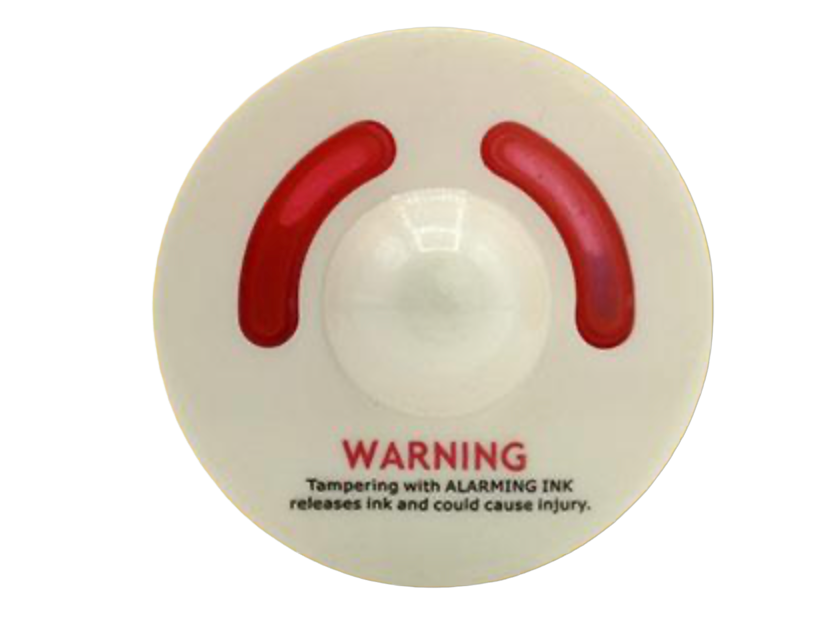
The TAG3003-A Hawkeye Ink Tag with Pin is an industry-standard benefit denial security tag designed to work seamlessly with all Sensormatic AM systems. Operating at a frequency of 58 KHz, this tag combines the traditional theft deterrent of AM technology with the added security of ink-based benefit denial. If tampered with, the tag is designed to release ink, rendering the garment unwearable and significantly reducing inventory loss due to shoplifting.
Hawkeye ink tags are trusted by retailers for their reliability and effectiveness in high-theft environments. This complete package includes 500 ink tags paired with 500 cone head pins, providing a robust solution for protecting valuable merchandise.
Key Features:
• Benefit Denial Security: Designed to release ink if tampered with, effectively preventing theft and reducing inventory loss.
• AM Technology: Operates on a 58 KHz frequency, compatible with all Sensormatic AM systems.
• Industry Standard: Widely used by retailers for reliable protection in high-theft areas.
• Complete Package: Comes in boxes of 500 ink tags with 500 cone head pins, offering comprehensive security.
• Effective Deterrent: Combines AM technology with ink-based protection for maximum security.
Quantity: Comes in boxes of 500 ink tags with 500 cone head pins.
Product Code: TAG3003-A Hawkeye Ink Tag - AM - NEW
https://www.fox13seattle.com/news/prolific-bellevue-wa-retail-theft-suspect-jail