
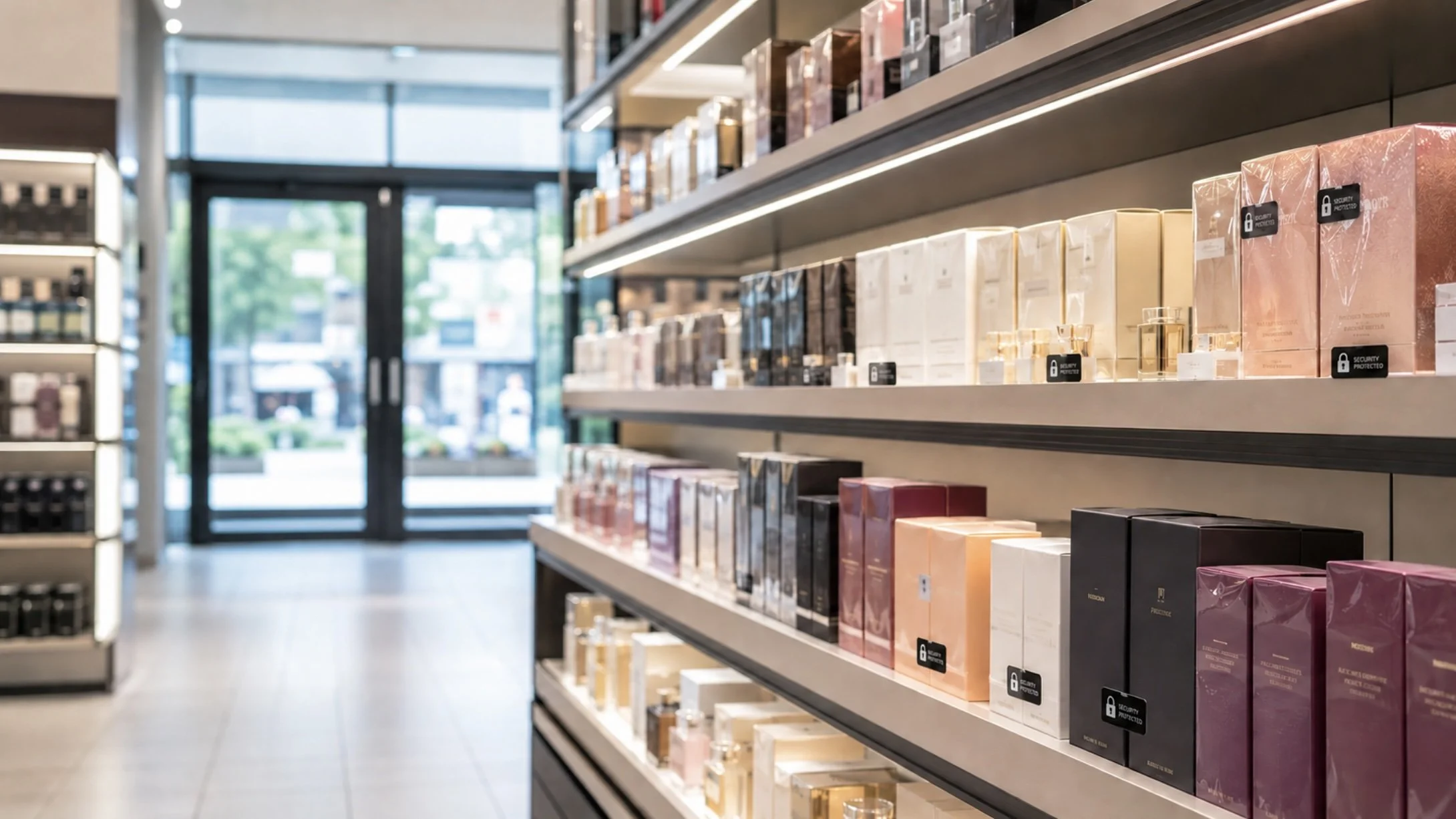
Fragrance theft prevention tradeoffs…
Fragrance Theft and the Locked Case Problem
On June 4, 2026, the State of California reported that its organized retail crime efforts have recovered nearly 260 million dollars in stolen merchandise and produced more than 32,000 arrests since October 2023. Buried in the operations behind that number is a pattern any beauty or drugstore operator already knows. Costa Mesa police recovered roughly 150,000 dollars in stolen fragrances and merchandise tied to Ulta. Bakersfield officers arrested suspects linked to Ulta and Target. Fragrance and cosmetics were not collateral damage in those cases. They were the target.
The reason is simple. A tray of designer perfume is small, light, and worth more per cubic inch than almost anything else on a store floor. It resells fast on secondary markets, and it carries no serial number to trace. Organized retail crime crews boost it to order because a fence will buy it the same day. That is what makes beauty a structural target rather than a seasonal one.
The instinct most retailers follow is to lock it all up. Glass cabinets, locked pegs, tester only displays where a customer has to find an associate to hand them the actual box. It feels decisive, and in the short term it moves the theft number. The problem is what it does to everything else.
The hidden cost of the locked case
Locked merchandise does not just inconvenience the shopper. It quietly taxes the entire transaction. Industry research on locked displays has found that a large share of customers will abandon a purchase or walk to a competitor rather than wait for someone to come unlock a case. Conversion on locked categories drops sharply, and associate hours that should go toward selling get burned walking back and forth with a key. You are spending labor to make the buying experience worse.
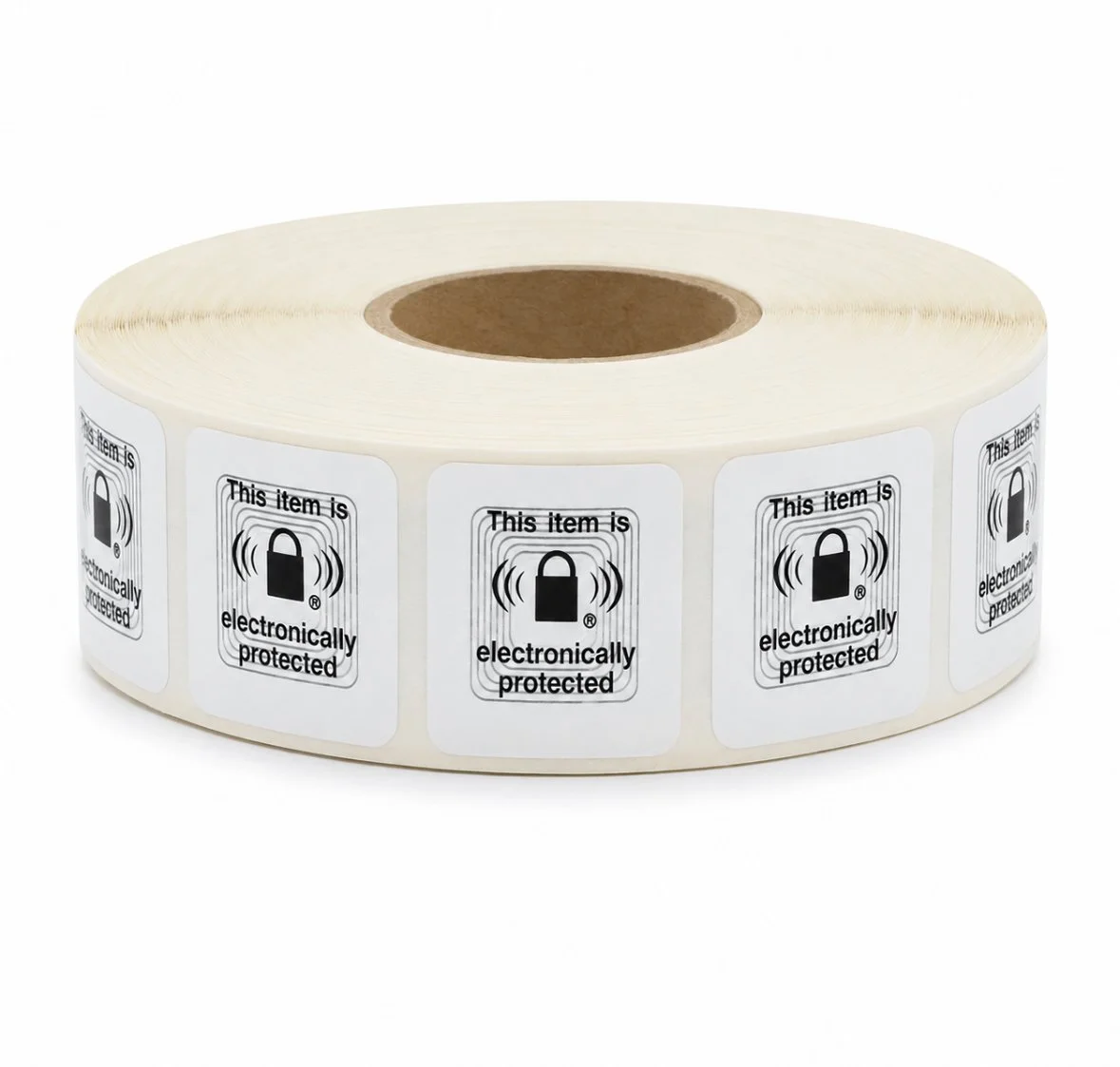
Protect small boxed merchandise with these clear 26x26 RF labels printed with a lock warning, one of the smallest Checkpoint compatible label sizes we stock. Built on 8.2MHz RF technology, the most common EAS frequency in the world, they work with all Checkpoint 8.2 systems and pair a strong adhesive with a visible warning print that adds deterrence. Ideal for liquor bottles, fragrance, pharmacy goods, beauty supply, packaged goods, and groceries.
Key Features
8.2MHz RF technology: Works with all Checkpoint 8.2 systems
Clear printed lock warning: Adds a visible deterrent while showing the packaging beneath
Compact 26mm x 26mm format: Ideal for smaller boxed items
Strong adhesive: Stays put on boxes and packaging
Medium detection performance: Dependable coverage for everyday merchandise
Use cases: Liquor, fragrance, pharmacy, beauty supply, packaged goods, and groceries
Quantity: 1,000 labels per order, supplied on rolls of 500; full boxes contain 20,000 labels
Dimensions: 26mm x 26mm (1.02 x 1.02 inches)
Product Code: TAG1726 Clear RF Label 26x26 Lock Warning
For a category that depends on impulse and discovery, that is the wrong trade. Beauty buyers browse. They pick up the box, read it, smell the tester, and decide at the shelf. Put a sheet of glass between them and the product and you have removed the part of the experience that drives the sale. You stopped some theft and you stopped some buying along with it. The shrink line improves while the sales line quietly erodes, and the second number rarely gets blamed on the lock.
There is a middle path, and it is the one most high volume retailers eventually return to. Keep the product out where people can touch it, and protect it with electronic article surveillance instead of a key.
How EAS protects open beauty shelves
The core idea of EAS is that merchandise stays on the open shelf, tagged, and an alarm sounds at the door if it leaves without being deactivated or detached. For boxed fragrance and cosmetics, the workhorse is the label. RF labels from Checkpoint systems operate at 8.2 MHz and are paper thin and virtually flat, which is exactly what a small cosmetic box or a cellophane wrapped perfume carton needs. The label disappears against the packaging and deactivates at the register. Sensormatic AM systems run at 58 kHz and bring strong detection and good resistance to false alarms, with wide pedestal coverage that suits larger store openings. Both perform well in high traffic beauty floors. The right one depends on your store layout and any equipment you already run.
Labels exist because hard tags cannot go everywhere. You cannot pin a reusable hard tag through a sealed perfume box, so packaged goods like cosmetics, boxed fragrance, and over the counter beauty items are where labels do their job. For higher value boxed sets and gift packs, a spider wrap, the cabled harness normally seen on boxed electronics, fits a fragrance carton just as well and adds a visible physical deterrent on top of the alarm. Where a category is hot enough to warrant it, an alarming safer case or keeper box lets the product sit on the shelf fully visible while still triggering the pedestal at the exit.
The strongest version of this is source tagging, where the label is applied inside the packaging during manufacturing or distribution before the product reaches the floor. The protection is in place the moment the box hits the shelf, store labor drops, and the tag is invisible to the customer. For a beauty program running thousands of small units, that is the difference between a security layer that scales and one that eats your payroll.
Recovery is not prevention
It is worth sitting with the California number for a second. Nearly 260 million dollars recovered is a real enforcement achievement, but recovery happens after the merchandise has already left the store, been resold or seized, and cost the retailer a sale and the labor to chase it. EAS works at the only point that prevents the loss, which is the exit, in the moment the booster tries to walk the product out. Tags and pedestals will not arrest a crew, and they are not meant to. They break the easy grab that the resale economy runs on, and they do it without turning your beauty aisle into a holding cabinet.
The retailers who get this right do not choose between open shelves and protection. They tag the product, deactivate at the register, run working pedestals at every exit, and train staff to respond to an alarm. RFID, which integrates with both AM and RF systems, adds inventory visibility on top so you know what is actually on the shelf versus what walked. Locking everything away is the move you make when you do not have a tagging strategy. With one, you can keep the doors of the cabinet open and still protect what is inside.
Retail Security Group Inc. provides professional EAS system installation, maintenance, and consultation across all 48 continental U.S. states. Whether you need a full new system, a tagging strategy review, or service on existing Checkpoint or Sensormatic equipment, we can help. Info@SecurityTagStore.com
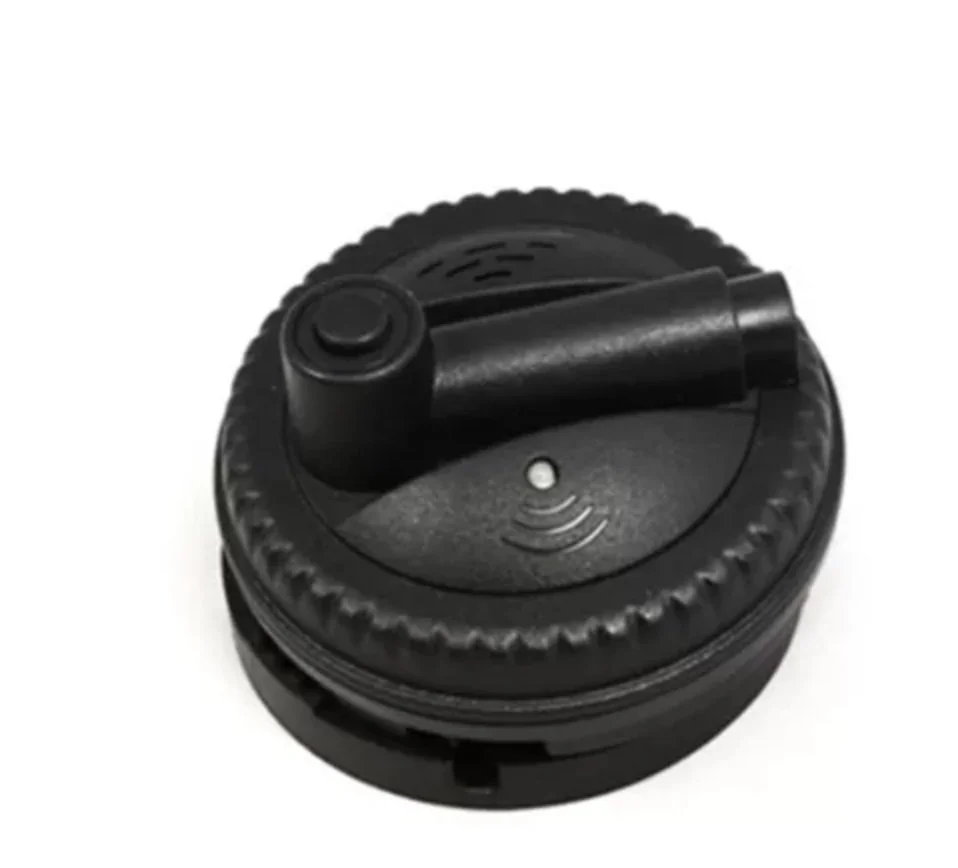
Protect boxed merchandise and high-value retail products with the Box Guard Wrap Large – AM security tag. Designed for larger boxed items that are difficult to protect with standard hard tags, this reusable wrap-style tag secures around the package while providing strong visible theft deterrence and reliable 58KHz AM alarming performance. Ideal for electronics, appliances, tools, gaming accessories, and premium boxed merchandise. Compatible with AM / Sensormatic style systems. Requires Superlock detacher.Key Features
Key Features
Large Wrap Design
Designed specifically for protecting boxed merchandise that cannot easily be pinned or tagged with traditional hard tags.
AM Technology (58KHz)
Reliable detection and strong performance on AM / Sensormatic compatible EAS systems.
Strong Visible Theft Deterrent
Large black wrap design creates immediate visual deterrence for high-risk products and grab-and-go merchandise.
Reusable & Durable
Built for repeated retail use with strong construction for daily handling and long-term reliability.
Ideal for Multiple Categories
Perfect for electronics, power tools, small appliances, gaming accessories, boxed cosmetics, liquor gift sets, and premium retail goods.
Convenient Pack Size
Box of 50 tags, ideal for store replenishment, specialty departments, and larger security rollouts.
Requires Superlock Detacher
Designed for use with Superlock magnetic detachers only.
Product Details
System Type: AM / 58KHz
Color: Black
Lock Type: Superlock
Compatibility: Sensormatic compatible AM systems
Quantity: Box of 50 tags
Condition: New
Product Code:
TAG2222L Box Guard Wrap Large – AM – New (50 Pack)