
In early July, the Hillsborough County Sheriff's Office in Florida announced the takedown of a theft ring it named Operation D-Fence. Deputies arrested 14 people, recovered roughly 5 million dollars in stolen merchandise, and seized about 220,000 dollars in cash along with seven vehicles. Investigators tied the group to more than 12 million dollars in stolen goods and an estimated 7 million dollars in proceeds moved over the past year. At the center was a family business operating as Save on Construction LLC, run out of a home in Lutz that detectives described as a makeshift hardware store. The crew hit The Home Depot, Lowe's, and active construction sites across Florida, Indiana, Kentucky, and Tennessee.
The methods matter more than the dollar figure. This crew did not just walk product out the door, though they did plenty of that. They also used false invoices to obtain goods below cost, and in some cases they returned stolen items for refunds and then went back and stole the same product again. Detectives counted more than 1,800 online sales tied to the operation over a single year. That is not a spree. That is a business with procurement, inventory, and a sales channel.
Read that way, a case like this stops looking like random shoplifting and starts looking like a supply chain. There is a procurement stage, where product comes off the shelf. There is a logistics stage, where goods move to a fencing hub and get repackaged. And there is a sales stage, where the merchandise lists on an online marketplace and turns into cash. Loss prevention teams and police can attack any of those stages, but the stages are not equally cheap to defend. Breaking up a fencing hub takes a months long investigation, warrants, and a task force. The procurement stage, by contrast, happens inside your four walls, in the open, dozens of times a day. That is the link you actually control.
Electronic article surveillance is the control that lives at the procurement stage. It does not solve organized retail crime by itself, and no honest vendor will tell you it does. What it does is raise the cost and the risk of the very first step in the chain. A booster who can clear a shelf in seconds and walk out clean is cheap labor for a fencing ring. A booster who trips a pedestal alarm at the exit, or who cannot defeat a hard tag without tools and time, is expensive labor. Raise the cost of procurement and you shrink the margin the whole operation runs on.
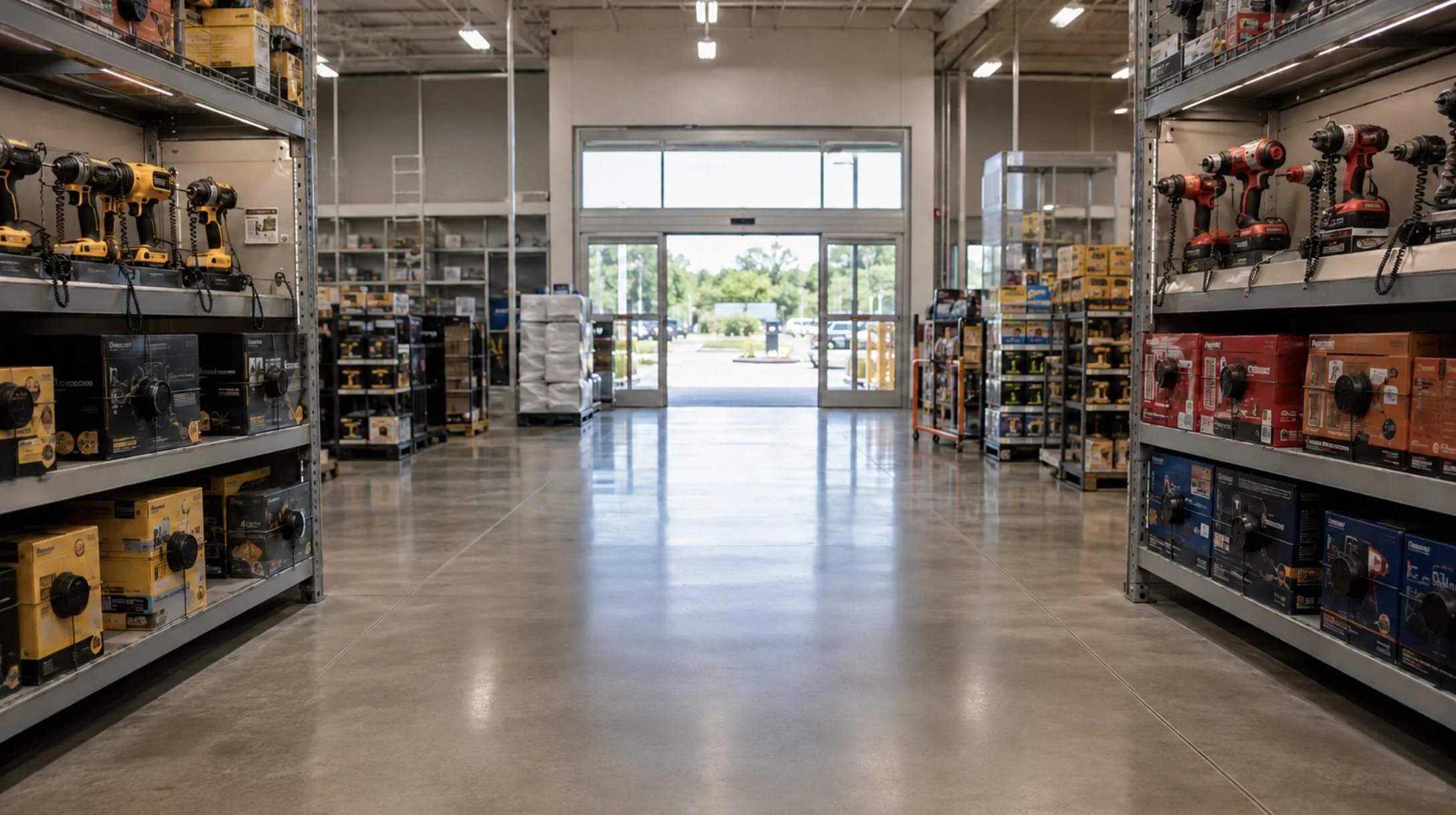
The category in this case is instructive because home improvement product is awkward to protect, and that is exactly why it gets targeted. Boxed power tools, cordless drills, and packaged hardware do not tag the way a shirt does. This is where matching the tag to the item earns its keep. Spider wraps lock down boxed power tools and electronics so the box cannot be opened or the item slipped out, and they carry the alarming element built in. Cable locks secure loose power tools and equipment that a shoplifter would otherwise pocket. Hard tags deliver the best detection rates and are the hardest to defeat, so they belong on any item that can physically accommodate a reusable tag. For packaged hardware and small boxed goods where a hard tag will not fit, AM labels close the gap. Labels are not a lesser choice, they are the tool for the categories a hard tag cannot reach.
Source tagging strengthens all of this. When the tag or label is applied at the point of manufacture rather than by a stock clerk in the aisle, protection is live from the first time the product touches your floor, and no SKU slips through untagged during a busy reset. For a chain being hit across four states by the same crew, consistency across every store is the whole game.
One more piece the D-Fence case exposes is the refund loop. When a stolen item comes back to the counter for cash or credit and then gets stolen again, the tag and the receipt are your paper trail. Deactivation discipline is part of that. A label that never gets deactivated at checkout produces nuisance alarms that train staff to ignore the pedestals, and a system your people ignore is not a system. Tags that stay intact and get read and deactivated properly are what let you separate a real event from noise, both at the exit and at the return desk. Return abuse tied to organized crime has become one of the fastest growing loopholes in retail, which is why the physical controls at the shelf and the exit still anchor everything else.
Policy is moving too. The Combating Organized Retail Crime Act passed the U.S. House in May and is awaiting Senate action, which would give federal investigators more room to pursue interstate rings like the one in Florida. That helps at the logistics and sales stages. It does not tag your shelves. The procurement stage is still yours to defend, and it is the cheapest, earliest, most repeatable place to break the chain.
Retail Security Group Inc. provides professional EAS system installation, maintenance, and consultation across all 48 continental U.S. states. Whether you need a full new system, a tagging strategy review, or service on existing Checkpoint or Sensormatic equipment, we can help.
Info@SecurityTagStore.com
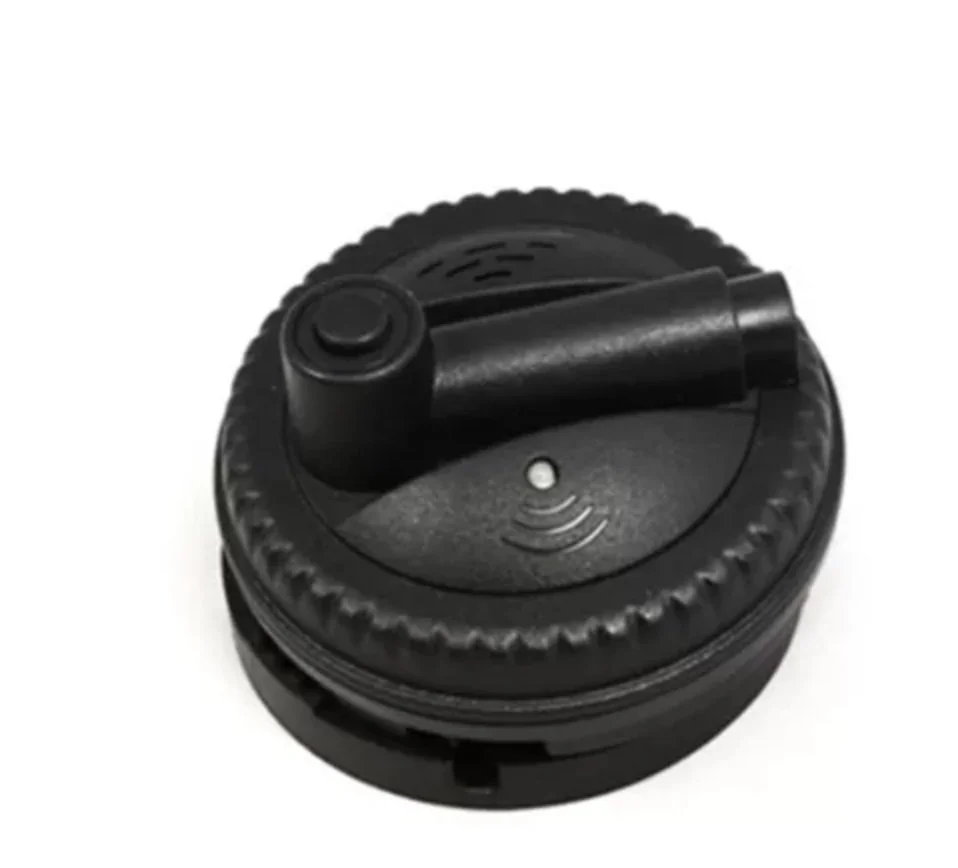
Protect boxed merchandise and high-value retail products with the Box Guard Wrap Large – AM security tag. Designed for larger boxed items that are difficult to protect with standard hard tags, this reusable wrap-style tag secures around the package while providing strong visible theft deterrence and reliable 58KHz AM alarming performance. Ideal for electronics, appliances, tools, gaming accessories, and premium boxed merchandise. Compatible with AM / Sensormatic style systems. Requires Superlock detacher.Key Features
Key Features
Large Wrap Design
Designed specifically for protecting boxed merchandise that cannot easily be pinned or tagged with traditional hard tags.
AM Technology (58KHz)
Reliable detection and strong performance on AM / Sensormatic compatible EAS systems.
Strong Visible Theft Deterrent
Large black wrap design creates immediate visual deterrence for high-risk products and grab-and-go merchandise.
Reusable & Durable
Built for repeated retail use with strong construction for daily handling and long-term reliability.
Ideal for Multiple Categories
Perfect for electronics, power tools, small appliances, gaming accessories, boxed cosmetics, liquor gift sets, and premium retail goods.
Convenient Pack Size
Box of 50 tags, ideal for store replenishment, specialty departments, and larger security rollouts.
Requires Superlock Detacher
Designed for use with Superlock magnetic detachers only.
Product Details
System Type: AM / 58KHz
Color: Black
Lock Type: Superlock
Compatibility: Sensormatic compatible AM systems
Quantity: Box of 50 tags
Condition: New
Product Code:
TAG2222L Box Guard Wrap Large – AM – New (50 Pack)