
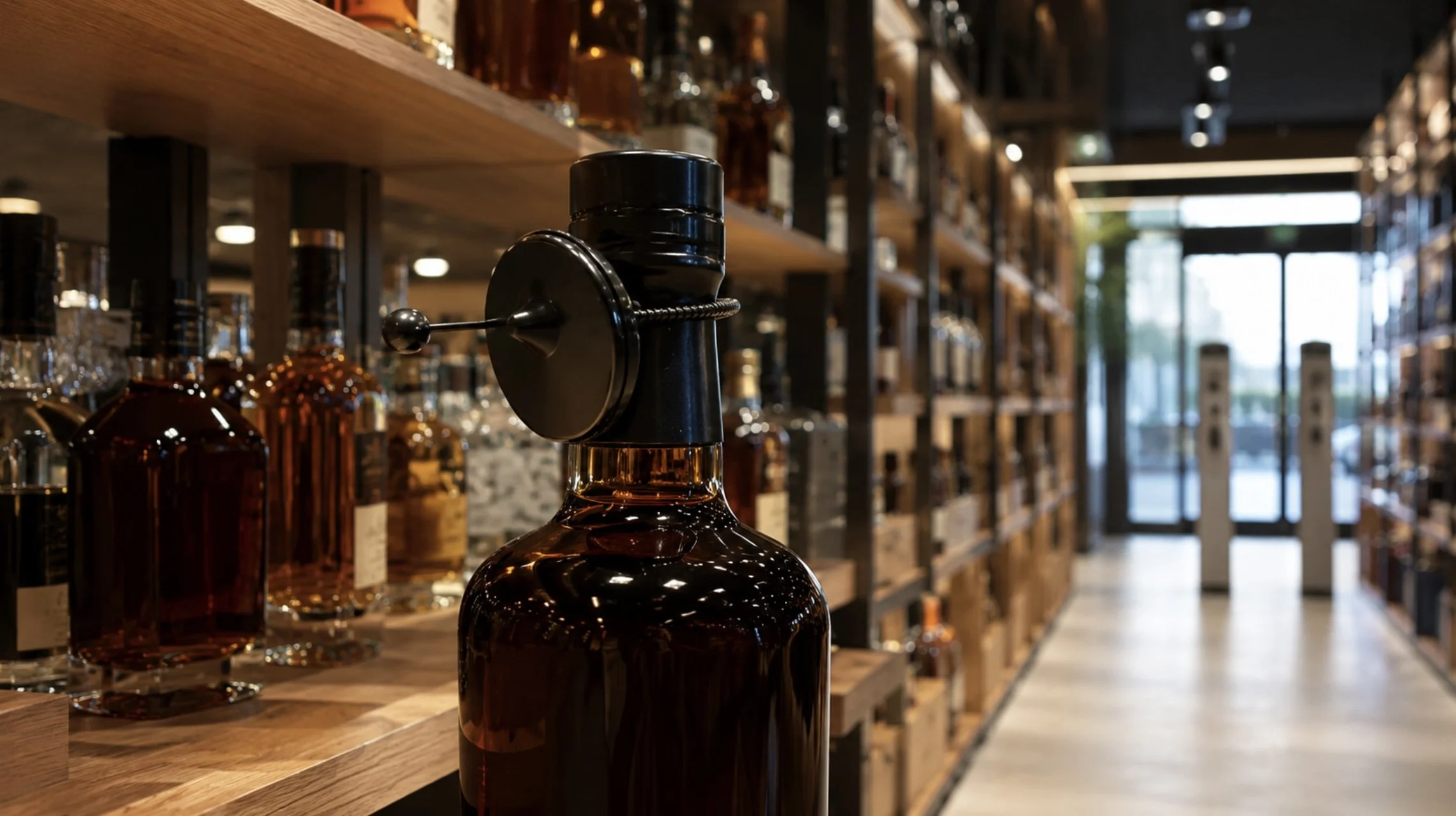
Bottle security tags…
The Liquor Aisle Is the Easiest Target in the Store
In mid June 2026, Orange County sheriff's deputies in San Clemente answered a call about stolen alcohol at the Pavilions grocery store in Talega. Working the scene, they learned the same crew had pulled the same job at a store in Lake Forest the week before. Deputies found the getaway vehicle on the 5 Freeway, and with help from the California Highway Patrol they stopped it and took all three occupants into custody. Inside were numerous bottles of alcohol along with narcotics and paraphernalia. Three people were arrested on multiple charges.
What stands out is not the size of the haul. It is the pattern. One crew, two stores, the same category, a week apart, and a vehicle stuffed with bottles headed somewhere to be resold. That is organized retail crime working a supply chain, and the supply is a shelf of premium spirits that anyone can walk up to, fill their arms with, and carry out the door.
Why Spirits Draw Organized Crews
Liquor is one of the most reliably stolen categories in retail. It checks every box a booster looks for. The unit value is high, a single bottle of premium whiskey, tequila, or cognac can run well over a hundred dollars. The product is compact and easy to conceal. And it resells instantly through corner stores, online marketplaces, and hand to hand with no questions asked. Retailers are projected to lose roughly 50 billion dollars to theft in 2026, and spirits sit near the top of the shrink list right alongside cosmetics, apparel, and over the counter medicine.
Grocery and drug chains feel this most because they merchandise alcohol in the open. A dedicated liquor store can put a clerk at the register with a clear sightline down every aisle. A supermarket cannot. The wine and spirits section is one department among fifty, staffed thin, and shoppers expect to browse and compare without asking anyone to unlock anything. That expectation is exactly what an organized crew exploits.
The Locked Case Trade off
The reflexive answer to a targeted category is to lock it up. Cases work, in the narrow sense that a bottle behind glass is harder to grab. But locking the liquor aisle carries a real cost that shows up in the register totals, not the shrink report. Every locked door is a shopper who has to find an employee, wait, and second guess whether the bottle is worth the hassle. In categories that are heavily impulse and occasion driven, and alcohol is both, that friction quietly kills conversion. Locked cases trade a shrink problem you can measure for a sales problem you usually cannot.
For most supermarket and drug retailers, wrapping the entire spirits department in acrylic is not realistic anyway. The aisle is too long and the traffic too heavy. What these stores need is protection that stays on the open shelf, deters the casual grab, slows the organized crew, and still lets a legitimate customer pick up the bottle and read the label.
Where EAS Fits
Electronic article surveillance was built for exactly this problem. The goal is not to make theft impossible. It is to make an alarming exit the default outcome of walking out with an unpaid bottle, and to make defeating that protection take more time and attention than a booster wants to spend on the floor.
The workhorse for glass spirits are bottle tags. These are a variety of specialty EAS devices that fits over the neck and cap of the bottle and lock into place. They carry a tag that the exit pedestals detect, so a bottle that leaves the store without being removed at the register sets off the alarm. Bottle tags are visible, which is the point. A crew scouting a store sees them and knows this aisle is wired. They are inexpensive per unit, reusable, and they turn a two second grab into a job that requires tools and dwell time on camera.
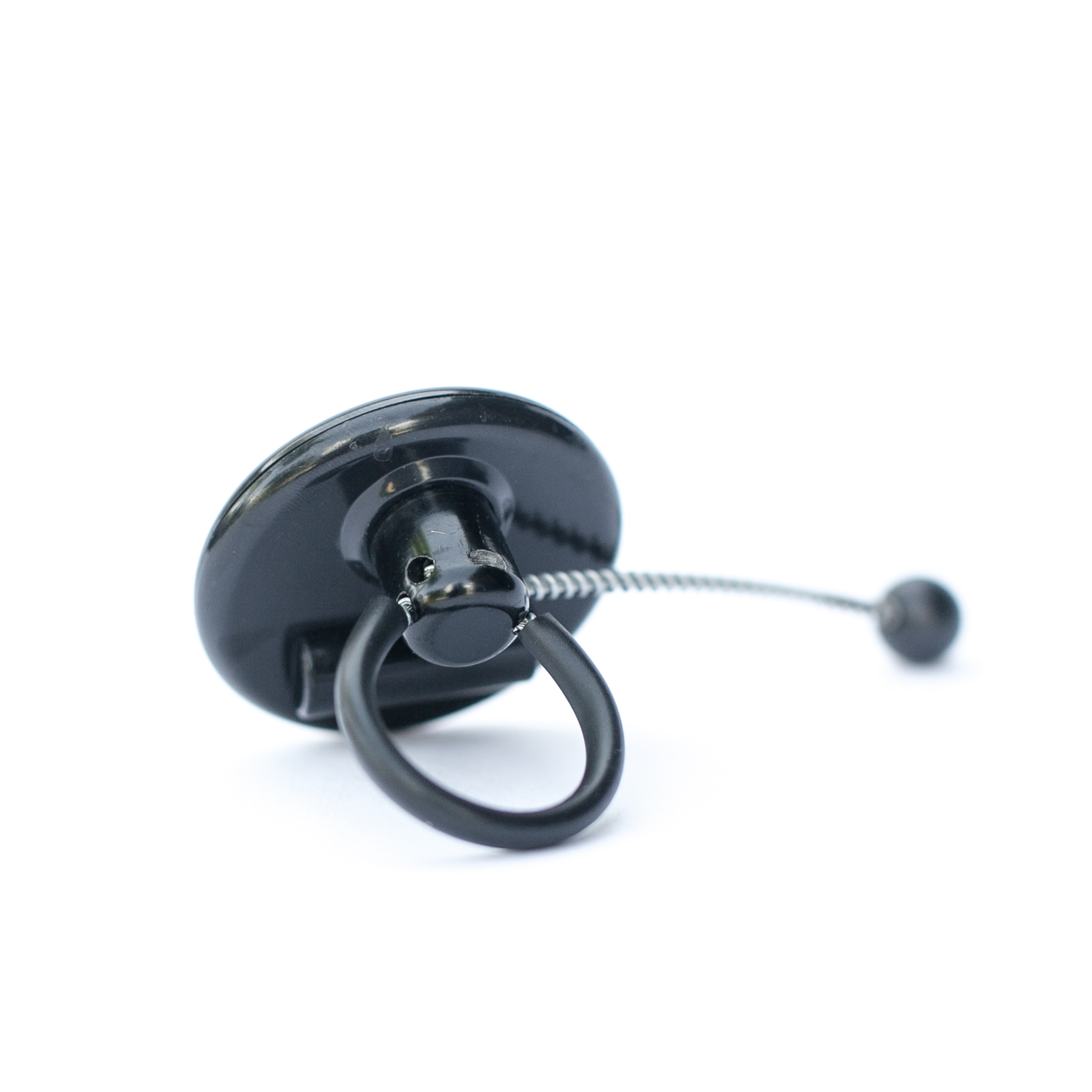
The TAG1090 RF Bottle and Sports Tag is specifically designed to protect bottles, golf clubs, bats, and similar items, providing versatile and reliable security. This tag operates on the 8.2MHz RF frequency, making it compatible with Checkpoint systems and all other 8.2 RF security systems. Whether you’re securing high-value sports equipment or liquor bottles, this tag offers a robust solution to deter theft. For additional flexibility, this tag is also available in AM technology.
Key Features:
• Versatile Protection: Ideal for securing bottles, golf clubs, bats, and similar items.
• RF Technology: Operates on the 8.2MHz frequency, compatible with Checkpoint systems and all 8.2 RF security systems.
• Reliable Security: Provides strong, tamper-resistant protection for valuable merchandise.
• Flexible Options: Also available in AM technology for use with different security setups.
• Bulk Supply: Comes in boxes of 100 tags, perfect for retail environments.
Quantity: Comes in boxes of 100 tags.
Product Code: TAG1090 Bottle and Sports Tag - 8.2MHz - NEW - BLACK
For alcohol that ships in a box, gift sets, boxed cognac, cartoned premium brands, a paper thin RF label is often the better fit. Checkpoint RF labels are virtually flat and can be applied to the carton or source tagged into the packaging without changing how the product looks on the shelf. This is where source tagging earns its keep. When labels are applied during manufacturing or packaging, before the product ever reaches the store, protection is consistent, invisible, and does not depend on a busy stocker remembering to tag every unit. Major spirits producers have moved in this direction, pre tagging bottles and cases in the supply chain rather than leaving all of it to store staff.
Matching the Protection to the Exit
The tag on the bottle only matters if the pedestals at the door are the right technology for the opening. Two systems dominate retail. Checkpoint runs on RF at 8.2 MHz and is known for those paper thin labels that suit packaged goods and tight shelf presentation. Sensormatic runs on AM at 58 kHz and is known for strong detection and wide pedestal coverage, up to about eight feet between pedestals on certain systems. That wide coverage matters at the front of a supermarket, where exit and entrance openings are broad and a narrow detection zone would leave gaps a practiced crew walks right through. Both technologies perform well in high traffic, and the right choice depends on the store's layout and the mix of merchandise, not on one system being universally better.
RFID is increasingly part of this picture too. It integrates with both AM and RF environments, and for high value spirits it adds item level visibility, so a retailer can see what left the shelf and when, not just hear an alarm at the door. The alarm and the inventory signal work together.
Two operational details decide whether any of this holds up. First, deactivation and tag removal have to be engineered into the checkout, every lane, so paying customers never trip the alarm and staff never get trained to ignore it. An EAS system the cashiers have learned to wave through is worse than none. Second, the tag has to match the bottle. Bottle locks for glass spirits, RF labels for boxed and cartoned product, and source tagging wherever the manufacturer supports it. Get those two things right and the open shelf stops being the easiest target in the store.
Retail Security Group Inc. provides professional EAS system installation, maintenance, and consultation across all 48 continental U.S. states. Whether you are protecting a supermarket spirits aisle, a full liquor department, or a mixed floor of high shrink categories, we help you select and deploy the right combination of Checkpoint RF and Sensormatic AM hardware, bottle locks, labels, and source tagging for the merchandise you actually sell. Info@SecurityTagStore.com
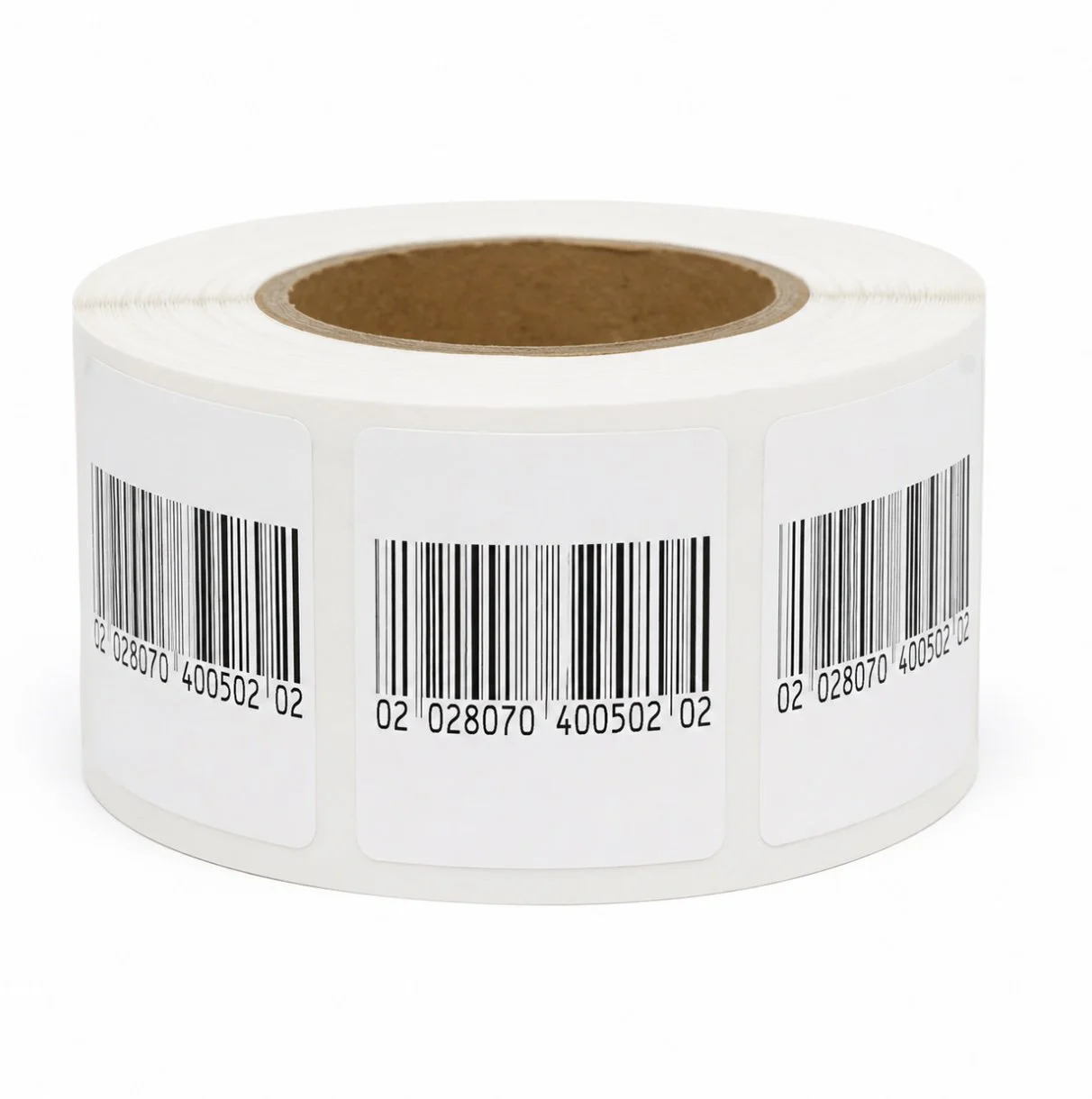
Protect boxed and hard to tag merchandise with these 400 Series barcode security labels. Built on 8.2MHz RF technology, the most common EAS frequency in the world, they work with all Checkpoint 8.2 systems and blend into packaging thanks to the printed barcode face. Compare to Checkpoint 410 labels. Perfect for liquor bottles, fragrance, pharmacy goods, beauty supply, packaged goods, and groceries, with plain white versions also available.
Key Features
8.2MHz RF technology: Works with all Checkpoint 8.2 systems
Dimensions: 40mm × 40mm
Barcode face: Blends into packaging like an ordinary product label
Label solution: Great for anything you cannot use a hard tag on
Use cases: Liquor, fragrance, pharmacy, beauty supply, packaged goods, and groceries
Comparable product: Compare to Checkpoint 410 labels
Quantity: 2,000 labels per order
Product Code: TAG1420-BC Barcode Labels 400 Series