
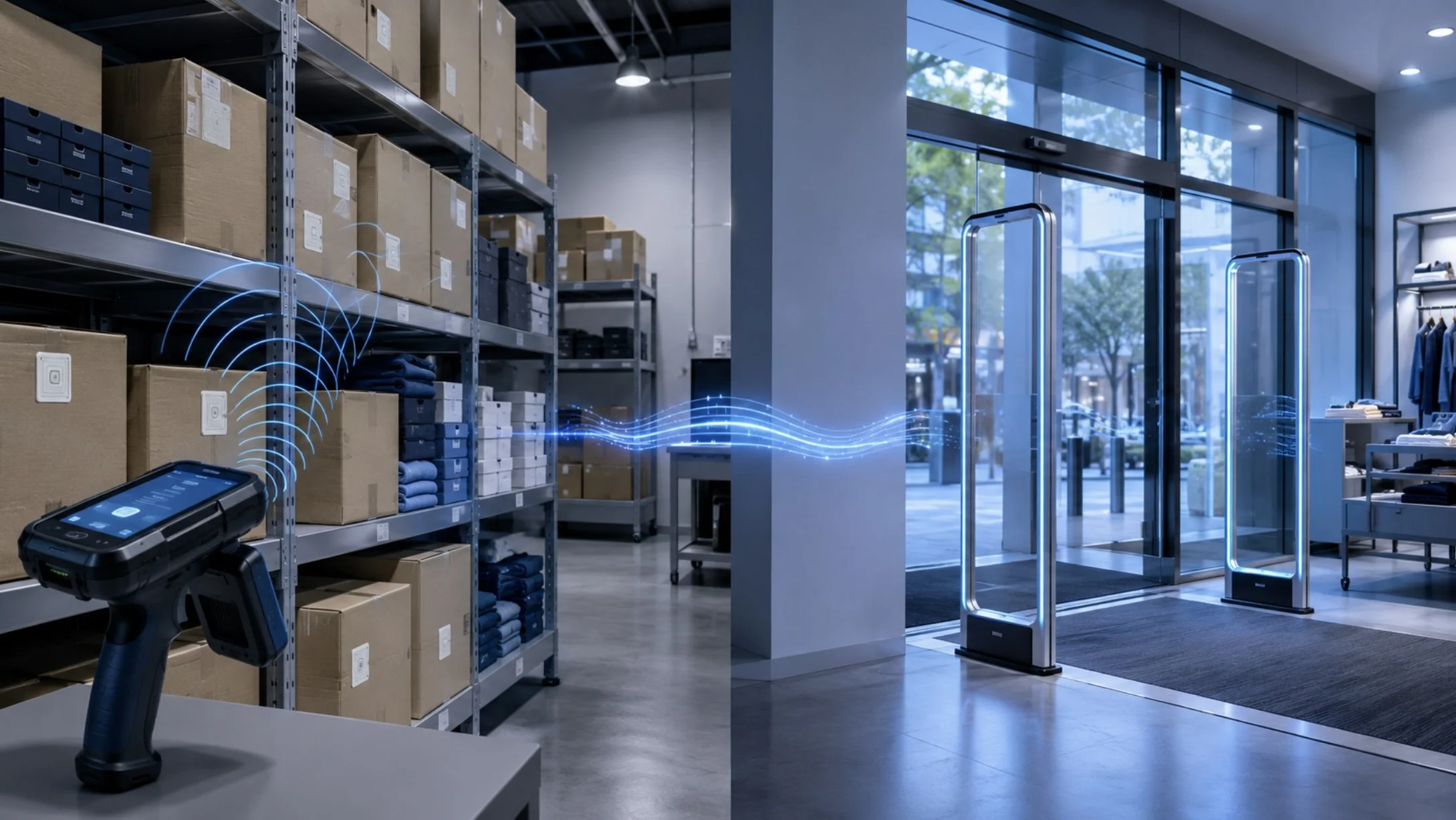
RFID and EAS are partners, not replacements…
In February 2026, Avery Dennison launched its AD IdentiFresh RFID inlay series, built specifically for high moisture, cold environments like refrigerated meat and deli cases. The launch follows the company's well publicized work with Walmart, which is rolling RFID into fresh food categories so associates can track freshness, rotate stock, and cut waste. Walmart's stated goal is to halve its operational food loss and waste intensity by 2030.
https://www.averydennison.com/en/home/news/press-releases/avery-dennison-launches-ad-identifresh.html
https://www.grocerydive.com/news/walmart-rfid-technology-fresh-categories-meat-deli/803567/
Notice what that announcement is about. Freshness. Inventory. Rotation. Waste. Nobody at Walmart is claiming RFID on a pack of ground beef will stop someone from walking it out the door. That distinction matters, because as RFID adoption accelerates across retail, a lot of store owners are quietly asking the wrong question: if I tag everything with RFID, do I still need EAS?
The short answer is yes. RFID and EAS solve different problems. They can share infrastructure, feed each other data, and live at the same exit, but they are not the same tool and one does not replace the other.
What RFID actually does
RFID gives every item its own digital identity. A reader pings the tag, the tag answers, and the system knows exactly what that item is, where it is, and in the fresh food case, how old it is. That is enormously powerful for inventory accuracy, which is why a large percent of North American retailers now use RFID in some form. It turns a once a quarter physical count into something close to real time visibility.
What RFID does not do well is stop theft at the moment it happens. A passive RFID tag is designed to be read, and as of now, does not to reliably trigger a loud immediate alarm the way a dedicated EAS pedestal does. RFID tells you what left and when you reconcile the data. EAS tells you something is leaving right now, while the person is still standing at the door.
What EAS actually does
Electronic Article Surveillance exists for one job: detect protected merchandise passing through the exit and sound the alarm in that instant. The two dominant platforms handle it differently. Checkpoint systems use RF technology operating at 8.2 MHz, known for paper thin labels that lie flat against packaging. Sensormatic systems use AM technology operating at 58 kHz, known for strong detection and wide pedestal coverage that can reach up to 8 feet between pedestals on certain systems, which suits wide exits and big box entrances.
Both platforms perform well in high traffic stores. Both support hard tags and soft labels. RFID integration is not exclusive to one EAS brand or one frequency. Whether you run Checkpoint RF or Sensormatic AM, you can layer RFID on top or run it completely independently.
Where they overlap, and where they stay separate
The confusion comes from the fact that RFID and EAS sometimes live in the same hardware at the same doorway. A single pedestal can read RFID tags for inventory and item level visibility while the EAS function watches for active, unpaid merchandise crossing the threshold. To a shopper walking out, it looks like one system. Behind the scenes, it is two distinct functions running in parallel.
Keeping them separate in your head is what leads to smart decisions. RFID answers the question what do I have and where is it. EAS answers the question is something being stolen right now. When a retailer treats RFID as a loss prevention system, they get blindsided, because RFID was not designed to physically deter a determined shoplifter and forcing it to sound an alarm is not effective. Likewise, EAS is not an inventory system.
The combined approach, sometimes called shrink visibility, is where 2026 retail is heading. RFID shows the pattern, which items are disappearing, from which zones, at what times. EAS provides the event, the alarm at the door that stops the loss before it completes. One is the analyst. The other is the guard. You want both.
https://www.rfidjournal.com/news/from-alarms-to-insights-how-rfid-is-redefining-the-future-of-retail-loss-prevention/224951
The tagging decision still comes down to the merchandise
None of this changes the fundamentals of physical protection. Hard tags still offer better detection rates than labels, are far harder to defeat, and act as a visible deterrent, which is why they belong on apparel, footwear, handbags, and accessories that can physically carry them. Labels still fill the gap for packaged goods where a hard tag cannot go, such as blister packs, boxed cosmetics, and OTC medications. Ink tags still add a layer of consequence by ruining the garment if tampered with. Bottle locks, spider wraps, cable locks, and lanyard tags still extend protection to wine, boxed electronics, power tools, and paired footwear.
RFID can ride along on many of these formats, but the protection logic does not change. You choose the tag based on the item and the threat, then add item level RFID data tracking on top.
The takeaway for store owners
The Walmart fresh food rollout is a useful reminder precisely because it has nothing to do with theft. It shows RFID doing what RFID does best, managing inventory and reducing waste. Your loss prevention strategy still needs a system whose entire purpose is stopping merchandise at the door. The retailers winning in 2026 are not picking one over the other. They are running EAS for protection and RFID for visibility, and getting the benefits of both.
Retail Security Group Inc. provides professional EAS installation, maintenance, and consultation across all 48 continental U.S. states. Whether you run Checkpoint RF, Sensormatic AM, or are planning an RFID integration on top of your existing system, we can help you build a setup that protects merchandise and delivers inventory visibility without confusing the two. Reach us at Info@SecurityTagStore.com
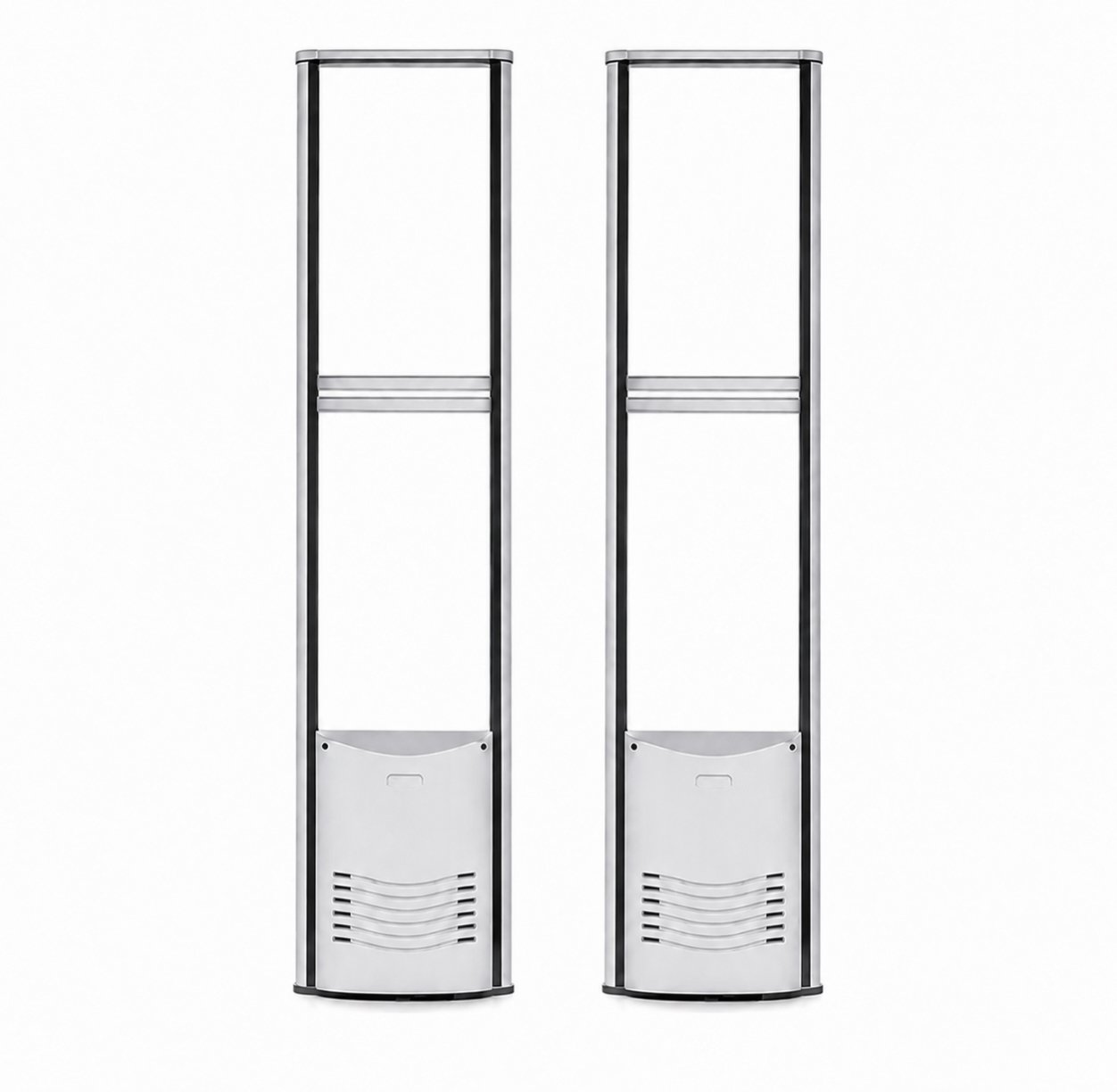
Cover large entryways with the Century Classic Primary and Secondary Transceiver system, a new AM 58KHz dual pedestal package that protects up to 12 feet total, 6 feet between the units plus 3 feet on each outer side. Built on the latest DSP technology and advanced signal filtering, it identifies label signals precisely while screening out environmental noise for minimal false alarms. The system works with all AM 58KHz security tags and is designed for professional installation.
Key Features
AM 58KHz technology: Works with all AM 58KHz security tags.
Wide coverage: Up to 12 feet, 6 feet between pedestals plus 3 feet on each outer side.
Latest DSP processing: Precise identification of label signals with noise reduction for maximum detection efficiency.
Interference resistance: Advanced filtering algorithms minimize false alarms and keep coverage consistent.
New condition: Sleek, durable design that blends into any retail space.
Professional installation required: Optimized for expert setup and precise operation.
Quantity: 2 new pedestals (1 primary, 1 secondary) with power supply
Dimensions: 61 × 15.5 × 5 in (per pedestal)
Product Code: C2001-2 Classic Primary and Secondary Transceivers, AM 58KHz, New