
The national shoplifting numbers look better than they have in years. The Council on Criminal Justice reported that shoplifting in 2025 was down roughly 10 percent compared to 2024, and June 2025 alone saw a 26 percent decline against the prior June. That is the largest single month drop in the recent dataset. It is real progress and it deserves to be noted before anyone starts the summer planning conversation.
What the headline number does not change is the operational reality on the sales floor. Summer is still a distinct shrink window for most retailers, and the reasons have nothing to do with whether national totals are trending up or down. They have to do with how stores actually run between Memorial Day and Labor Day.
Foot traffic surges. Doors get propped open. Sidewalk displays move merchandise outside the controlled perimeter. Staff schedules thin out as PTO requests stack up. Kids between ten and twenty, the single largest demographic of casual shoplifters, are out of school with idle time and pocket money. Daylight stretches later, which extends the windows when a thief can walk out under cover of a crowd. None of that is captured in a year over year percentage drop.
Organized retail crime is not taking the summer off either. In May 2026, Las Vegas Metro detectives, working with the Nevada Organized Retail Crimes Association, recovered more than $418,000 in stolen merchandise tied to a single buyer running a fencing operation. A 49 year old was booked into Clark County Detention on charges of participating in a retail theft ring and receiving stolen property valued over $100,000. That is one case, in one city, in one month. ORC crews work on a schedule driven by demand and resale velocity, not the academic calendar.
The Summer Product Mix
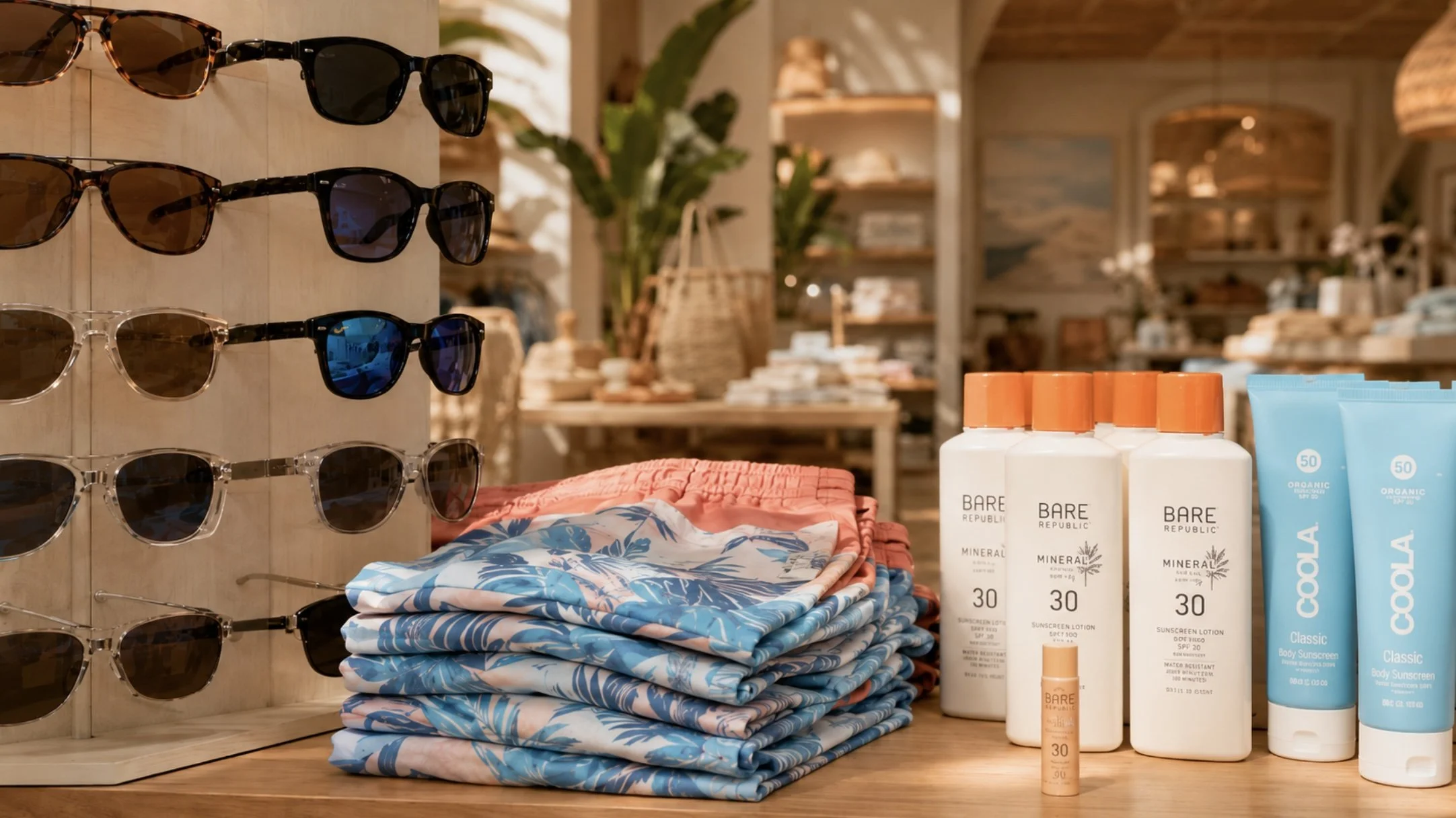
What changes in summer is what is at risk. Stores swing inventory toward categories that are easy to conceal, easy to resell, and built for outdoor warm weather use.
Sunglasses are the cleanest example. Small, high ticket, recognizable resale value, and almost impossible to protect with a label. Lanyard tags solve this. They lock to the frame, set off the pedestals on exit, and are visible enough to function as a deterrent at the rack.
Swimwear and sandals follow the same logic. Lightweight, foldable, easy to pocket, and high enough margin to be worth a booster's time. Hard tags work on swimwear when the fabric construction allows. Lanyard tags keep paired sandals together and prevent the classic walk out where one shoe is left in the store and the other is in a pocket.
Sunscreen, after sun lotion, lip balm with SPF, and the rest of the seasonal OTC section move into prime real estate every summer. These are packaged goods. Hard tags will not work. Paper thin RF labels from Checkpoint sit flat on the box or tube without bulking up the packaging, which matters when the product is on a peg hook and customers expect a clean look. AM labels from Sensormatic are also widely used in this category and detect well at the pedestal. Both technologies work well alongside RFID, which is increasingly relevant for fast turning seasonal SKUs where inventory visibility matters as much as the alarm itself.
Cosmetics and fragrance volume rises through the summer wedding and travel season. These are some of the most stolen goods in retail, with high resale velocity on secondary marketplaces. Thin labels, spider wraps on boxed fragrance gift sets, and locked display cases for the highest value SKUs are the standard playbook.
Outdoor electronics deserve their own line. Portable speakers, action cameras, smartwatches, and wireless earbuds are summer movers, and theft of wireless earbuds and smartwatches has reportedly risen by roughly 25 percent year over year. Spider wraps secure the boxes. Cable locks anchor demo units. For wide-aisle stores with open exits to a parking lot or boardwalk, the wider pedestal coverage of AM systems, which can reach up to eight feet between pedestals on certain Sensormatic configurations, is a meaningful advantage.
Wine and spirits volume climbs through every long weekend from Memorial Day through Labor Day. Bottle locks remain the right answer here. They are visible, they are cheap on a per unit basis, and they make a casual grab and go effectively impossible without dwell time the thief does not want to spend.
Grilling tools, power gear, and outdoor hardware round out the summer mix. Cable locks are the workhorse for anything boxed and bulky.
Layout and Coverage
Two things change physically in summer stores. Doors get held open for HVAC relief and customer flow, and merchandise migrates closer to the entrance to catch impulse traffic. Both choices widen the detection zone the EAS system has to cover.
Ink tags are worth a final word. The thief who plans to defeat the alarm is gambling on a clean getaway. An ink tag changes the math by destroying the garment on tamper. For high ticket summer apparel and designer sunglasses, that consequence is what closes the loop between alarm and actual deterrence.
The Bottom Line
The 2025 numbers are encouraging. The summer operating environment is still what it always was. Audit the summer SKU list now. Match the tagging to the product. Test the pedestals before the holiday weekend. The retailers who treat the national decline as permission to relax are the ones who will be reading another fox news bust headline with their own store name in it.
Retail Security Group Inc. provides professional EAS installation, ongoing maintenance, and consultation across all 48 continental U.S. states. From single door boutiques to multi store chains, we help retailers select and deploy the right choice of RF and AM hardware, hard tags, labels, lanyard tags, bottle locks, spider wraps, and ink tags for the merchandise actually on the floor. Contact us at Info@SecurityTagStore.com.
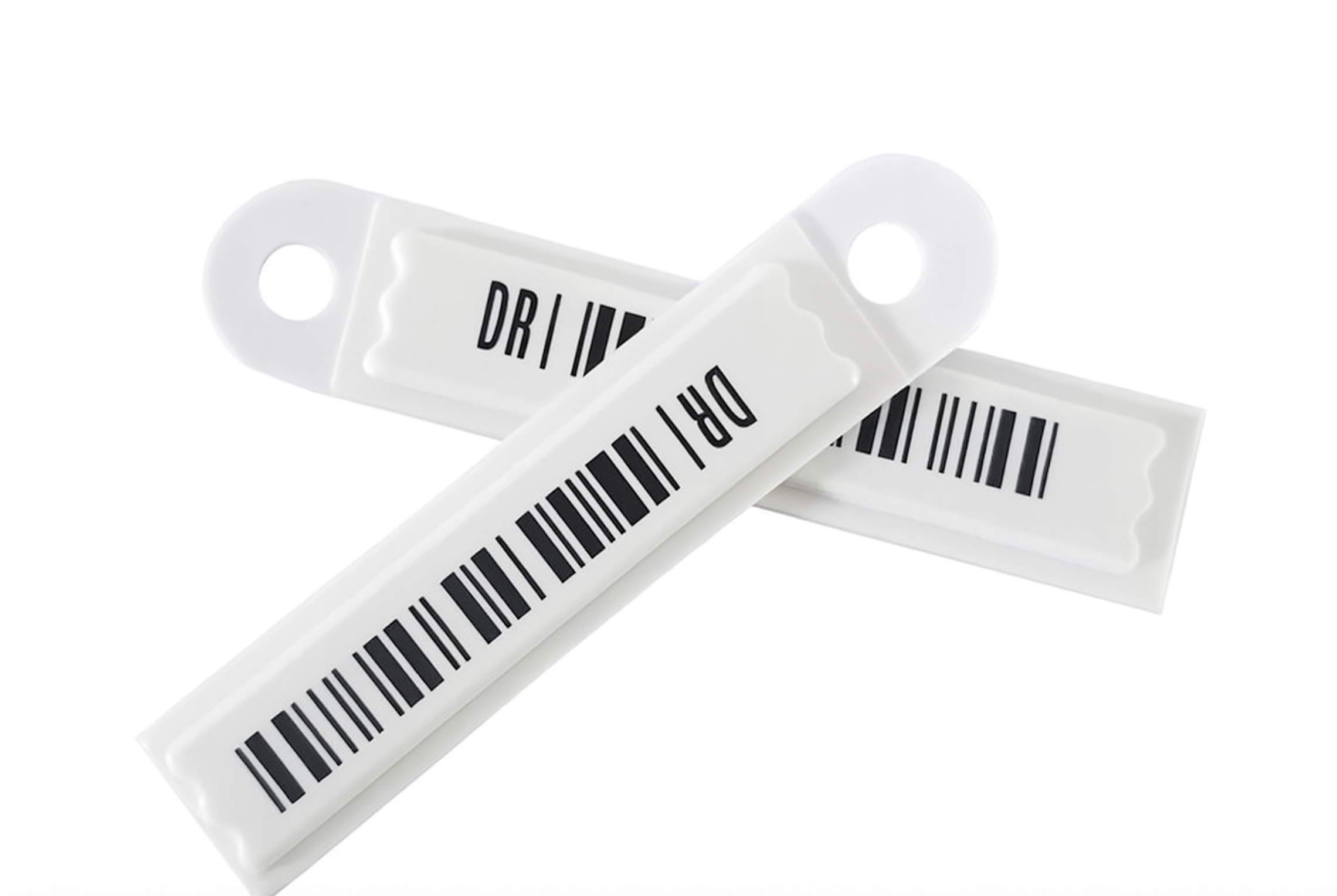
The TAG2104 Jewelry Hang Label is a specialized 58KHz AM security solution designed for items where adhesive or pin tags are not practical or desirable. These labels attach using included plastic ties, making them perfect for securing jewelry, eyeglasses, watches, shirts via buttonholes, and other delicate or irregularly shaped merchandise.
Each bag contains 1,000 non-adhesive hang labels and 1,000 plastic ties, providing a ready-to-use solution for retailers who need discreet, non-damaging security without adhesive residue or pinholes. Fully compatible with Sensormatic and other 58KHz AM systems, the TAG2104 is ideal for boutique and specialty retail environments.
Key Features:
• Non-Adhesive, No-Pin Design: Attaches with included plastic ties, perfect for items where stickers or pins are impractical.
• AM Technology: Operates on the 58KHz frequency; compatible with all standard AM security detection systems.
• Complete Kit: Each bag includes 1,000 AM hang labels and 1,000 plastic ties for quick and easy application.
• Safe for Delicate Items: Ideal for jewelry, watches, eyewear, and clothing.
• Low-Profile Form Factor: Slim label design is effective yet unobtrusive, maintaining product visibility and presentation.
Label Specifications:
• Frequency: 58KHz (AM)
• Label Length: 58mm ± 0.2mm
• Label Width: 10.8mm ± 0.2mm
• Thickness (excluding liner): ≤ 1.9mm
• Thickness (including liner): ≤ 2.0mm
Quantity: Sold in bags of 1,000. Each bag includes 1,000 hang labels and 1,000 plastic ties.
Product Code: TAG2104 – Jewelry Hang Label – AM 58KHz – Includes Plastic Ties
https://www.fox5vegas.com/2026/05/14/las-vegas-man-arrested-418k-organized-retail-crime-operation/