
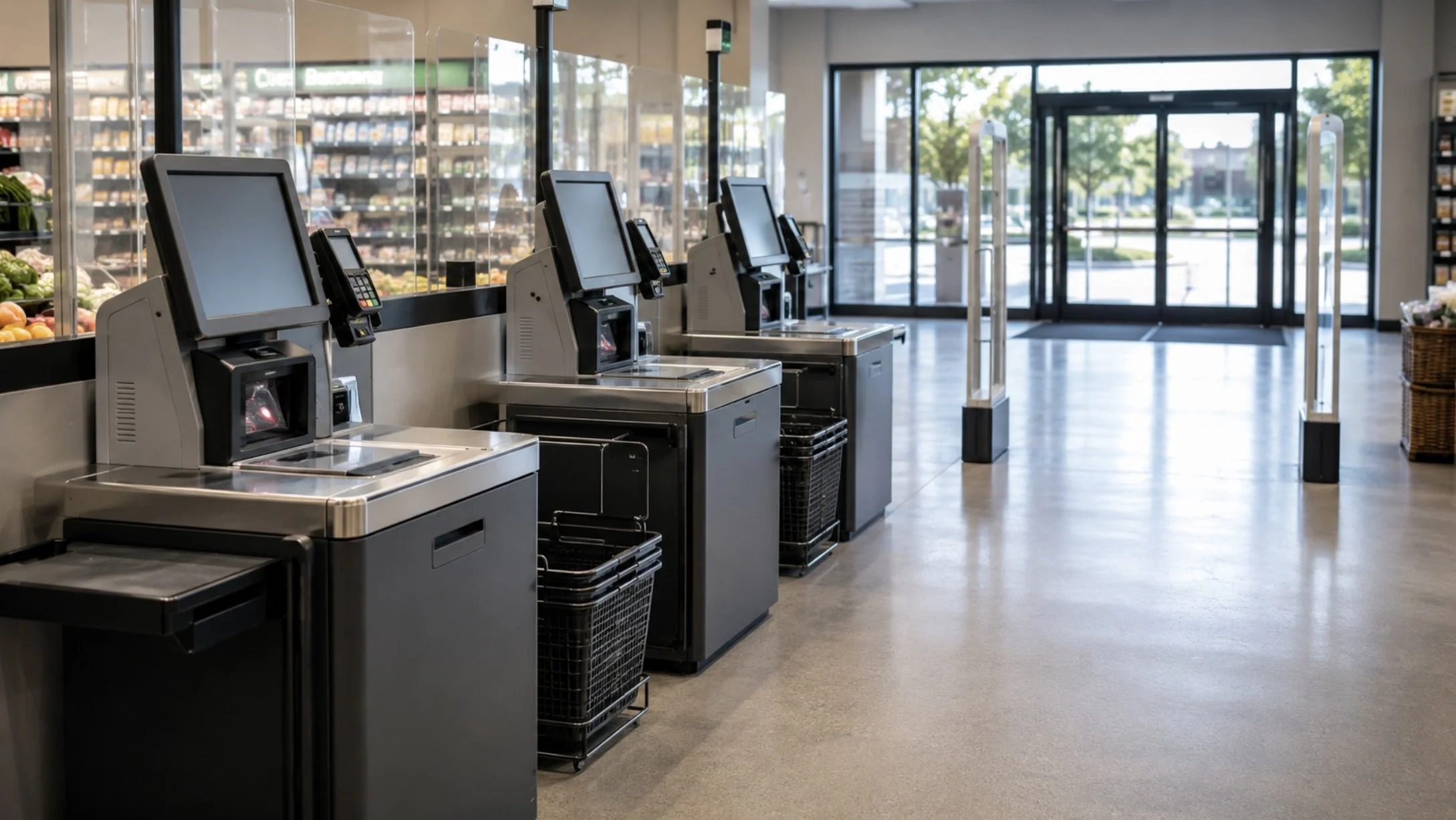
Self checkout…
A new study has put self checkout loss back at the center of the loss prevention conversation. In June 2026 the University of Leicester released the Self Checkout Loss Report 2026, led by criminology professor Dr Matt Hopkins and commissioned by ECR Retail Loss. It is one of the largest studies of its kind, drawing on 39 retailers with a combined annual turnover near one trillion euros. The headline finding is that self checkout is no longer the future. It is the present. More than half of all store transactions surveyed in the study ran through a self checkout lane.
That shift came with a cost. The study found that stores saw losses rise by an average of 22 percent in the first year after introducing self checkout. The more encouraging part of the report is that losses today are not meaningfully higher than they were in 2018, which tells you the retailers who took the risk seriously have learned how to manage it. The ones still bleeding are the ones who installed the machines and assumed the technology would police itself.
Why self checkout changes the math
Here is the part that does not get said often enough. A staffed register is not just a place to pay. It is a control point. The cashier scans every item, watches the basket, deactivates the security label, and removes the hard tag. When you remove the cashier, you do not just remove labor. You remove four separate loss prevention functions and hand the first three to the customer.
The Leicester report is careful to point out that most of the loss is not malicious. Colin Peacock, who coordinates ECR Retail Loss, put it plainly when he said most self checkout loss is generated by ordinary people making everyday mistakes. Awkward items, fiddly barcodes, confusing screens, and slow help all produce missed scans. Estimates of how much of the total loss is deliberate theft range widely, from 6 percent to 80 percent depending on the store and the study.
That range is exactly why a single fix does not work. You have to treat the honest mistake and the deliberate walkout as two different problems.
What lane level technology does and does not solve
Most of the attention goes to the lane itself. Weight scales compare the item placed in the bagging area against a database. Camera systems watch for missed scans. Nudges prompt the shopper to rescan. These tools attack the missed scan problem, and they help. The report found product weight checking was the most deployed grocery intervention at 71 percent, and that 77 percent of loss prevention managers still view weight alerts as their best current option.
But weight scales and camera AI share the same limit. They work only at the lane, and only while the shopper is standing there. They do nothing about the customer who skips the lane entirely, or who clears the alert and walks out with merchandise that never got scanned. For that, you need something at the exit. That is what electronic article surveillance has always been.
Why EAS is the genuine last line of defense
EAS does not care how an item was checked out, or whether it was checked out at all. A live security tag or label that passes between the pedestals at the door sets off the alarm. Cashier, self checkout, or no checkout, the logic is the same. When the human in the loop disappears, the door becomes the one control point you have left, and EAS is what turns the door into a control point instead of an open hole.
The two main systems both fit this job. Checkpoint runs on RF at 8.2 MHz and produces paper thin labels that disappear onto packaged goods, which is most of what moves through a grocery or drugstore self checkout. Sensormatic runs on AM at 58 kHz and offers wide pedestal coverage, up to eight feet between pedestals on certain systems, and has a line of AM labels. RFID now integrates with both and adds item level visibility on top of the alarm. There is no single right answer. The right choice depends on your store layout, your merchandise, and your exit.
Designing deactivation into the self checkout, not around it
This is where stores get into trouble. At a staffed lane the cashier deactivates the label and pulls the hard tag as a matter of routine. At self checkout, that step has to be engineered in or it does not happen. If your RF or AM labels are not being deactivated at the self checkout, every legitimate buyer walks out with a live label and your pedestals alarm on paying customers. Nuisance alarms train your staff and your shoppers to ignore the system, which is worse than having no system at all.
The fix is to integrate a deactivation pad into the self checkout scan bed so labels clear automatically as they are scanned, and to verify it actually works during routine maintenance. Hard tags are a different and in some ways stronger story at self checkout. A customer cannot deactivate a hard tag. It requires a detacher that only staff control, which means high theft apparel, footwear, and accessories can carry a reusable hard tag that forces the shopper to a staffed counter or trips the alarm on the way out. For packaged goods that cannot physically accommodate a hard tag, a properly deactivated label fills the gap.
The takeaway
Self checkout is not going away. More than half of transactions already run through it, and the retailers who win are not the ones who resist it. They are the ones who rebuild their loss prevention around the new reality. Lane level tools handle the honest missed scan. EAS at the door handles everything that gets past the lane. The two are not competitors. They are layers, and a self checkout store needs both.
Retail Security Group Inc. provides professional EAS system installation, maintenance, and consultation across all 48 continental U.S. states. Whether you are rolling out self checkout, retrofitting deactivation into existing lanes, or servicing Checkpoint or Sensormatic equipment, we can help. Info@SecurityTagStore.com
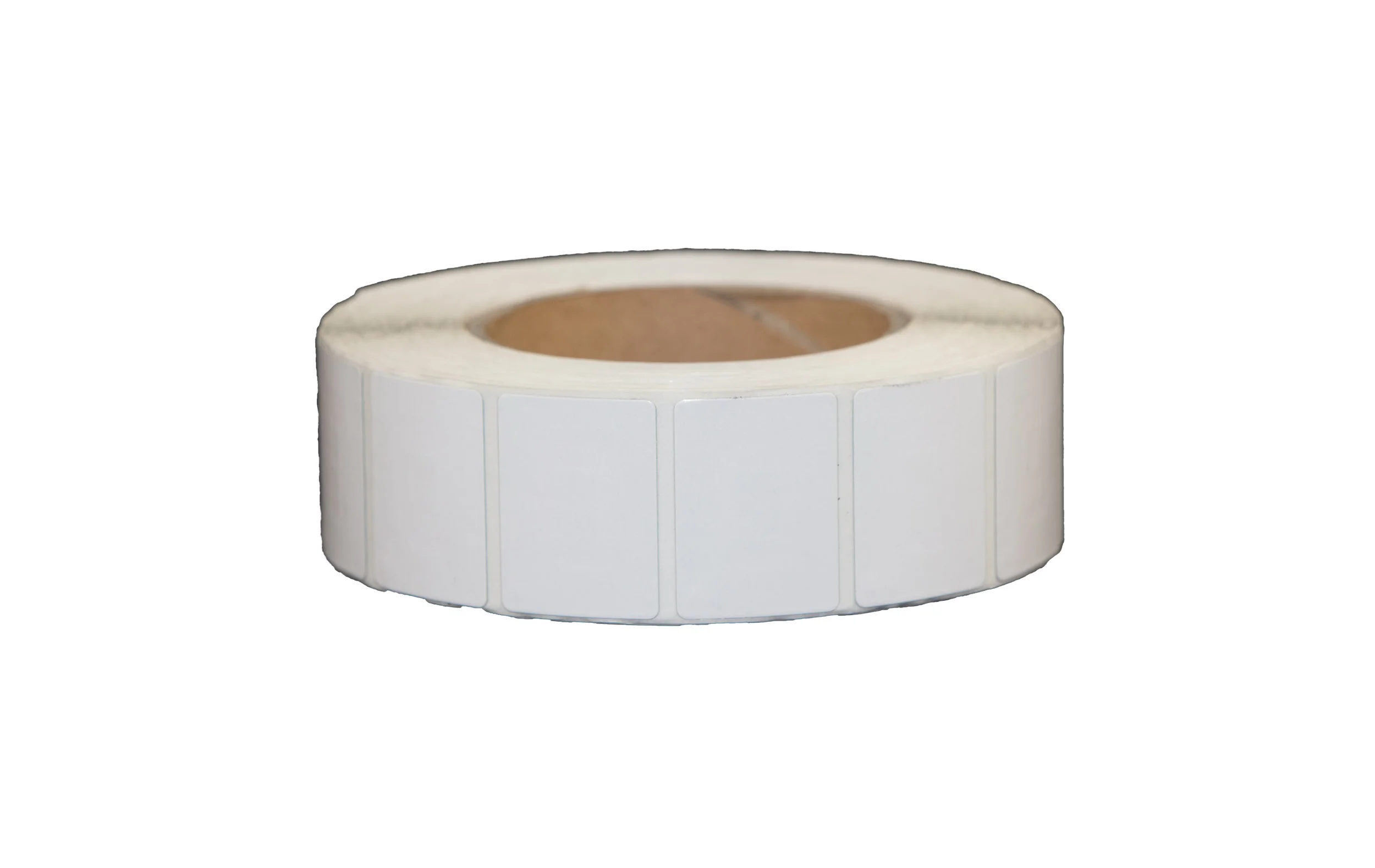
Protect boxed and hard to tag merchandise with these 722 Series plain white security labels, among the smallest Checkpoint compatible labels we stock. Built on 8.2MHz RF technology, the most common EAS frequency in the world, they work with all Checkpoint 8.2 systems and offer good detection performance with an FDA approved strong adhesive. They are perfect for liquor bottles, fragrance, pharmacy goods, beauty supply, packaged goods, and groceries, and barcode versions are also available.
Key Features
8.2MHz RF technology: Works with all Checkpoint 8.2 systems
Compact 26mm x 29mm format: Ideal for smaller boxed items
Plain white face: Clean look on any packaging
FDA approved strong adhesive: Stays put on boxes and packaging
Good detection performance: Reliable pickup at the door
Use cases: Liquor, fragrance, pharmacy, beauty supply, packaged goods, and groceries
Quantity: 2,000 labels per order, supplied on rolls of 2,000; full boxes contain 20,000 labels
Dimensions: 26mm x 29mm (1.02 x 1.14 inches)
Product Code: TAG1722 Plain White Labels 722 Series