

Tariff Refunds Start with the CAPE Portal Launch…
The Consolidated Administration and Processing of Entries portal opened Monday, April 20, 2026, and with it, the first real pathway for importers to recover what U.S. Customs and Border Protection estimates will reach $166 billion in refunds for tariffs the Supreme Court ruled unconstitutional in February. The money at stake is enormous. The process is narrower than the headlines suggest, and the impact on retailers will not be distributed evenly.
What the Supreme Court Actually Did
In a 6 to 3 decision handed down February 20, the Supreme Court ruled that the prior administration's use of the International Emergency Economic Powers Act to set new import tax rates in April 2025 exceeded presidential authority. The court held that Congress, not the executive, controls tax-setting powers, and that the 1977 emergency powers law was never written to authorize tariffs justified by a trade deficit declared a national emergency. More than 330,000 importers paid duties under that framework before the decision came down.
https://www.washingtonpost.com/politics/2026/04/19/tariff-refund-trump-customs/3c212734-3c22-11f1-bb46-ed564688d953_story.html
How the Refund Portal Works
CBP has built the refund mechanism inside the Automated Commercial Environment Secure Data Portal. Importers and authorized brokers submit a CAPE Declaration, which is a comma-separated values file listing entry numbers. Entry numbers must be 11 alphanumeric characters. Each declaration can include up to 9,999 entries, and multiple declarations are permitted. The system is designed to consolidate refunds rather than process them entry by entry.
If a claim is accepted, CBP says importers should expect refunds within 60 to 90 days, subject to compliance review. Phase 1 of the rollout covers certain unliquidated entries and entries within 80 days of liquidation. Importers who have not already added bank account information to the Importer sub-account in their ACE Portal cannot receive refunds until they do. Trade lawyers and analysts are skeptical the system will move at the pace CBP projects, particularly as the queue fills up in the first weeks.
https://www.cbp.gov/trade/programs-administration/trade-remedies/ieepa-duty-refunds
Who Gets Paid First
According to an April 10 Citi analysis, the largest refunds will flow to the biggest importers. Walmart is in line for approximately $10.2 billion. Target is expected to recover $2.2 billion. Nike is due roughly $1 billion. Kohl's comes in at $550 million, Gap at $400 million, and Macy's at $320 million. For the national chains, the refunds will be meaningful but spread across balance sheets that already accounted for much of the cost.
https://www.kold.com/2026/04/21/businesses-begin-filing-tariff-refunds-after-supreme-court-ruling/
Smaller retailers will see a different experience. Small and mid-sized importers operate on thinner margins and had less ability to absorb tariff costs or stockpile inventory ahead of duties. Many of them financed tariff payments with short term credit and are still carrying that cost. The filing process itself, which relies on accurate entry records and an active ACE Portal account with current banking information, also favors retailers with in house customs expertise or established broker relationships.
https://fortune.com/2026/04/20/cape-tariff-refund-portal-small-business-challenges/
What the Refund Is and Is Not
It is important to understand what these refunds represent. They are capital recovery, not new profit. Most of the duties were already absorbed into higher consumer prices, thinner gross margins, and front loaded inventory purchases made to avoid further tariff exposure. The refund returns cash retailers already spent, often months or years ago. For companies that had to borrow or draw on lines of credit to cover the tariff bill, the recovered amount will first go toward paying down that debt rather than reinvestment.
What that means practically is that retailers should not expect the refund to change their income statement dramatically in a single quarter. The balance sheet impact will be larger than the P and L impact. Cash will return, working capital will improve, and debt service will ease. None of that shows up in same store sales.
Why This Matters for Loss Prevention
Here is the part the general business press is not covering. The last two years of tariff pressure forced retailers to defer capital spending across every non revenue function, and loss prevention was one of the first places to take cuts. EAS system upgrades were delayed. Tag and label budgets were trimmed. Store level training hours were reduced. Meanwhile, organized retail crime has not waited for the tariff situation to resolve. Shrink remains a material drag on margin even after recent declines from pandemic peaks, and executives at Kroger, Target, Dollar General, and TJX have all pointed to shrink recovery as a direct contributor to margin expansion.
https://www.retaildive.com/news/retail-inventory-shrink-theft-levels-down-pandemic-highs/815222/
The retailers who recover tariff capital have a choice about where to redeploy it. The ones who put a portion of the refund into updated detection infrastructure, tag inventory, and professional installation will see the return show up in lower shrink over the next two to four quarters. The ones who treat the refund as a one time balance sheet cleanup and keep the loss prevention freeze in place will keep bleeding margin to theft.
Categories most affected by tariffs are also, not coincidentally, the categories most dependent on EAS protection. Cosmetics and health and beauty carry some of the highest shrink rates in retail, and Checkpoint RF labels, which are paper thin and easy to apply to packaging, remain the standard tool there. Apparel and footwear, which saw some of the largest tariff driven margin compression, depend on hard tags and ink tags to protect high turnover inventory. Electronics and power tool categories rely on spider wraps and cable locks. Sensormatic AM systems, which can cover up to eight feet between pedestals, are often the better fit for big box and wide aisle formats. Both RF and AM platforms integrate with RFID for retailers pairing loss prevention with inventory visibility.
The Practical Takeaway
File promptly. Confirm ACE Portal banking details this week. Expect 60 to 90 days minimum from acceptance to payment, and plan for longer if your entries require compliance review. Treat the refund as recovered working capital, not new revenue, and decide now where you want that capital to land when it arrives. The retailers who emerge from this cycle strongest will be the ones who use the recovered cash to close the loss prevention gap that widened during the tariff squeeze, not the ones who let it quietly absorb into general operating funds.
Retail Security Group Inc. provides professional EAS installation, ongoing maintenance, and loss prevention consultation across all 48 continental U.S. states. Whether you run Checkpoint RF, Sensormatic AM, or an RFID integrated platform, we can help you evaluate coverage, modernize tag and label inventory, and put recovered tariff capital to work where it protects margin. Info@SecurityTagStore.com
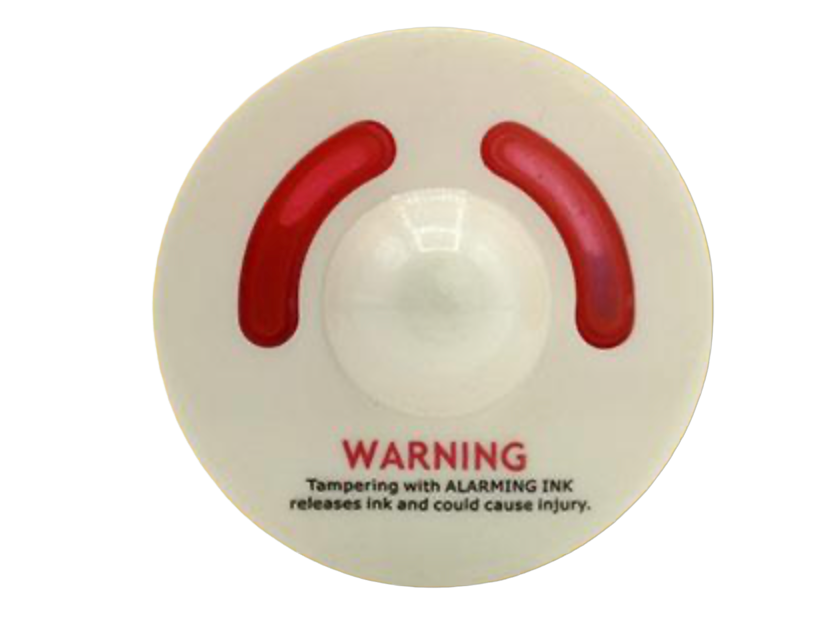
Deter shoplifting before it starts with the Hawkeye ink tag, an industry standard benefit denial tag sold new with pins included. Built on 58KHz AM technology, it works with all Sensormatic AM detection systems. If tampered with, the tag may release ink that can render a garment unwearable, which greatly reduces inventory loss related to shoplifting.
Key Features
AM technology: 58KHz frequency works with all Sensormatic AM systems.
Benefit denial: May release ink if tampered with, rendering garments unwearable and deterring theft.
Pins included: Every box ships with matching cone head pins.
Condition: Brand new stock.
Bulk pack: 500 tags per box for high volume tagging.
Quantity: Sold in boxes of 500 ink tags with 500 cone head pins included.
Product Code: TAG3003-AG Hawkeye Ink Tag, AM, New