
When a major drugstore chain has to call in undercover cops, it's a sign that prevention failed long before the arrests began.
This week, Philadelphia police wrapped up an undercover retail theft operation at CVS locations across the city that resulted in 39 arrests. The sting spanned nine stores, with a concentrated enforcement action at a single Center City location at 11th and Market streets accounting for 13 of those arrests alone. CVS itself initiated the operation, approaching the Philadelphia Police Department and asking to "do something on a larger scale," according to Inspector Ray Evers.
The results were eye opening, not just for the number of arrests, but for who was getting arrested. "Teachers, a contractor coming in his truck who thinks the Wawa is a buffet, and just steals," Inspector Evers noted. This wasn't a dragnet that only caught organized retail crime (ORC) rings. It caught a cross section of everyday people, opportunistic thieves who apparently felt confident enough to steal in broad daylight from staffed retail locations.
That confidence didn't come from nowhere. It came from a perceived lack of consequences and, critically, a perceived lack of barriers.
The Sting Is the Symptom. The Disease Is Weak Deterrence.
Let's be clear about what an undercover police sting actually is: it's a last resort. It's expensive, labor intensive, temporary, and reactive. It catches people after they've decided to steal. It does nothing to prevent the next person from making that same decision tomorrow.
That's not a knock on law enforcement. Philadelphia's operation was well executed, and the partnership between CVS and the PPD is exactly the kind of retailer law enforcement collaboration the industry needs more of. But no retailer can rely on periodic police stings as a loss prevention strategy. The math doesn't work: you can't put undercover officers in every store, every day, during every shift.
What you can do is make every store harder to steal from in the first place. And that starts with Electronic Article Surveillance.
What EAS Actually Does (and Why It Still Matters in 2026)
EAS systems are sometimes dismissed as "old technology," especially by people enamored with AI powered cameras, computer vision, and RFID inventory tracking. But here's the thing: EAS isn't competing with those technologies. It's the visible, physical foundation that makes everything else work better.
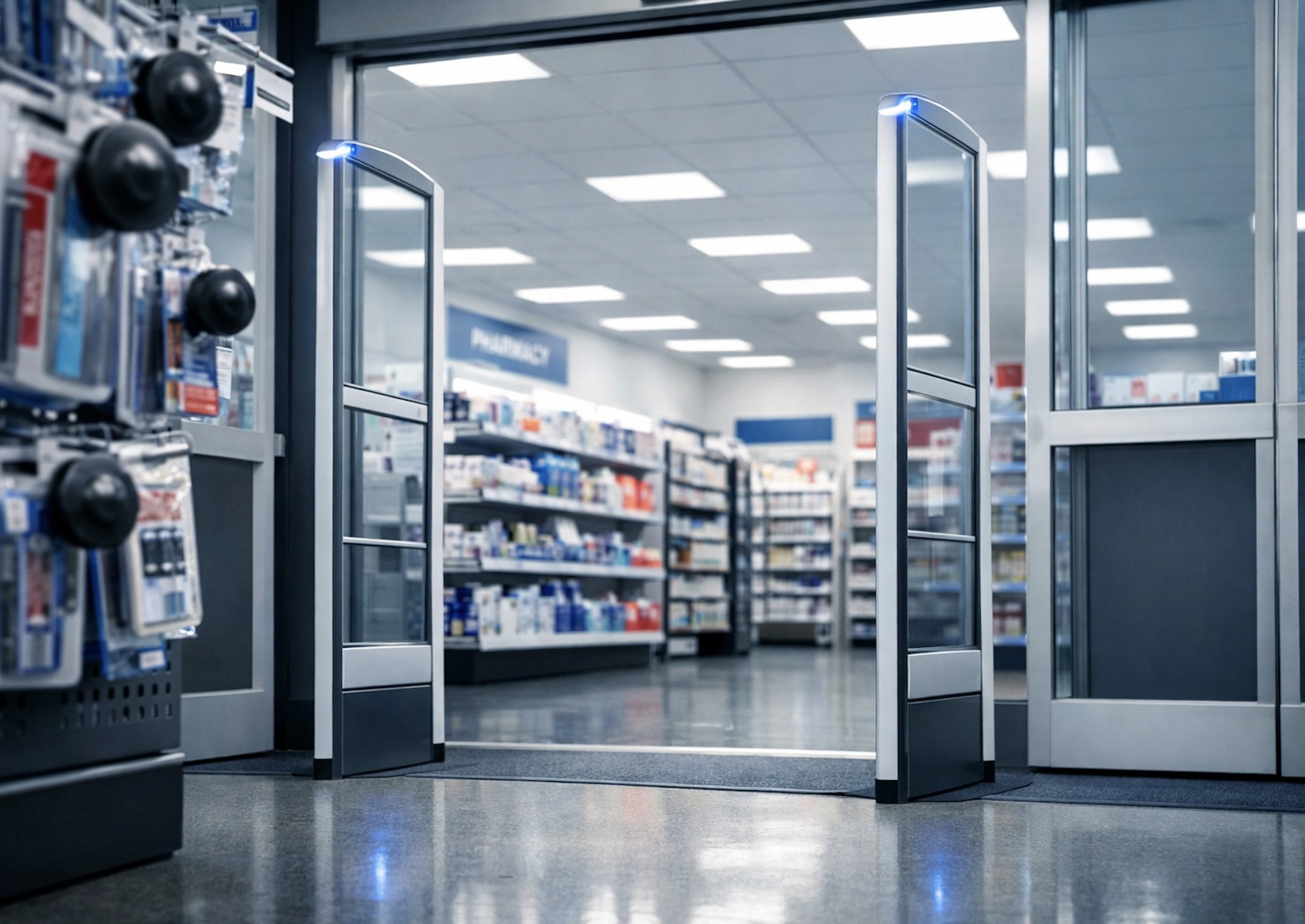
An EAS system has two core components: security tags or labels attached to merchandise, and detection antennas(pedestals or concealed systems) at store exits. When a tagged item passes through the detection zone without being properly deactivated or detached at the point of sale, an alarm sounds.
That alarm does two things simultaneously. First, it alerts staff to a potential theft in progress. Second, and arguably more important, it tells every person in the store that someone is watching and the merchandise is protected. Deterrence isn't just about catching thieves. It's about convincing would be thieves not to try.
AM vs. RF: Understanding the Two Major EAS Technologies
Not all EAS systems are created equal, and choosing the right one depends on your merchandise, store layout, and operational needs.
Acousto Magnetic (AM) systems, the technology behind Sensormatic's product line, operate at 58 kHz and are known for strong detection rates and resistance to false alarms. One of AM's biggest practical advantages is range: certain Sensormatic AM systems can cover distances of up to eight feet between pedestals, making them an excellent choice for retailers with wide aisles and large exit openings. AM hard tags are robust and reusable, well suited for apparel, sporting goods, and other categories where a visible deterrent matters. The trade off is that AM labels are thicker than their RF counterparts, which can be a consideration for retailers tagging flat or thin packaging.
Radio Frequency (RF) systems, the technology behind Checkpoint Systems' product line, operate at 8.2 MHz and are the go to choice when paper thin labels are a priority. RF labels are virtually flat, making them ideal for pharmacies, cosmetics, health and beauty aisles, and any environment where labels need to be applied discreetly to packaging without adding bulk. Both RF and AM technologies are now being integrated with RFID, giving retailers the ability to combine loss prevention with inventory visibility in a single tagging strategy regardless of which EAS platform they run.
Both AM and RF systems perform well in high traffic retail environments. The right choice depends on your specific needs: if you need maximum pedestal coverage across wide openings, AM is hard to beat. If your priority is thin, low profile labels for packaged goods, RF is the stronger fit.
Hard Tags, Labels, Ink Tags, and Specialty Tags: Matching the Tag to the Threat
The tag itself is where EAS strategy gets tactical.
Hard tags are reusable, visible, and act as a strong psychological deterrent. A shopper sees a hard tag on a jacket and immediately understands that the item is protected. Removing a hard tag without the proper detacher damages the merchandise, which defeats the purpose for most thieves. Hard tags are ideal for apparel, accessories, footwear, handbags, and any item that can accommodate a reusable tag.
Soft labels are adhesive backed, disposable EAS tags that can be applied to packaging or hidden inside products. They're the workhorse of high volume retail: cosmetics, health and beauty, grocery, OTC pharmaceuticals. The advantage is versatility: labels can be applied to packaged goods where hard tags simply can't go, some blister packs, boxed cosmetics, OTC medications, and grocery items. The trade off is that hard tags generally offer better detection rates and are significantly more difficult for shoplifters to defeat or remove. Labels fill the gap for product categories that hard tags can't protect.
Ink tags add a layer of consequence. Even if a shoplifter manages to leave the store, an ink tag ruptures when tampered with, destroying the garment's resale and personal value. As we've written before on this blog, EAS systems trigger an alarm, but some brazen shoplifters gamble they can get away. With ink tags, the risk is greater: even if they succeed in leaving the store, the ink tag prevents use, return, or resale of the item.
Specialty tags, including bottle locks for wine and spirits, spider wraps for boxed electronics, and cable locks for power tools, extend EAS protection to merchandise categories that standard tags can't cover. With tariff driven price increases pushing the street value of categories like auto parts, baby formula, and premium liquor even higher, specialty tags are no longer optional for many retailers. They're essential.
The Philadelphia Lesson: Deterrence Is Cheaper Than Enforcement
Consider the economics of what happened in Philadelphia this week. A multi day undercover operation across nine stores, involving plainclothes officers, coordination with store management, processing 39 arrests, and the court system resources that follow. That's an enormous expenditure of public and private resources to address a problem that, in many cases, could have been reduced (not eliminated, but meaningfully reduced) with consistent, well maintained EAS coverage.
The retailers seeing the best results in 2026 aren't choosing between technology and enforcement. They're layering both. But they're starting with the basics: tags on merchandise, working pedestals at the doors, trained staff who respond to alarms, and a tagging strategy that matches the actual risk profile of their inventory.
California's numbers reinforce the point from the other direction. The state's Organized Retail Crime Task Force recovered over 33,000 stolen items worth $3.3 million in just the first two months of 2026, including a single warehouse bust in El Monte that netted 30,000 items valued at roughly $3 million. That's $3 million in merchandise that left retail stores undetected. Every one of those items was either untagged, inadequately tagged, or stolen from a location where the EAS system wasn't functioning properly.
What You Should Do Right Now
If the Philadelphia sting or the California recoveries make you uneasy about your own stores, good. That unease is productive. Here's where to start:
Audit your tagging compliance. The most common EAS failure isn't a broken pedestal. It's merchandise that never got tagged in the first place. Walk your floor. Check your high shrink categories. If product is hitting the sales floor without tags or labels, your system is only as strong as the percentage of merchandise it actually protects.
Test your detection equipment. When was the last time someone walked a live tag through every pedestal in your store? If the answer is "I don't know," that's your answer. Pedestals need regular testing and maintenance. Sensitivity drifts. Components age. Environmental changes (new fixtures, lighting, adjacent electronics) can introduce interference.
Match your tags to your risk. A soft label on a $7 lip gloss makes sense. A soft label alone on a $90 bottle of bourbon does not. Your tagging strategy should reflect the actual street value and theft frequency of each category, not just what's easiest to apply.
Train your team to respond to alarms. An alarm that everyone ignores is worse than no alarm at all, because it teaches thieves that your system is decorative. Staff need a clear, simple protocol: acknowledge the alarm, approach the customer, check the receipt. Every time.
Talk to your EAS provider. If your system is more than five years old, or if you've expanded, remodeled, or changed your merchandise mix since installation, it's time for a professional assessment. Modern AM and RF systems offer significantly better detection, fewer false alarms, and integration options that didn't exist even a few years ago.
Undercover stings make headlines. EAS systems don't. But the retailer who invests in visible, consistent, well maintained deterrence is the one who never needs to call the police and ask for help in the first place.
Retail Security Group Inc. provides professional EAS system installation, maintenance, and consultation across all 48 continental U.S. states. Whether you need a full new system, a tagging strategy review, or service on existing Checkpoint or Sensormatic equipment, we can help. Info@SecurityTagStore.com
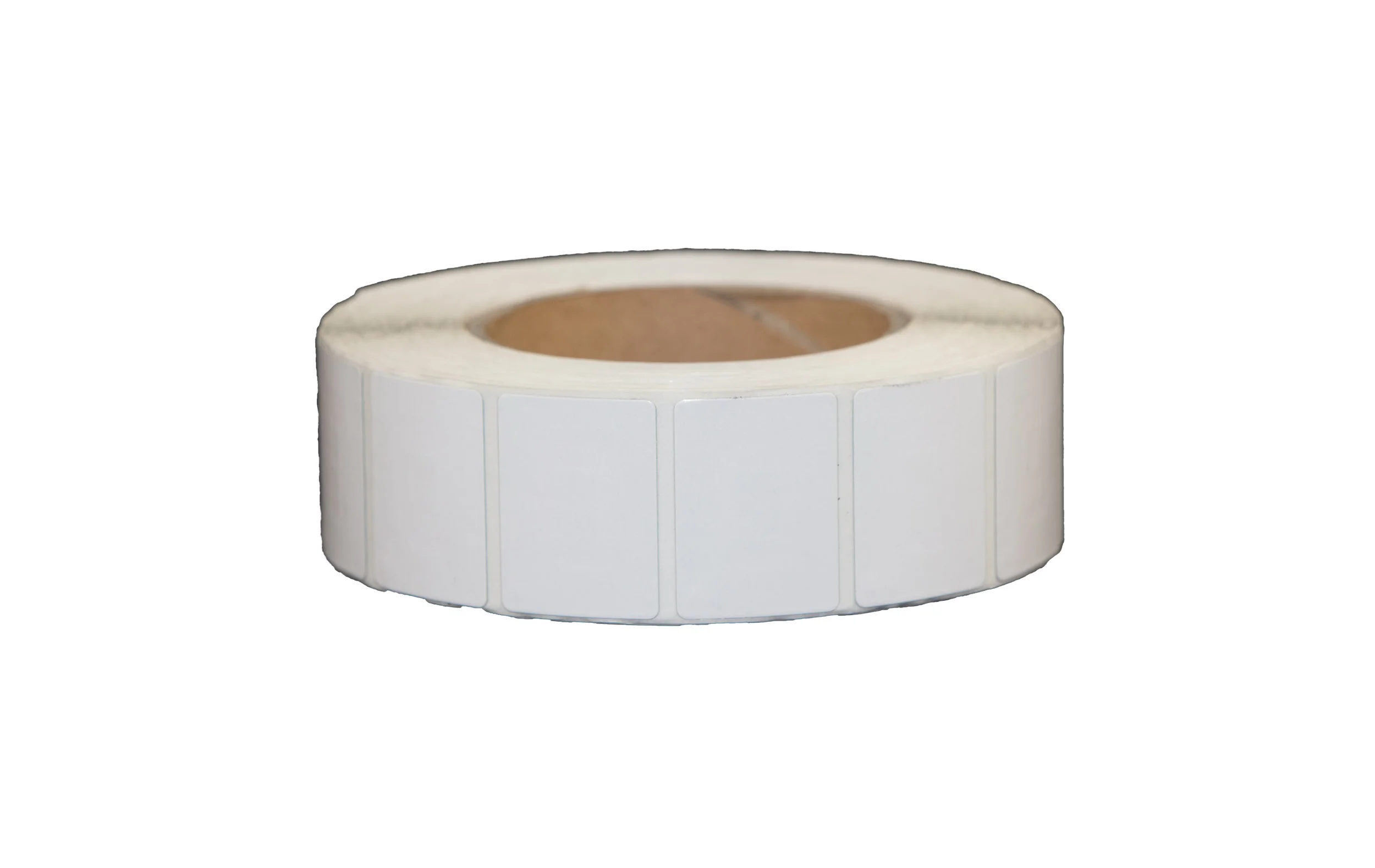
Protect boxed and hard to tag merchandise with these 722 Series plain white security labels, among the smallest Checkpoint compatible labels we stock. Built on 8.2MHz RF technology, the most common EAS frequency in the world, they work with all Checkpoint 8.2 systems and offer good detection performance with an FDA approved strong adhesive. They are perfect for liquor bottles, fragrance, pharmacy goods, beauty supply, packaged goods, and groceries, and barcode versions are also available.
Key Features
8.2MHz RF technology: Works with all Checkpoint 8.2 systems
Compact 26mm x 29mm format: Ideal for smaller boxed items
Plain white face: Clean look on any packaging
FDA approved strong adhesive: Stays put on boxes and packaging
Good detection performance: Reliable pickup at the door
Use cases: Liquor, fragrance, pharmacy, beauty supply, packaged goods, and groceries
Quantity: 2,000 labels per order, supplied on rolls of 2,000; full boxes contain 20,000 labels
Dimensions: 26mm x 29mm (1.02 x 1.14 inches)
Product Code: TAG1722 Plain White Labels 722 Series